
A Reliable Game Plan for the Slow Days
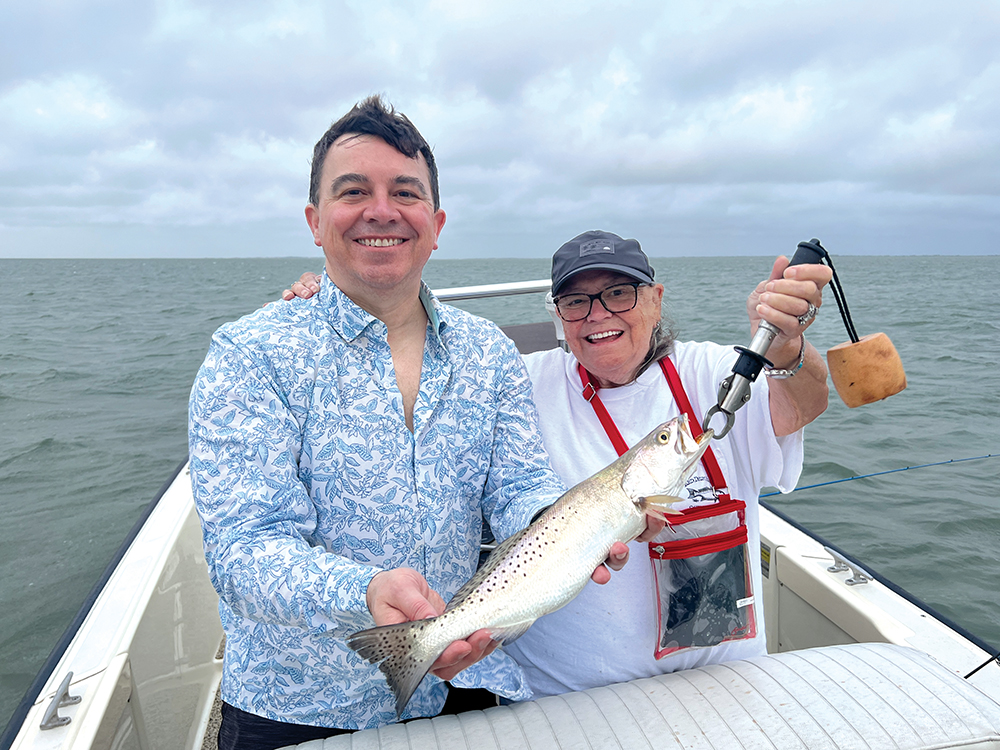
Each day I would frequent many of the same areas and have good success. Everything was stable. The salinity; the water temperature; an abundance of bait and slicks. But then we started getting recurrent rain showers. In addition, the days continued to get shorter. Surface water temperatures dropped by 4 or 5 degrees. Some of the areas I was paying a daily visit to were not producing like they had been. An early cool front pushed through our area dropping the water temperatures even more. Spots that were producing 20 and 30 trout per morning were now only coughing up 5 or 6 and we had to work for those! Things were changing. Our trout were on the move. It was challenging but it was certainly nothing unusual for this time of year. Welcome to September!
Throughout the summer months there are common signs (namely trout slicks and bait concentrations) that point us in the right direction. But now, such signs weren’t as prevalent. The rafts of mullet that lived over reefs and structure all summer were now just a few mullet breaching the surface here and there. Those well-defined hard-edged slicks were replaced by faint bled-out “maybe a slick” slicks that we casted to with a level of uncertainty. Please don’t get me wrong. We still have some stellar days in September but the aforementioned changes cause some inconsistency at times. So how do we react to these late summer/early fall variables?
Stay Mobile
The first thing we have to realize is that the trout are now on the move and that means we have to be willing to be on the move as well. Some of our fish will still be in their summertime haunts (open-water reefs and structure) and some will begin to show up along shorelines near bayou drains with good depth changes and live habitat. The rest of them will be in transit caught up somewhere in-between. I typically don’t spend as much time at each spot this time of year. In addition, I like to make sure my clients are fanning their casts to cover as much water as possible within our targeted fishing area. This applies to drifting and wading. Usually 30 to 45 minutes is long enough to get a good read on whether to stay or leave.
Call Them In
We often chunk more topwaters when trying to trick finicky, non-schooling trout. Using topwaters as “trout calls” can draw agitation strikes when sometimes nothing else will. Sound (vibration) travels a long way very quickly through water. As a matter of fact it travels at approximately 3,350 mph which is about 4.3 times faster than the speed of sound through air. Water temperature also affects the speed of sound as it travels faster in warm water versus cold water. Salinity has a slight effect too as sound travels faster in water with higher salinity (oceanexplorer.noaa.gov). There are other variables that affect the speed and distance of sound travelling through water such as pressure and frequency but I think you get the idea.
My two favorite trout calls are the MirrOlure She Dog and Rapala Skitter Walk, especially when we’re fishing deep or choppy water. I feel like the crisp, high-pitch rattle from these particular topwater plugs send sound waves straight to the trout’s lateral lines and just drives them crazy! Even if the trout won’t fully commit to the topwaters, they at least make their presence known. This enables us to find other ways to trick them using small Saltwater Assassin Sea Shads or MirrOlure Lil Johns.
Heightened Awareness for Small Signs
As I’ve mentioned, many of the usual signs we use to locate trout may not be available during the transitional period. On days when it seems like there isn’t anything at all to lead us to the fish there actually may be. Just because it isn’t the big neon sign we were hoping for doesn’t mean it’s not a sign. Just the other day we were drifting over some deep oyster beds. Our bite had really slowed. There wasn’t a breath of wind. I noticed one large tern hovering over something when suddenly a shrimp got forced into the air by a trout. I told the guys to reel in as I trolled into position to cast where that shrimp got blasted. We proceeded to catch eight or nine solid trout there until the bite faded. You see, we don’t necessarily have to have a big group of birds or an area littered with slicks to catch fish. Sometimes one bird or one shrimp is all it takes.
Nooks and Crannies
I’ve talked about nook and cranny fishing a lot through the years. This style of fishing produces year-round but can be especially productive on tough bite days. This strategy involves narrowing our focus to smaller areas that are likely to hold fish. Such areas include small bayou mouths, grassy points, small shallow reefs with cuts through them, and isolated structure such as a pile of rocks or pier pilings. These areas are sometimes only good for a few fish but other times they’re loaded. Either way they can save our bacon on even the toughest of days!
Target Other Species
I’ve experienced days when the trout bite was so challenging that I would just switch gears altogether and target redfish. Finding open-water schools of redfish can turn a slow and boring day into an action-packed adventure. Of course, it helps to have the right conditions when searching for the mid-bay schools. Ideally, we want light winds so we can cover lots of water, especially deeper areas along the Houston Ship Channel while looking for birds (terns and gulls), slicks and/or mud boils. A good trolling motor for a stealthy approach and fully charged batteries is a must for this style of fishing. I use a 36 volt lithium ion battery with an on-deck Stealth One charging system that charges my trolling battery when I run the big motor. This system has been a game changer for me. Soft plastics rigged on 1/4 or 3/8-ounce lead heads will enable us to make the long casts sometimes required to reach the schools. It can be some of the most fast and furious fishing you’ve ever experienced!
If it’s too choppy to do the open-water stuff, we fish the bayous, back lakes and bayou drains for slot redfish and flounder. We typically pop a few trout while fishing these areas as well. Later in the month white shrimp will begin their migration from these areas, which will further concentrate fish. Four-inch Assassin Sea Shads, especially in Chicken On A Chain and Slammin’ Chicken colors rigged on 1/8-ounce jig heads are perfect choices for this type of fishing. I like keying in on mud boils, small slicks and wakes over shell and mud.
I must say the catching has remained pretty consistent throughout the changing of the seasons in recent years. With this being said, we will inevitably have a few of those tough bite days but hopefully by having a solid game plan we can still make the most out of the slower days, even if it means changing our approach and covering more water. And even though most of us are trout snobs we may need to seek out other species when the going gets tough. After all, it’s more about the tug than the groceries anyway.