


A Seaweed Surge Sweeping the Seas

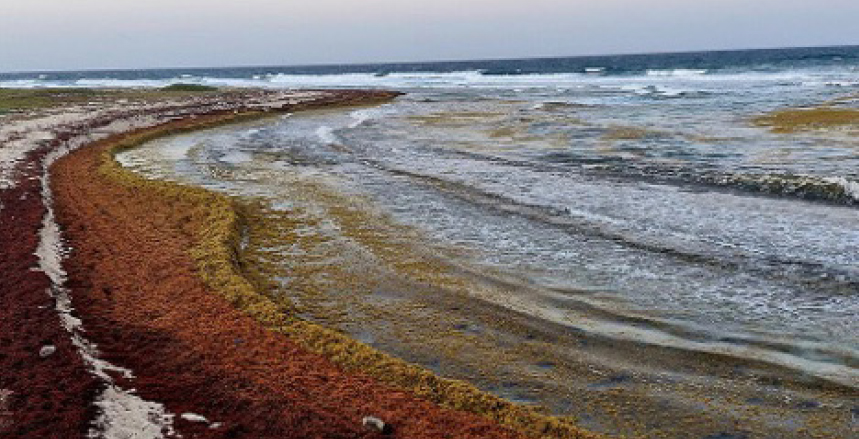
A mat of Sargassum washed ashore at a popular tourist destination in San
Nicolas, Aruba. Credit: Ginelly.Q, Wikimedia Commons, CC by CC0 1.0.
With oceans covering about 70 percent of Earth’s surface, it’s hard to get
a sense of what’s happening across all that water at any given point in
time. Even with imagery from an extensive satellite network, making
sense of it all requires massive amounts of analysis. But that’s where
artificial intelligence (AI) can help. A recent AI analysis of 1.2 million
satellite images of the world’s oceans produced a surprising discovery
that wouldn’t have been possible without all that computing power.
Scientists from the University of South Florida and the National Oceanic and Atmospheric Administration (NOAA) conducted the first comprehensive global assessment of floating algae and found that algal blooms are growing and spreading across the world’s oceans. They looked at both “microalgal scum” and “macroalgal mats.” Microalgae is made up of microscopic, single-celled organisms, and macroalgae refers to seaweeds.
Both types of algae increased globally from 2003 to 2022, but macroalgae far outpaced microalgae. While microalgae grew by about 1 percent per year, macroalgae expanded by more than 13 percent in the tropical areas of the Atlantic and western Pacific oceans, with the biggest increase occurring after 2008. Overall, macroalgal blooms covered about 43.8 million square kilometers (16.9 million square miles).
These huge, expanding carpets of seaweed have the potential to reshape marine habitats. They can provide nursery grounds for marine species and support fisheries, but excessive amounts of algae can deplete oxygen, harm marine life, and release noxious compounds that may affect people and animals. Scientists are investigating the causes of these macroalgae blooms, including warming oceans and over-abundance of nutrients and what it will mean for the future marine ecosystems.
Scientists from the University of South Florida and the National Oceanic and Atmospheric Administration (NOAA) conducted the first comprehensive global assessment of floating algae and found that algal blooms are growing and spreading across the world’s oceans. They looked at both “microalgal scum” and “macroalgal mats.” Microalgae is made up of microscopic, single-celled organisms, and macroalgae refers to seaweeds.
Both types of algae increased globally from 2003 to 2022, but macroalgae far outpaced microalgae. While microalgae grew by about 1 percent per year, macroalgae expanded by more than 13 percent in the tropical areas of the Atlantic and western Pacific oceans, with the biggest increase occurring after 2008. Overall, macroalgal blooms covered about 43.8 million square kilometers (16.9 million square miles).
These huge, expanding carpets of seaweed have the potential to reshape marine habitats. They can provide nursery grounds for marine species and support fisheries, but excessive amounts of algae can deplete oxygen, harm marine life, and release noxious compounds that may affect people and animals. Scientists are investigating the causes of these macroalgae blooms, including warming oceans and over-abundance of nutrients and what it will mean for the future marine ecosystems.