
Building Upon Success: Oyster License Buyback Efforts Continue in 2026
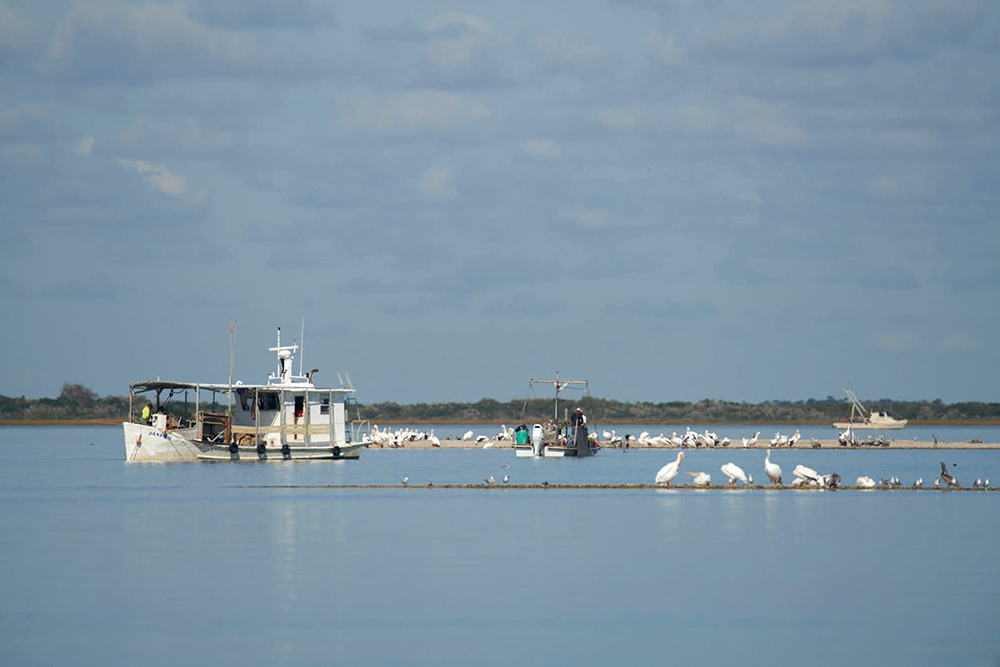
Texas Parks and Wildlife Department (TPWD) is accepting applications for the Oyster Boat License Buyback Program, offering commercial oyster boat license holders a limited opportunity to retire their licenses for a fixed price of $30,000. The application window runs from March 13 through May 15. For a second consecutive year, privately donated funds are supplementing state resources to support the program and make the flat rate offer possible.
TPWD administers voluntary buyback programs across several inshore fisheries, including shrimp, crab, finfish, and oysters, all of which have operated under license moratoria since 2005 or earlier. These voluntary retirements reduce the number of active licenses, easing fishing pressure on public reefs and helping to stabilize oyster populations over time. Revenue for buybacks comes from a surcharge on commercial licenses and, increasingly, from private philanthropy that leverages public dollars to increase the incentive for license holders to participate.
Last year’s round marked an unprecedented outcome for Texas oyster conservation. Through a $30,000 flat-rate offer supported by both public funds and private donations, TPWD and partners secured contracts to purchase and retire 112 commercial oyster boat licenses, roughly a 20–21% reduction in the state’s oyster license pool. That result followed a shift in TPWD’s approach: earlier rounds (2018–2024) used a reverse-bid process that yielded limited participation. After stakeholder feedback, TPWD adopted a straightforward fixed-price offer in 2025, a change that significantly increased interest and participation among license holders, including many with recent landings on public reefs.
The $30,000 purchase price reflects a true public-private partnership. In the recent model, TPWD provided $15,000 per license in public funds, matched dollar-for-dollar by private contributions. A $1 million anchor gift from Coastal Conservation Association Texas (CCA Texas) helped catalyze further donations through the Texas Parks and Wildlife Foundation (TPWF) and other supporters. The S. Reed Morian Oyster Buyback Program, administered by TPWF, served as the fundraising vehicle that channeled philanthropic resources into the buyback effort. Major donors and supporters include the Reed Morian Foundation, the Brown Foundation, the Earl C. Sams Foundation, Jeffery and Mindy Hildebrand, Beaver and Joanie Aplin, John and Mary Eads, Bobby and Sherri Patton, and many volunteer-led grassroots donors across CCA Texas chapters.
Oyster reefs are foundational to Texas’ coastal ecosystems. They create structured habitat used by more than 300 species, stabilize shorelines, buffer wave and storm energy, and improve water quality through filtration. While individual filtration rates vary, oysters are efficient filter feeders that can substantially reduce turbidity and help maintain healthier benthic and marine communities. Restored reefs provide significant ecosystem services — estimates place their annual value from ecosystem functions and recreation far above the direct commercial harvest value per acre from public reefs. Given multiple stresses on Texas oyster habitats — including dredging, severe weather events, drought, floods, and historical overharvest — reducing fishing pressure on public reefs is a key tool in a broader strategy to restore reef health and support sustainable fisheries.
To assist license holders during the application period, TPWD Coastal Fisheries staff hosted one virtual and two in-person workshops in early April to explain the application process and answer questions about the Oyster Boat License Buyback Program. Oyster license holders seeking more information can email [email protected] or call (512) 389-8575. For direct questions about the Commercial Fishing License Buyback Program, contact TPWD’s Coastal Fisheries Commercial Fishing License Buyback Program manager, Zack Thomas, at (512) 389-8448 or [email protected].
Looking ahead, TPWD and partner organizations, including CCA Texas and TPWF, anticipate continuing the buyback approach where funding and legislative support permit. Sustaining the momentum will require ongoing collaboration among state agencies, conservation groups, industry stakeholders and private donors. The recent rounds demonstrate that combining public surcharge revenues with philanthropic contributions can produce measurable conservation outcomes, reducing fishing pressure on public reefs and advancing long-term goals for healthier, more sustainable coastal ecosystems and fisheries.