
Death, Taxes, and Surf Trout
I’ve always considered unique wildlife appearances to be good omens in my life. On my first day of graduate school at Texas State, a pack of six wood ducks landed right across the pond from me. I took it as a sign that I was on the right path.
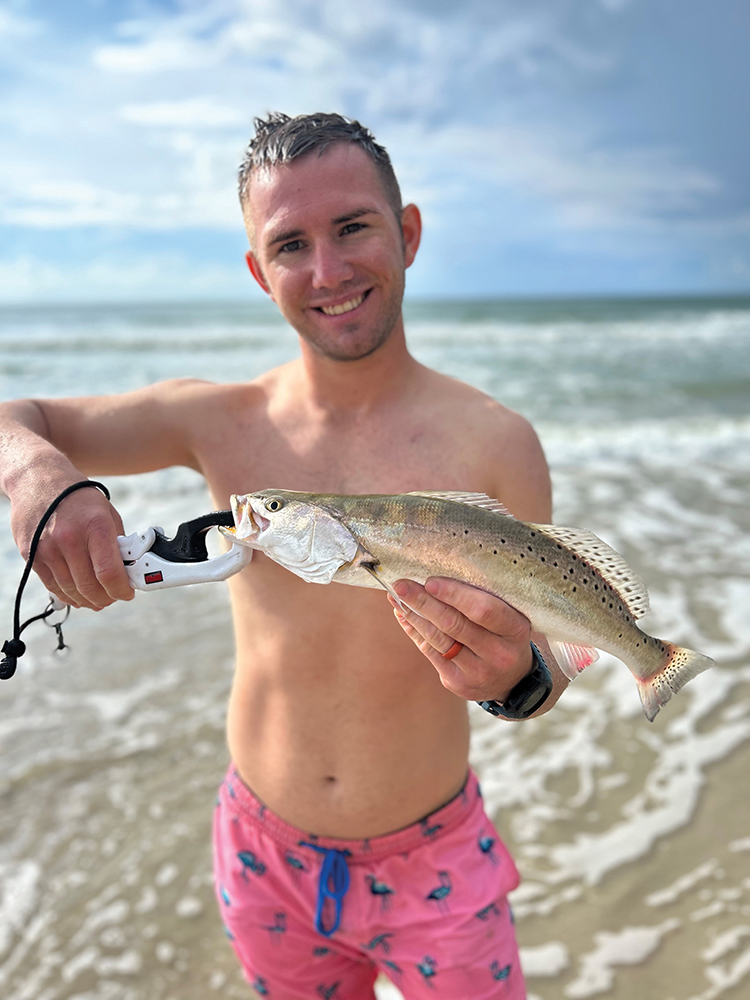
Two years ago, I headed down to Port Aransas ahead of my wedding. After finishing my honey-do list on Tuesday night, I found myself with Wednesday morning free. I decided to buy a dozen croakers and fish the surf at first light. A dozen croakers produced a dozen solid trout.
I convinced my new wife that we should do it again the day after we got married. Normally, her interest in fishing is fairly passive, but she agreed to give surf fishing a try. That day was just like the two before it. Eighteen croakers landed us about fifteen trout, all over sixteen inches.
I’ve read plenty of articles, social media posts, and watched videos claiming that catching trout in the surf is “easy.” Based on those results, I’d have to agree. Of course, like all things in fishing, there’s still an art to it. Surf trout fishing might be one of the most productive ways to target these fish, but it’s not for the faint of heart—it comes with real risks.
The most obvious danger is the surf itself. The waves are always worse than they look, and rips can change in an instant. The surf is also brutal on reels. When I get to where I want to fish, I position myself sideways—one shoulder facing the beach, the other toward the Gulf—and do my best to keep my reel out of the water. Often, that’s impossible.
As for where and how I fish, that depends on the day. If you research surf fishing, you’ll hear talk about guts, cuts, rips, wash, and bars. I like to keep it simple. I wade out to the first or second sandbar, usually standing knee- to belly-deep on top of it, and cast into the area where the sandbar drops off. These deeper sections, called guts, grow successively deeper the farther you wade from shore. I’ve found both the Gulf and beach sides of the bar to be productive.
My rigging method is equally simple. A Gamakatsu 2/0 Kahle hook and a fluorocarbon leader cover most situations. I’ve experimented with adding weights but found that doing so reduces hookups significantly. And by now, you’ve probably guessed my bait of choice—croaker.
Croakers can be tricky to keep alive because they require a lot of oxygen, and they’re most effective when lively. I use a 45-quart ice chest and never put more than eighteen croakers in it at once. When wading, I carry about six croakers in a floating bait bucket. More than that tends to stress them. If one starts to fade, I swap it out quickly, returning it to the bucket to recover for later use.
When it comes to rods and reels, there are plenty of good options, and few of them are wrong. I use my standard inshore setups—7-foot rods paired with 3500-series reels, spooled with 20-pound braid and 6 feet of fluorocarbon leader. I like to let the croaker swim freely, so I keep my bail open after casting, holding the line with my finger.
Trout can behave unpredictably with croakers. Sometimes they toy with the bait before committing; other times, they hit hard and run instantly. I use a three-second count after the initial strike before closing the bail and setting the hook. This gives the trout enough time to get the hook in its mouth but not long enough for a gut hook. I start my count once the fish is steadily pulling line.
Two final tips—both critical. First, be on the water before sunrise. Surf action can be both fast and short-lived. In the heat of summer, it’s rare for a solid trout bite to last past 9:00 a.m. And with beaches filling up quickly, an early start ensures you can claim a good, uncrowded spot.
Second, find the green water. Among surf anglers, “green water” is spoken of almost mythically—and for good reason. As current and temperature shifts occur, you’ll notice the surf take on a deep emerald hue. Predatory fish follow this water as it pushes closer to shore. This past summer, the green water arrived later than usual, which delayed the surf trout as well.
Trout in the Texas surf offer one of the most reliable ways to target truly exceptional fish. On any given day, you might find yourself among an endless number of twenty-inch-plus trout. And when the bite is hot, the surf can deliver a mixed bag of Spanish mackerel, redfish, black drum, and jack crevalle right alongside them.