
Feather Jigs
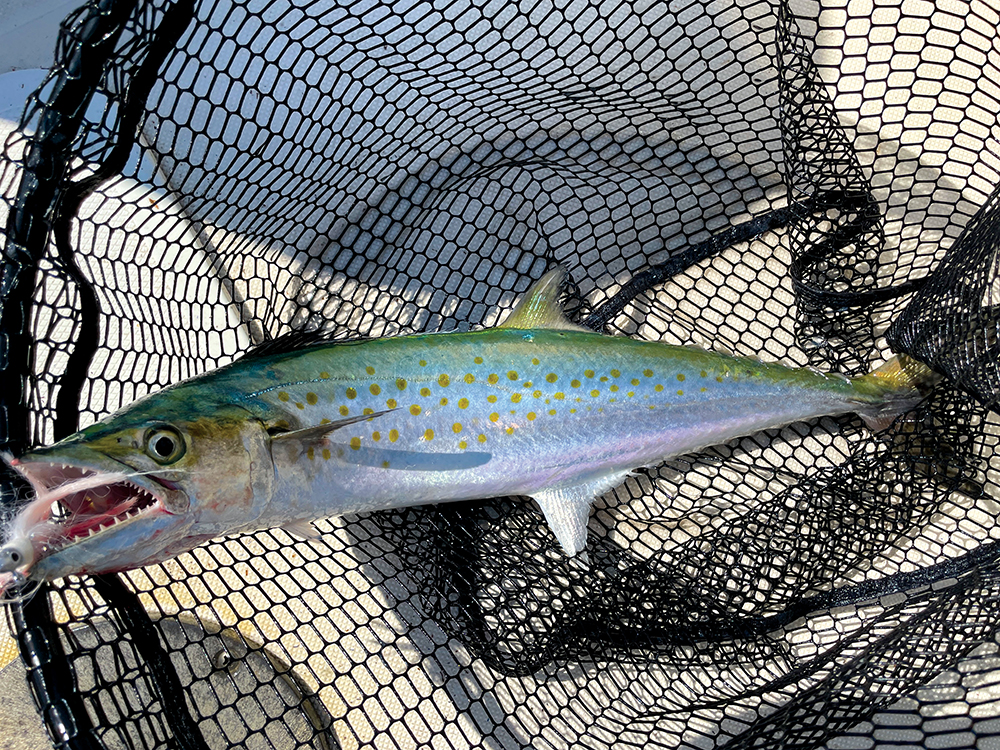
Preparing for a fishing trip tomorrow, I’m wiring up short leaders for a few bucktail jigs and recalling countless successes with these classic lures. A friend recently introduced me to a technique of fast-trolling these jigs for Spanish mackerel, and it’s time to put a few in the freezer. As it turns out, instead of slinging gold spoons all day while the boat drifts along, one can circle a prime area at up to four knots and mackerel will attack the jigs with enthusiasm. It’s a welcome change, saving a lot of angling energy, which is vital for us slightly older guys still fishing the Gulf. Initially skeptical of this technique, I soon learned that big mackerel are happy chasing after trolled jigs, rather than our casting spoons, which are slow by comparison even with 6:1 or faster gear ratio reels. To be clear, I’m not saying one should plow up and down the jetties leaving a three-foot wake like Rodney Dangerfield, but try it in more secluded spots like 80 yards off the beach or around nearshore platforms in the Gulf.
Mackerel are quick as squirrels and a slow artificial will often draw critical inspection and refusals. By tomorrow, I hope to have new pictures of one of these jigs pinned to a ponderous mackerel’s lip. Five pounds would be nice, because they’re fighters. Twice, we’ve caught six-pounders that fought like their kingfish cousins, almost spooling our reels because we were using tackle better-suited for speckled trout.
Clear green water is a must for mackerel, and that’s where feather jigs really work, because they’re attacked visually; the opposite of bumping a plastic worm jig, perhaps laden with artificial smell, in murkier water. (Which is still the best tactic when visibility is limited.) When casting with feathers, the jigs sink fast and I let them go down 20 feet, before starting a fast and erratic retrieve. But again, green water is the key. Scan the horizon for dark water, before getting serious. For instance, that rig off Crystal Beach has been there since the 1980s and we sometimes tied up there in a jonboat, but only because it had clear water while the Galveston jetties sat in brown water. We had lots of strikes on spoons, and filled a box with mackerel.
Other coastal fish are also drawn to non-soft plastic jigs. Countless ling, perhaps the majority years ago, were caught with them. Along the Florida Panhandle, jig makers specialized in making the finest ling and pompano jigs, using natural feathers and artificial materials. Not sure how those guys are doing today, though. Pompano are still in the surf, but the ling population there and elsewhere has fallen on hard times. Many ling tournaments have been cancelled in that area, where schools of huge ling used to cruise along the surf, to the delight of pier fishermen, who peppered those brown brutes with colorful, 2-ounce jigs.
Like everyone on the coast, I’ve thrown soft plastics a great deal, but it gets tiresome replacing the plastic, some of which self-destruct in 24 hours. That plastic is also supple, soft, and easily bitten off. Feather jigs are more durable and don’t leave plastic in the water. They can still be shredded from constant action, though. But saved and rebuilt. However in murky bay waters, the plastic worm jig still shines. All the way back to 1969, when Boone’s Tout Tails were a revelation for us. We used them in Sabine Lake but once we left the jetties and headed offshore, it was all bucktail jigs.
I started making my own jigs as a young teenager—hundreds of them—but eventually stopped. Cooking the lead is said to be hazardous and today one can buy shiny jigheads online and paint them after wrapping the tails. My uncle Wib, who taught me to wrap mylar-tail jigs, made them bullet-proof by dipping each jig down to the wrapped thread in a fast-warming Dixie cup of marine resin that hardened in 6-8 minutes. We had to work fast to dip and hang 100 jigs on the clothes line before the resin turned rock hard. Those jigs caught a big variety of fish. Decades flew by and the last time I wrapped jigs, bull redfish were in Matagorda Bay, busting small, migrating blue crabs on top of the water. (The crabs were leaving because of a drought; the bay water had become too salty.) I’d wrapped a number of one-ounce jigheads with orange and green dyed feather tails. Then took a charter from Nacogdoches out there and we landed 24 bull reds on heavy spin tackle, either while casting or slow-trolling those jigs. The guys were stoked. Every fish was 37-42 inches.
In the rough-and-tough world of offshore fishing in clear water, there is no need for plastic jigs. Everything out there will hit feather jigs, and without tearing them up. Mackerel, kings, snapper, mahi, upper coast trout, tripletail, bluefish, ladyfish, you name it. Way back when on the Louisiana partyboats out of Cameron and Grand Chenier, we landed big sow snapper behind the boat after lowering 3/4 ounce jigs. The regular crowd with their broomstick rods were mystified how we ever landed big snapper with baitcaster reels and 20-pound line. We used jigs without bait. If we missed a strike, we just danced it around and another snapper would latch on. If we pinned a cigar minnow to a 2-ounce jig and lowered it deep, it was a quick hookup.
Years ago these “feathered” jigs were scarce as hen’s teeth in Texas (except for white/green striper jigs on Toledo Bend and Lake Texoma). I would fly to Miami on business and stop by to visit Lead Enterprises on the Miami River, where big bubbling cauldrons of lead could be viewed up close. It was a tough neighborhood, though I never heard gunfire, and hot in that factory! Large bay doors stayed open in summer with the fans blowing full power while cooking lead. However, the finished products, boxes of big pink, yellow or white jigs in different sizes, were available for purchase in air-conditioned comfort. I’d buy a year’s worth of 2- or 3-ounce feather jigs and head back to Houston where they were soon used on Texas amberjack, kingfish and snapper. Once, a 66-pound wahoo. We pulled another wahoo of 50 pounds out of the box at a king tournament’s weigh-in and the crowd there in Surfside grew silent, then someone shouted with relief it was only a wahoo. So I put it back and pulled out a 47-pound kingfish. Sometimes we actually swept the event with second and third place, too.
How was this possible? We learned that fresh 30-inch ribbonfish pinned to those jigs (available every August from Galveston harbor and or nearby bay shrimpboats, or by casting spoons at Galveston Bay’s Moses Lake), really worked. Author’s note: For more details on this and many more adventures, check out my new e-book, The Kingfish Bible: New Revelations, available on Amazon.)
Fortunately, “feather” or “bucktail” jigs are easier to find these days; checking with Bass Pro Shop, they sell two-packs of white jigs with sturdy hooks, made by Offshore Angler. We recently bought a few and headed out a short ways, trolling and also casting their 1/4 ounce “DLX pompano jigs”. (We didn’t try their 1/2-ounce size because we weren’t going further offshore.) Those new jigs provided fast action on mackerel and ladyfish.
Rigged with just 6 inches of light wire leader meant that we suffered no tackle losses. Any of the Texas jetties offering green water should be fertile ground for these jigs in summer or fall, and also in green surf commonly found on Padre Island, where pompano mix with trout and mackerel.