


Finding an Especially Elusive Whale
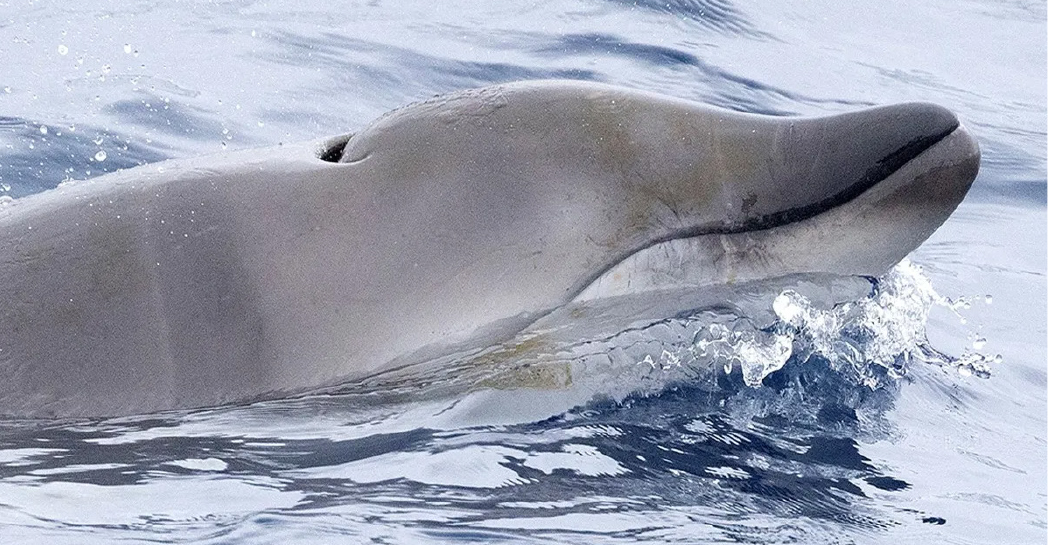
Ginkgo-toothed beaked whales are very elusive and were seen
swimming for the first time off the coast of Baja California.
Credit: Todd Pusser, CC BY-NC-ND 4.0
Beaked whales are among the hardest whale species to find because
they dive deeper than any other mammal (some reaching almost 10,000
feet deep), they only surface for a couple minutes at a time, and are
especially wary of boats. But knowing where they live is important so
the military can avoid going there for sonar exercises, which hinder the
whales’ feeding and can cause severe injury. After five years of searching,
scientists finally found the species for the first time in the open sea—and
an albatross nearly sabotaged the whole operation.
Along the coast of Baja California, Mexico in June 2024, scientists spotted a small group of ginkgo-toothed beaked whales swimming. This rare species was initially described in 1958, when a pair of Japanese scientists found one stranded on a beach near Tokyo. Since then, fewer than two dozen have been identified, always stranded on beaches.
The recent search began in 2020 when scientists started tracking a group of whales making a call not associated with any other species. The biologists named the call BW43 and returned to the area where they heard the call every year for three years. But each time, they lacked the specialized equipment that would ultimately help them find the ginkgo-toothed beaked whales.
When they returned last summer, they were aboard a research vessel with a collection of underwater microphones and high-powered binoculars. When a pair of beaked whales they had been following surfaced, they shot a small arrow that nicked a tiny piece of skin from one—which an albatross nearly stole before they could pull it aboard. Shouting and a few tossed bread rolls helped the crew chase off the bird long enough to pull in the sample and test its DNA, confirming they had, in fact, found the elusive ginkgo-toothed beaked whales.
Along the coast of Baja California, Mexico in June 2024, scientists spotted a small group of ginkgo-toothed beaked whales swimming. This rare species was initially described in 1958, when a pair of Japanese scientists found one stranded on a beach near Tokyo. Since then, fewer than two dozen have been identified, always stranded on beaches.
The recent search began in 2020 when scientists started tracking a group of whales making a call not associated with any other species. The biologists named the call BW43 and returned to the area where they heard the call every year for three years. But each time, they lacked the specialized equipment that would ultimately help them find the ginkgo-toothed beaked whales.
When they returned last summer, they were aboard a research vessel with a collection of underwater microphones and high-powered binoculars. When a pair of beaked whales they had been following surfaced, they shot a small arrow that nicked a tiny piece of skin from one—which an albatross nearly stole before they could pull it aboard. Shouting and a few tossed bread rolls helped the crew chase off the bird long enough to pull in the sample and test its DNA, confirming they had, in fact, found the elusive ginkgo-toothed beaked whales.