
Following Trout from Summer to Fall

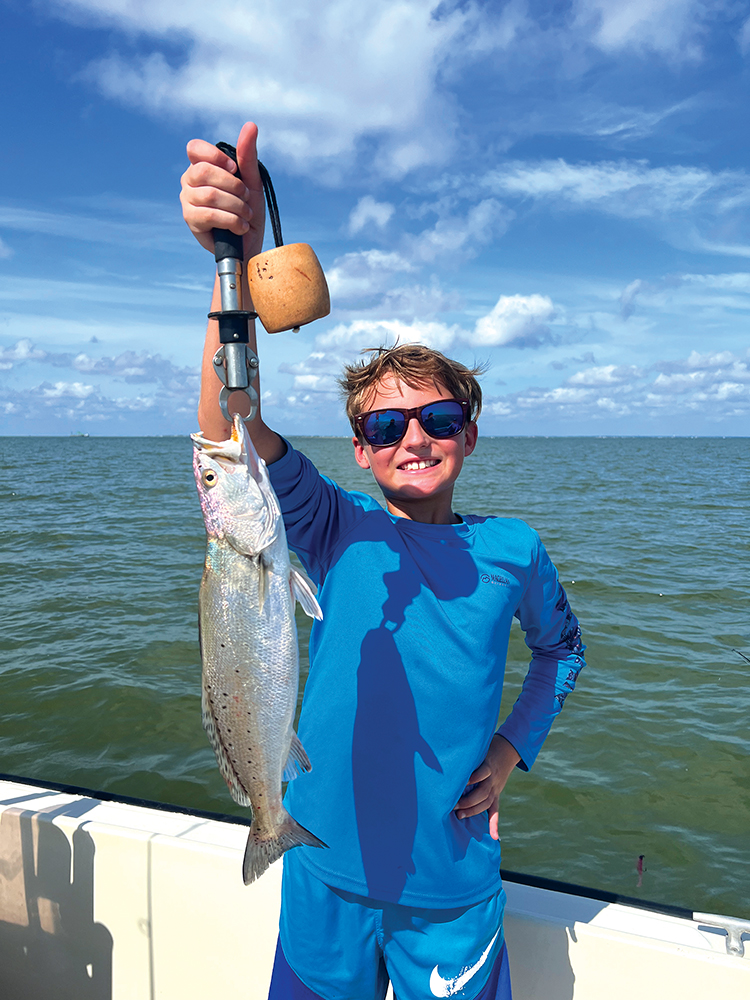
The heat was what it was, but overall, I didn’t think it was too bad this summer - at least not out on the water. Regardless, that’s what we sign up for here on the Texas Coast. With the exception of a few years of me sitting behind a desk when I was in the corporate world I’ve worked in the heat most of my life, so I’m used to it. At any rate, summertime fishing is winding down and the biggest thing I’m personally looking forward to is not just cooler weather but a change of scenery. Our trout patterns are in the process of changing so this means we’ll be looking at new waters and fishing a little differently than we have been for the past few months. Bring it on!
Summer Recap…
The trout have been very nice to us by showing us where they are most days in the form of slicks. Some days it’s almost not fair. Once again, this year, here in Galveston Bay we’ve had an abundance of shad. Not only are shad extremely oily and help our trout produce well-defined sticks but they are very rich in fat and protein, so our trout in most parts of the Galveston Bay Complex stay chunky even during the summer doldrums days of July and August.
Our tides have been extremely low and it seems like we’ve had more weak tide movement days than last year. To combat these two challenges, we’ve been fishing deep shell and structure near the Houston Ship Channel. The deeper water holds cooler water temps and the ship traffic provides us with artificial tide movement when the naturally occurring movement isn’t there to help us.
Speaking of tides, the tide chart is at the top of my list when planning my trips, but I don’t always put 100% faith in what’s on paper because there are other influencing factors to consider such as wind velocity, wind direction, and barometric pressure. I often find a stationary object like a channel marker, range marker, or the tip of an island or peninsula to get a better real-time snapshot of what kind of current we actually have, and then I adjust accordingly. I had to do just that on a recent trip where I noticed an incoming tide that was too swift for the area I had planned to start my day. The actual tide chart predictions indicated that there would be a weak incoming, not the roaring current that I witnessed when observing the water swirling around the channel marker. Stiff westerly winds the previous night had pushed more water out of our bay than predicted, then the wind switched back to an easterly flow just before daylight causing water to flow in like a rushing river.
Galveston Bay water has been very salty most of the summer so our clarity has been exceptional. Because of this I’ve had great success with the brighter colors like Laguna Shrimp, Flamingo Flash and Chartreuse w/ Silver Glitter Bass Assassins. We’ve caught some crazy stuff including spotted eagle rays, baby ling, Spanish mackerel, and bluefish. We’ve also seen pompano skipping across the surface in certain areas. The higher salinities should allow our trout to re-establish a base population of resident fish in areas where they haven’t been in years.
Easing Into Fall…
Fall is right around the corner and it brings some welcome changes. By the time this fine publication hits your mailbox it will officially be fall on the calendar. The autumnal equinox occurs this year on September 22. Following this, the nights will begin getting longer. This coupled with cool fronts will result in declining water temperatures which will cause our trout to behave differently. Having a clear understanding of these behavioral changes will result in us having more successful days on the water.
During late September and into early October we will most likely still be in a summertime-like pattern where good numbers of our trout will still be holding in deeper areas over live oyster reefs and structure. Most of our days will be spent drifting slicks while chunking Saltwater Assassins and other soft plastics like MirrOlure Provokers and Lil Johns rigged mainly on 1/8-ounce lead heads. We’ve also had some recent success on the new Lil John XXL. It’s a 5 ½” version of the original Lil John (3 ¾”) and like its middle sister (the 4 ¼” Lil John XL) the XXL has a shallow slot so it can be rigged weedless. Because of its larger profile and added buoynancy I was able to weed out some of the smaller specks on one of our recent trips. This is going to be a great big trout bait this fall and winter!
It typically takes a couple of decent cool fronts to trigger what I consider a true fall pattern. This usually occurs around mid-October. Water temperatures will really start to cool and forage species such as white shrimp and shad will be on the move. Trout will spend more of their time suspended in the upper levels of the water column. As their forage species begin to pull out of rivers, bayous, and the back ends of bays with the passage of each front trout will tend to congregate near the mouths of those areas. We’ll also start seeing more frequent open-water schools of giant redfish. Many will be feeding upon shrimp, shad and/or ribbon fish and can be easily spotted by the terns and gulls hovering and twirling above them. Some days we’ll locate schools because of mud boils and/or slicks. Most of the open-water redfish action occurs in 8 to 12 feet of water here in the Galveston Bay System.
We’ll start wading more shoreline areas with the passage of every front. Such areas will include bayou drains, shallow reefs, grass flats, and back lakes. Active bait, small slicks and depth changes will be our main focal points. I’m especially partial to bayou drains and small points with good current flow. We’ll start throwing more topwaters such as MirrOlure Top Dogs and Rapala Skitter Walks, just to name a few as our fish will become more amped up with cooler temps and bait concentrations. I mix in some of the smaller profile topwater plugs like Heddon’s Super Spook One Knocker and Super Spook Jr in calm conditions that typically require a more subtle presentation. The Mansfield Knocker topwater has also found its way into my wading box in recent years. Twitchbaits like Borboleta’s Lele (both floating & slow sinking), Texas Custom Lure’s Double D and Rapala’s X-Rap Sub Walk will also be in play, especially when our fish won’t fully commit to a topwater. Of course, we can never go wrong with our tried-and-true Saltwater Assassin Sea Shads. They get the job done when nothing else will.
Later during October I will most likely increase my focus on smaller nook and cranny type areas such as small oyster reefs with breaks or cuts through them. I will also spend more time fishing along deeper ledges that possess softer bottom and preferably some live oyster and/or clams. Shoreline marsh drains are always in play. I guess my main point is that we’ll be spending less time out in the mid-bay areas as the weather cools. One exception to this is when we do the open-water redfish thing. We’ll catch those giant bruisers all fall and winter out deep! Our lure selections won’t differ much from our mid-October choices during this time period.
There are plenty of signs to point us in the right direction as we transition from summer to fall. Each passing front will result in our fish developing a more predictable pattern. New staging areas will emerge especially in the far-reaching corners of our bays and along shoreline outflow areas. Bait migrations will result in our trout forming legitimate schools which will make them easier to find. Slicks, nervous bait and bird activity will be cheat codes on the easy days. I’m geared up and ready. Let’s Go!