
From Brush to the Bay: How Texas Brigades Inspired My Passion for Conservation
One of the most fascinating things to me is just how interconnected our little world is. Thoughts like this settled in my mind as I sat in the brush, watching the world come alive. I fell in love as I watched the pink sky intertwine with the deep blues of the moon's dance, and the doe and her fawn step out to the pond before me, taking a drink of water before wandering on to their day’s agenda.
I wasn’t casting a line that day, nor was I watching the tide roll in and feeling the ocean’s breeze coat my skin. Instead, I was awake at five a.m., settled into the brush, evaluating the landscape for animals like quail and white-tailed deer. At Texas Brigades, I had the honor of earning Top Herd and Top Covey at both the Buckskin Brigade and Bobwhite Brigade—recognition not just for knowledge, but for teamwork, collaboration, and initiative.
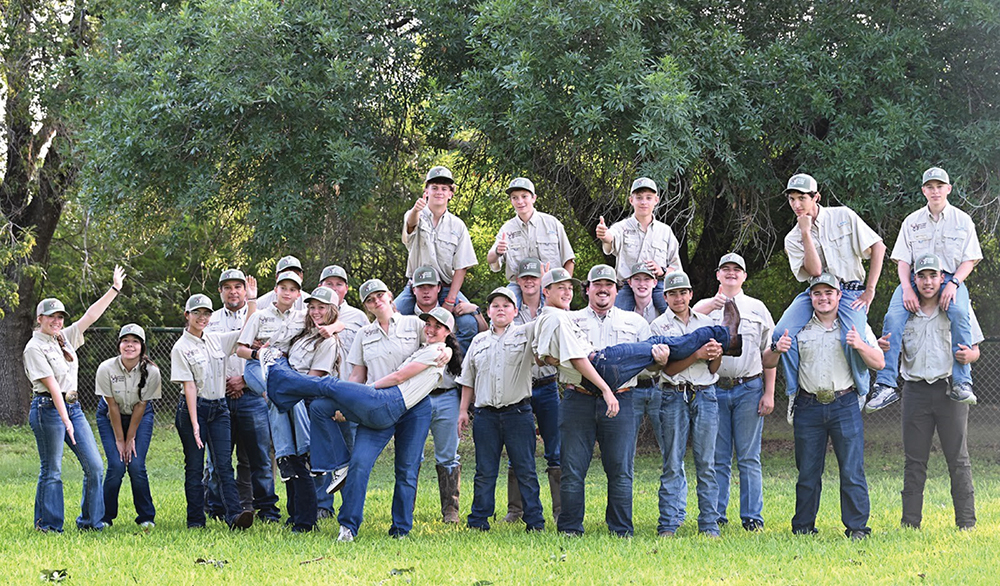
To give credit where it belongs, I genuinely could not have done it without my girls—my “herd” for Buckskin and “covey” for Bobwhite. We pushed each other, shared ideas, and strategized together. We supported one another when emotions ran high, leaned on each other, and grew stronger through it.
This summer, I attended the South Texas Bobwhite Brigade and the South Texas Buckskin Brigade, two of the nine youth conservation and leadership programs that make up Texas Brigades—a program dedicated to teaching middle and high school students about wildlife conservation, public speaking, teamwork, and leadership. At first glance, the camps I attended didn’t seem to have much to do with the coast. But after just a few days in the field, it became clear: conservation is a thread that connects everything.
My journal became both a wealth of knowledge and an anchor through it all. Every day, I took notes during lectures and recorded everything I found interesting—from plant identification and Aldo Leopold’s five tools to habitat design and public speaking. But there was so much more than just facts and lessons. I wrote about the people I met and how they inspired me, how I saw myself growing, and how the others were growing alongside me. That journaling process helped me reflect deeply on what conservation really means—and it helped me earn recognition as Top Journal at both camps. Alongside my trifold and poster, it showed me that storytelling and science go hand in hand.
And while all this learning happened inland, the impact reached far beyond the brush.
What I didn’t realize at the time was that these upland lessons—and the work, reflection, and connection that came with them—would shape the way I understand the coast, too.