
Giving Ourselves the Best Chance for Success
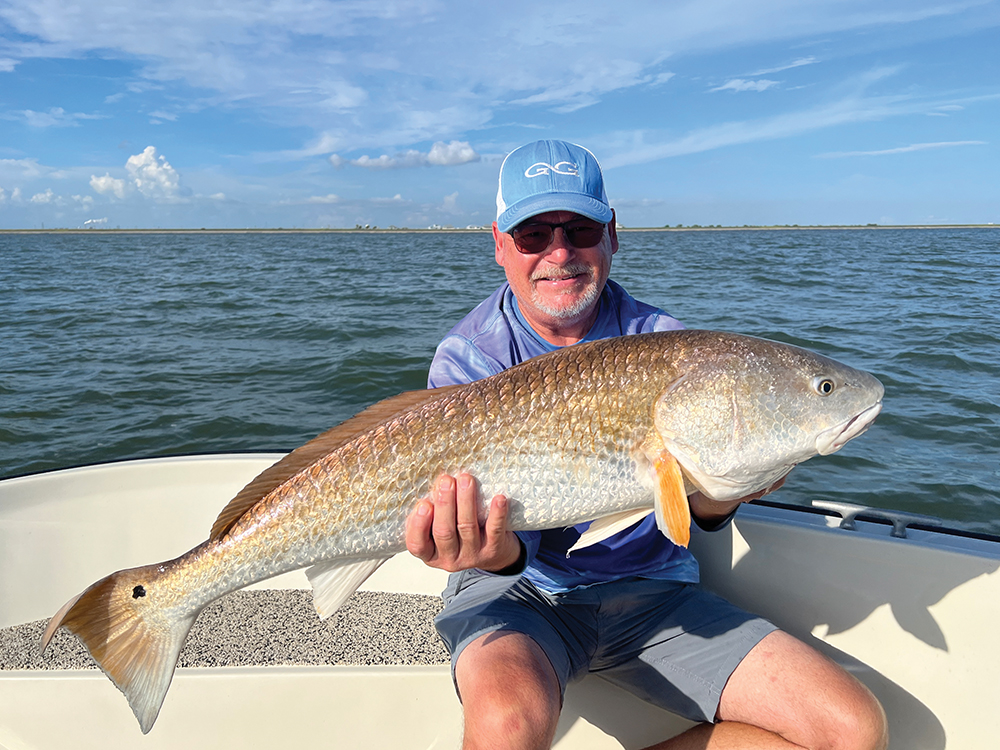
We are coming into one of my favorite times of the year. The weather will finally begin to cool. With the passage of each front comes massive bait migrations which help concentrate our fish and send them into frenzies. The three main saltwater species we love to chase will feed more frequently and more aggressively. All of this being said, there are certain details that require our attention in order for us to capitalize on the awesome opportunities presented by these seasonal changes.
Just like the old real estate marketing cliché states, “Location, location, location” is the first step in the process of putting together a successful day on the water. If we don’t put ourselves where the fish are then everything else we do from that point forward is irrelevant. The good news is that there are typically many locations this time of year that will hold fish. Early in the month there will still be some mid-bay trout holding tight to structure such as wells and submerged rocks. Some of the deep reefs with live oysters will also hold schools. As white shrimp begin their migration toward the Gulf, gulls and terns working over schools will become more prevalent. We will also start seeing more open-water schools of giant redfish feeding primarily on shrimp and ribbonfish (Atlantic Cutlassfish).
As water temperatures begin to cool my favorite areas to target will be in and around the mouths of bayou drains leading to the bay, as well as river mouths. Our three main forage species for this time of year (shad, shrimp and mullet) will concentrate in these areas providing a full-on buffet for trout, redfish and flounder. It can be some of the easiest fishing of the year if we play our cards right.
Now that we’re confident that we’re in an area holding fish there are some common mistakes that must be avoided in order for us to have above average success. Unfortunately, I get to witness said mistakes on pretty much a weekly basis. To me, most of the things that immediately come to mind are common sense, but you’d be surprised.
It starts with proper ingress and egress. I can’t count the number of times I see boats come into a fishing area running their big motor and some of them at a fairly high rate of speed. This is a sure way to bust up the schools, not only for yourself but anyone else who may want to fish the area. It’s smart to employ a stealthy approach by killing your outboard 75 to 100 yards out, then using the trolling motor to ease into the area. I assure you; this method will yield much better results. This especially holds true when fishing shallow water areas. The same rules apply when leaving a fishing area. Leave like you arrived, instead of burning out of there at Mach One like your hair’s on fire. Not only will you allow others to enjoy catching fish there but they will respect you for your good etiquette. The fishing community is small and word travels fast. Be smart.
So now we’re set up in the area we chose to fish and two small slicks pop up. By the way, this could be a hypothetical scenario but this actually happened on my boat the other day. However, while the story is true, the names have been changed to protect the innocent (in true Dragnet fashion). As always, when we’re drift fishing I’m all the way in the back of my boat operating the trolling motor from the starboard side stern. My three clients (Larry, Curly and Moe) are lined up down the starboard side as I situate the boat where they can cast to the slicks. I’m throwing my Bates Salty Hundo mounted on my 6’ 9” Waterloo HP Lite, which will cast to the moon, especially with the Saltwater Assassin Litl P&V rigged on a 1/4 ounce Pro Elite jighead I’m chunking.
Larry had decent gear and he had no problem getting enough distance to reach the fish. The same held true for Moe. The problem for Moe, however, was that he couldn’t feel the bites. He had a decent reel but his rod was an absolute broom handle, better suited for bull reds. I ended up letting him use one of my personal rods and he did just fine. He actually fell in love with my Waterloo HP Slam and ordered one the next day.
In the front, toward the starboard bow, sat Curly. Good ole Curly. I won’t name the brand but Curly’s reel is known for its durability and was a damn good reel in 1994. It’s big. It’s heavy. It’s green and it holds a lot of line. Now apparently Curly can afford a guided fishing trip but he didn’t have enough money to buy line, because his reel had only about 60 yards on it.
Clients not having enough line on their reels is one of the most common mistakes I see them make. I like to spool my reels with line until there’s anywhere from an 1/8 to 1/16 of an inch of the brass spool showing – that’s all. Getting enough distance in your cast is one of the most important aspects of catching fish. If you can’t reach them then you won’t be able to catch them. Curly was merely a spectator until I stripped all of the old memory-laden Slinky-like monofilament off of his World War II reel and restrung it. He was able to finally get in on the action and all was right with the world.
Folks, we live in a day and age where we have access to the most premier, state-of-the-art fishing gear. We need to take advantage of it. In my world which these days only involves fishing for trout, reds and flounder, I need sensitive (but strong) lightweight rods and reels. I need premium quality line and leader material and cutting edge lure choices. Let’s face it, overall, fishing is pretty darn good but these trout aren’t as easy to trick as they were 10 and 20 years ago. Not only that but there are a lot more folks out there chasing them. Having the best gear gives us that advantage we need to be successful.
There are more than a handful of good rod, reel and lure manufacturers out there but through the years I’ve narrowed my preferences down to the ones who have been solid as a rock for me and my clients – day-in and day-out. For almost two full decades Waterloo Rods has given me and my clients the ability to capitalize on every bite with their true attention to detail and listening to feedback from the fishermen who use their rods.
There are many reel companies from which to choose but I’ve been with Bates for almost two years now and I can honestly say I’ve never held a reel in my hand that had all of the features that make it a supreme reel. It checks all of the boxes. It’s small (Salty Hundo), lightweight, smooth, casts a country mile and has a very smooth drag system.
The Seaguar braided line that I use seems to last longer than most and has superior casting abilities. The Seaguar fluorocarbon leader material (20 lb. test) is, bar none, the best on the market and gives me just the right amount of stretch and abrasive resistance when fishing structure and shell reefs, not to mention its low visibility properties. I use 30 pound test (8 lb. diameter) braided line. Twenty pound braid (6 lb. diameter) is fine, too. Make sure to put 15 to 20 yards of 10 or 12 pound monofilament backing on your reel before loading up with braid. If you prefer stringing your reel with mono, then I suggest using 10 or 12 pound test main line with a 20 pound fluorocarbon shock leader.
Last but not least there’s nothing you could ever put in a bait bucket that could ever compare to the effective actions and color choices I have at my disposal from Bass Assassin and MirrOlure. From Saltwater Assassin Sea Shads to MirrOlure She Dogs, the full spectrum is covered. We are very blessed to have the best.
I only rinse my reels very lightly after every trip and then wipe them down with a thin coat of gun or reel oil. Don’t store your rods and reels in the garage. Store them in a controlled environment preferably in a rod rack. I like to pull the side plates off and pull the spool slightly out when storing to let all of the moisture that may be in them evaporate.
Don’t get caught in the favorite lure syndrome. Just because you caught your biggest trout or the most trout on a Fire Tiger whatever doesn’t mean that it’s going to work today. Lure color choices are all about water clarity, bottom habitat, and the amount of sunlight we have. It’s that simple.
There are so many things we can discuss to give us a better shot at having a great day on the water but I only have so much paper, so let’s sum it up. Narrow down the area where you believe the fish are. Be stealthy in your approach. Make sure you are using the right gear and tackle to catch the fish you’re targeting. Pay attention to the direction of the tides and wind, with the understanding that fish face into the current…then adjust your casting and lure placement accordingly. A retrieval that presents your lure “in their face” is always preferred. There are so many variables that we cannot control but if we fix the things we can control then we’ll greatly increase our chances for success. Now go put some line on that reel!