
How Did I Get Here?
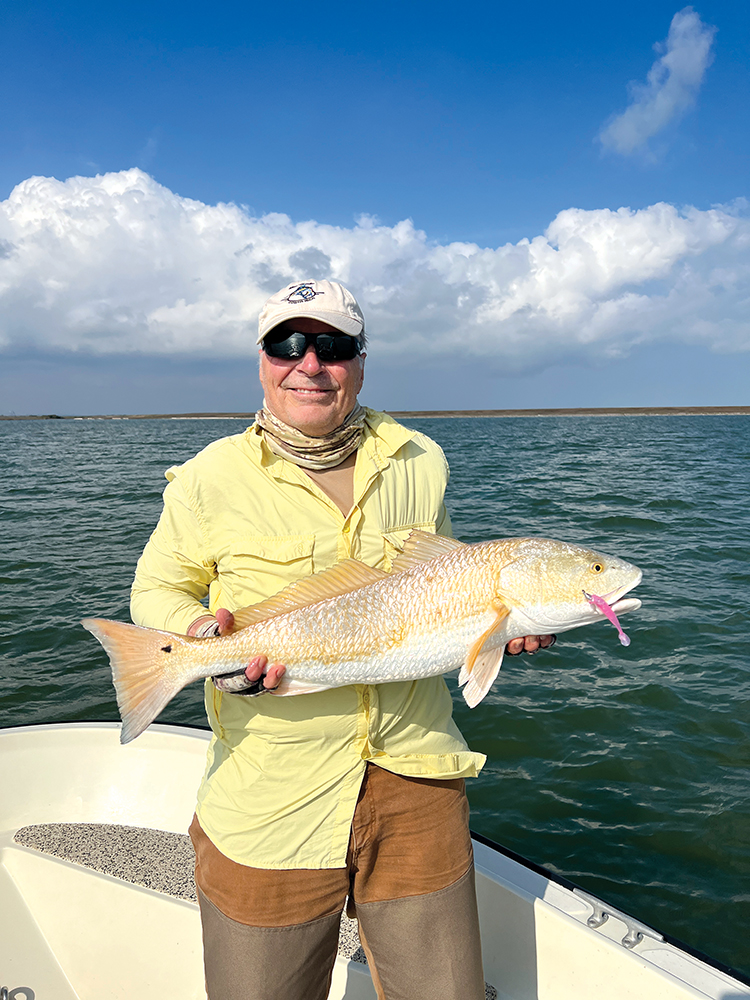
I’m guessing I was 10 or 11 years old. My cousins and I would play neighborhood football after school and on weekends. We built forts and hunted with our BB guns in the cow pastures along Dickinson Bayou. We built zip lines in the tall trees covered with muscadine grapevines behind my Great Grandma Anita’s house on Hillman Drive. I’ve made mention of it in past articles, but life growing up on the bayou really was grand. It was a special world that I wish every kid could experience.
Of all the fun stuff we did, fishing was the most exciting for me. Shocker! There was an old sunken shrimp boat at the end of the pier behind Hillman’s Café and fish house where we would all fish. Most of the time our little posse was made up of me, my cousin Hugh, and my buddy Shawn. Occasionally, a couple of other friends from the neighborhood would join us. That being said, we were a pretty tight-knit group, and I must say, not just anyone could fish off that old sunken shrimp boat.
Our bait of choice was usually dead shrimp or pieces of shrimp that had fallen through the conveyor belt that carried freshly unloaded shrimp from the vat to the scale. There were usually a few squid and other tiny critters mixed in with the shrimp. We would throw those in the coffee can with the shrimp. It all qualified as bait to us, and the croaker, sheepshead, flounder, redfish, sand trout, and hardhead catfish certainly didn’t discriminate. Once in a blue moon, one of us would catch a speck, and to us that was like winning the lottery.
It wasn’t long before I acquired a little jon boat. I made paddles out of two old cedar fence pickets. I would paddle out to the railroad tracks that stretched across the bayou. It was there that I discovered a whole new world. Not only was I now mobile enough to seek out new areas, but my dad had taught me how to throw a cast net, so now I had shad, finger mullet, and shrimp to use for bait. This was next-level stuff for me and my buddies. The more I fished, the more selective I became. A croaker was no longer good enough, and hardheads were sacrilegious. It was all about reds and trout now, and the live oyster reefs around the railroad bridge happened to be loaded with them.
I eventually graduated to a fiberglass Sears Game Fisher with a tiller-handle 9.9-horsepower Johnson Seahorse outboard. I was now able to venture out into the bay to area reefs and structures that my dad and uncles had taken me to in their boats. I remember seeing huge schools of mullet rafting over live oyster reefs and gulls working over trout that were feeding on migrating shrimp. I’m not sure if I realized it at the time, but the sights, smells, and sounds of being on the saltwater were becoming part of me. There was a sense of freedom about being on the water that nothing else compared to.
As I grew older, my love for the water never waned. When I went off to college, I was hundreds of miles from the coast, but I was able to temporarily get my fix by fishing area lakes like Fork and Palestine. I had fished for largemouth bass before, but never on this level. There’s a huge difference between fishing stocked ponds and 25,000-plus-acre lakes. I learned how to fish flooded timber, underwater creek beds, ledges, hydrilla, and boathouses while using plastic worms, crankbaits, and topwaters. I threw a few spinnerbaits too, but worms and topwaters were by far my favorites. The coolest thing I used to do was chunk topwaters as I trolled along the boathouses at night when it was calm. The sound of a five-pound bass smashing my Jitterbug was nothing short of exhilarating.
I was in East Texas for about three years before I moved back to the coast and finished college while working at our family seafood business on the bayou where I’d grown up. I bought an old 21-foot Carolina Skiff and fished every chance I could between working and going to night school. I developed an even deeper love and appreciation for using lures to catch trout and reds. I didn’t realize it at the time, but I think those few years fishing for bass helped hone my skills for the saltwater game. Kelly Wiggler shrimp tails and Jumping Minnows were the main baits of choice for me back then (mid-1980s to early 1990s).
When I graduated college, I took a job in Houston doing environmental health and safety work for a chemical company. I became pretty much relegated to fishing on weekends at that point. I couldn’t wait to get off work on Fridays and hook up the boat. I worked there for about three years, then one day my dad called and informed me that his marketing guy was retiring and he wanted me to come back to work for him as marketing director. Here I was, just establishing a career, and my dad wanted me to come back to the very industry I’d spent almost six years of my life working my way through college to get out of. He asked if I would come down after work so we could discuss it. We had a great meeting. I prayed about it and thought long and hard before accepting the job. It felt good to be back in our family business. It felt right.
We grew the business to levels we’d never seen before. Unfortunately, our success wouldn’t last but a few years, as Mother Nature had other plans. Tropical storms, hurricanes, floods, droughts—eventually they took their toll on the oyster beds, and we were forced in another direction. I told my wife that I would get my captain’s license and run some fishing trips until I could find another job in the environmental field. Fishing was good back then. I mean, it was really good. It kept me busy enough that I kept putting off my job search. That was 24 years ago, and I’m still putting it off. I never intended to become a full-time fishing guide, but I suppose it was meant to be.
I’ve been very fortunate to make a living taking folks fishing. I have bills to pay like everyone else, but most of us in this profession are doing what we do because we truly love it. The daily challenge of trying to outsmart the fish is fun, and helping clients hone their skills so they can become better fishermen is rewarding. But at the end of the day, it’s about the people I get to meet and spend countless hours with. I get to learn all about their lives. I’ve been able to watch their kids grow. We’ve shared lots of laughs together and even a tear or two at times. Some of my best friends to this day are my dearly valued customers.
My cousin and my neighborhood buddies who fished with me on that old sunken shrimp boat all have good careers with 401(k) programs. Some are even retired already. As for me—well, I’m still fishing. A lot of those reefs I used to fish are gone or have changed drastically, but we still have plenty of areas to catch fish. A croaker still isn’t good enough. Trout are king, but I don’t mind catching a few reds either. We don’t throw Jumping Minnows much anymore, and I still know how to throw a cast net. I’m right where I belong.
Now you know how I got here.