
Kid vs. Adult Fishing
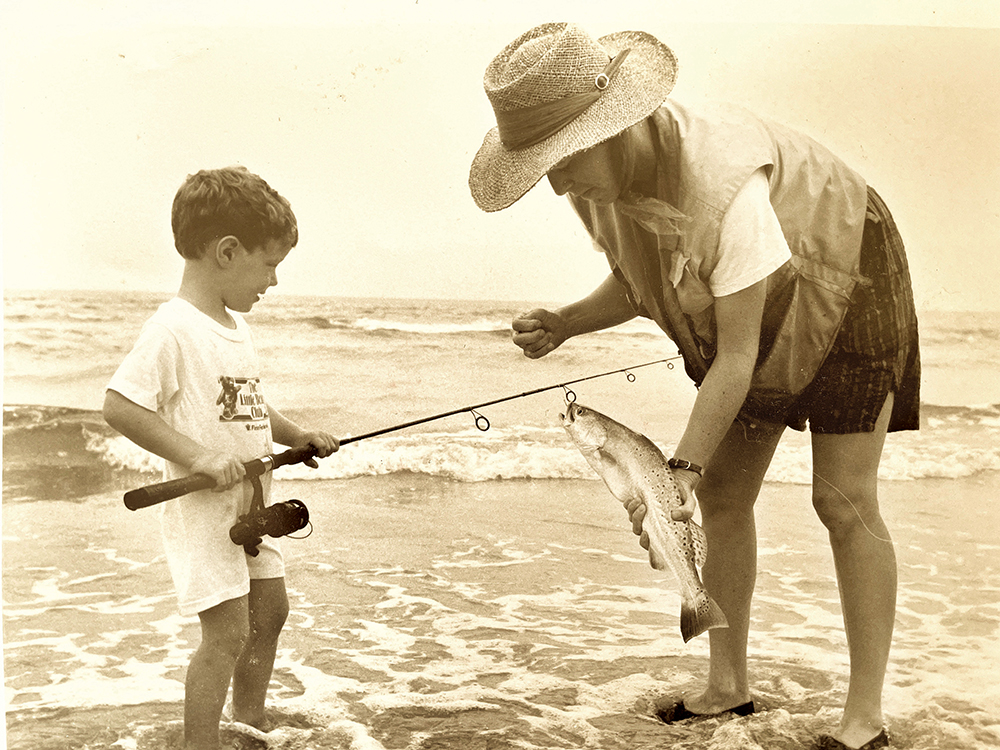
At what point should we begin taking kids saltwater fishing, exposing them to bigger fish? It can’t be pinned on a specific birthdate, but I may have pushed that boundary quite a bit. At a young age, my two boys were frequently exposed to adult fishing. They fished or rode in the boat when quite young, even climbing oil rigs offshore on two occasions (one during a glassy afternoon and the other during an approaching summer thunderstorm). They also walked the Sabine and Aransas jetties. They had to grow up fast; the Gulf wasn’t some idyllic pond with sunfish under the dock.
Living in Port O’Connor, saltwater was two blocks away and we were constantly out there. We’d pull a 20-foot minnow seine through grassy bottom off the front beach, catching small mangrove snapper, tiny sheepshead, and other critters. When we encountered floating sargassum weed out in the bay, we’d dip it out and shake it over a bucket, finding more critters, including sargassum fish. Our four-foot aquarium even held a flounder and a small rock hind grouper that lived for a year before they were released. We donated some of our catches to the newly opened restaurant called The Spot, with its big aquarium. However, the sheepshead were ill-tempered and there were complaints. So, with a tiny hook, I caught and tossed them out in the restaurant’s shell parking lot, where they quickly flew away with the seagulls. Anyway, catching small sea critters was great activity for the kids without the boat rides and whitecaps.
More often, they fished with me on regular saltwater trips in all seasons. They were fortunate to grow up before addictive smartphones hit the market, where today’s kids can now entertain themselves without ever leaving the house.
Our local big tarpon were clearly the most unsuitable fish for youngsters. We hooked a huge one, maybe 150 pounds, that tail-walked past the motor, shocking everyone. The kids dove into our handy boat cabin for shelter like someone yelled “Incoming!” in the trenches. That fish spooled us two hours later at night, because we could no longer see line on the reel. If we were battling 20-pound jacks at Pass Cavallo (back when it had 30-foot depths and swift currents) and a tarpon grabbed another line, I’d hand off the bent rod to Ian and fight the tarpon myself. Tough duty for one of POC’s fourth graders, battling big jacks without getting pulled overboard. He even caught one on Walmart tackle near the Cedars, which took more than an hour.
We did learn to leave the kids on the beach with a sitter while Amy and I fought tarpon and bull reds less than a hundred yards away in the Pass. When darkness fell, we’d park the boat in shallow water, wade ashore, and light the bonfire that the kids had built. Hotdogs and chasing ghost crabs around the fire—that was the ticket. We’d return to POC around 10:30 p.m.
Lots of memories. Like camping at the Land Cut down south one Easter weekend. Steve Qualia from Fish Trackers (who helped us tag and record so many fish) let us use his cabin on the Land Cut, and we dutifully loaded the 17-foot McKee Craft and headed south. The east wind never stopped blowing 20–25 knots, day or night. Outside the cabin was flat desert and blowing sand. A friend and I walked up and down the canal, tagging and releasing about 40 trout in two days. Amy and Ian were left in the cabin with no electricity and showed incredible patience. Amy had to hide the Easter eggs indoors. Returning across Baffin Bay and safely back at Marker 37 Marina, the locals were fretting that a young girl had just lost her arm to a shark attack in the Port Aransas surf.
The kids learned to snorkel when quite young, notably when visiting Florida and sometimes at the oil rigs offshore of POC.
When we briefly lived in Rockport, Padre Island became our go-to place. Unfortunately, brown tide arrived a month later and the bay stayed brown for years. No flounder gigging there to speak of, so we camped at Port Mansfield jetties via jonboat on opening day of duck season. Big flounder were plentiful, and I waded along, mostly leaving four-year-old Joseph in the tent by himself when he was tired of walking the dry sand beside me. Early the next morning, a north wind came up, our anchor dragged, and the jonboat drifted out to the middle of the channel, where it sat 50 yards away. No way I was swimming out there, so we just waited an hour until another boat came along and towed it back to us.
One summer morning we launched the jonboat in Padre Island’s flat surf, a few miles south of the park entrance. We’d camped the night before and a flat, green Gulf beckoned. I launched when there were no oncoming vehicles in sight and cleverly hid the detached trailer behind the tent. I thought there might be a big kingfish out there at the platforms, two miles out. We soon tied up, but there were no kings—only a school of small amberjack that swarmed around the boat, and the kids had fun handlining them. Returning, we stopped a half mile offshore and waited until there was no traffic approaching, dashed ashore, hooked up the trailer, and retrieved the boat. It was all in a weekend’s fun. You can definitely have a lot of adventures with kids and jonboats, far beyond the fishing piers and seawalls, and even teach them the basics of boat driving, wind and wave direction, and keeping a watch on the weather.
Often we had fun fishing the Padre Island surf for trout. I had good luck catching finger mullet with a castnet and then working them like a twitchbait, or using gold spoons. We could see trout in those clear waves, and if we hooked a whiting or ladyfish, they were sometimes attacked by bigger trout.
The kids were smart but also had that boating experience. When Amy and I were stranded at the POC jetties after dark, Ian convinced their rather slow, home-taught teenage babysitter that something wasn’t right. She finally called neighbor Marilyn, who quickly crossed the bay with her flounder boat and towed us back to town. No smartphones in those days—you had to think for yourself.
Our kids turned out all right. In college years, they’d take a group camping at a beach-side state park and seemed to be the only ones who knew what to pack, how to set up tents, build a campfire, and cook outdoors. Good times.
They’re now both married, live and work far away, but when they visit home, you can bet we still head out in the boat.