


Kingfish Decline
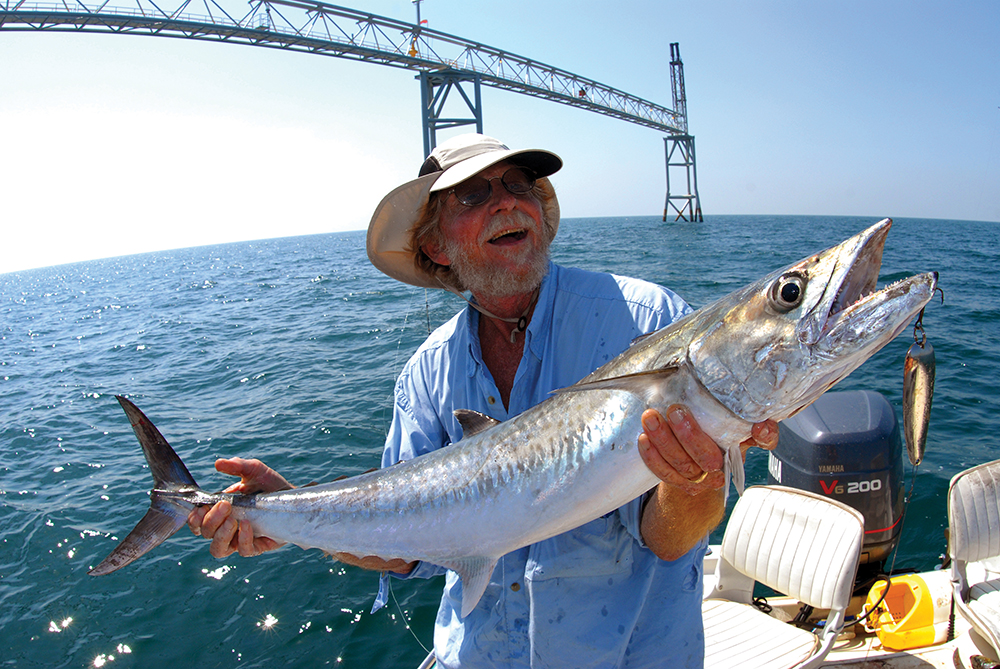
Only five years ago, kingfish were commonly caught off the Texas coast.
One item on my Christmas wish list is that kingfish in the Gulf will somehow reveal why their numbers have plummeted in the last four years. It’s pretty bad when Texas charterboat captains report catching only one percent of kingfish they typically caught only a handful of years ago. Why is this happening? Nobody knows, including biologists.
Fingers have been pointed at the loss of oil rigs offshore, but kingfish were plentiful out there before the rigs were built. The natural “snapper rocks” offshore, which were there before Columbus sailed, attracted big kingfish schools, but no longer. My favorite offshore rock, where we won tournaments, was visited by an acquaintance in Galveston years ago, a commercial fisherman. He reported taking 10,000 pounds of kingfish off that one spot, while trolling with cable and drone spoons. Today, commercial kingfish guys don’t even bother with Texas or Louisiana.
Why kingfish weren’t protected from commercial harvest decades ago is a mystery; this is a popular, sporty fish targeted by everyone from tourists to tournaments. Commercial catches never made that much money off these fish, because it took catching thousands of pounds to make a profit. The fish often had to be trucked to New York City fish markets, or ground up for chum and sold at marinas.
A wasteful fishery, at times. The “dropout” from gillnetting these fish was huge; they drown if they can’t keep swimming forward, and then drop to the bottom where they’re left behind. Today, 14 gillnet boats in Key West are grandfathered into fishing for the rest of each captain’s life. Last year they landed 650,000 pounds, caught where kings winter in the Keys. These boats use spotter planes and once brought in millions of pounds annually. When I was a teenager, a story going around was that a school of kingfish was spotted off Key West that was eight miles long.
For some reason, kingfish are still doing okay from North Carolina to Florida, while Gulf resources have crashed. Ed Walker with the Gulf’s Fishery Management Council suggests that the Eastern Gulf’s migration of kings down to South Florida may have run head-on into a big red tide between Tampa and Naples four Octobers ago, died and sank to the bottom, leaving no evidence. Those that survived may have migrated into the Atlantic after growing tired of hot water, red tides and pollution. Nobody knows for sure because dead kingfish don’t float.
They prowl open water, often following baitfish schools. Kings are a versatile fish and they’ll eat almost anything. My first kingfish many years ago was caught with a handline trolled behind a slow party boat returning home. Inside that 14-pounder was a single mantis shrimp, which lives on the bottom. Kingfish schools have even been seen jumping way offshore by tuna longline boats in deep blue water. Perhaps these fish have moved farther offshore seeking cooler water, but nobody knows for sure.
Information on these fish and their movements today may never be known, because you have to tag-and-release lot of them. We marked a couple hundred back in the late 1980s with shoulder spaghetti tags, but some of that data has been lost, the blood-spattered tag info cards accidentally thrown out, the info left entirely on a computer list that can be hacked or deleted. When I worked at CCA, our fish tagging fund was redirected into another direction, at a time when kingfish were plentiful and easily tagged.
The National Marine Fisheries Service (NMFS) also had us putting belly tags in kingfish in 1985, but not sure where that data is today. This year there have been 545 layoffs or accepted buyout offers to retire from NOAA, whose fishery arm is NMFS. However, the Gulf Council is still around and I recently talked to veteran fisherman and member Ed Walker.
“No one really knows what’s happened to kingfish,” says Walker. “Researchers, biologists, guides, recreational, tournament pros and veteran commercial operators all have theories. One thing is certain: landings in the western Gulf have plummeted. Commercial catches are down 70% in Louisiana and Texas where it was once a thriving fishery. Quite a few of the commercial kingfish guys in Texas have quit fishing altogether. West Florida has seen big declines of this species as well. That’s documented.
“One thing that is not suspected is overfishing. There was no notable change in recreational or commercial landings prior to this mysterious disappearance of Gulf kingfish. Some tournaments have now folded and others along west Florida are seeing dismal catches. Some haven’t been able to put 10 fish on the leaderboard.
“One theory put out by NMFS researchers is that perhaps record high water temperatures in the northern Gulf where these fish spawn in the summer has had a negative impact. When first hatched, kingfish larvae are highly sensitive to water temps and may not be surviving. That’s just one theory, though. There’s some evidence of that, but it’s thin and there have only been small samples taken.
“Sharks have become a problem. Some days, charter captains can’t get a kingfish to the boat without it being chewed up. In Florida, I’ve only seen this once in clear water in the past few years, but a football field-sized school of kingfish on the bottom was completely surrounded by sharks. However, sharks and kings have survived together for thousands of years.
“Some have suggested that kingfish have shifted their preferred habitat to deeper offshore waters and anglers now encounter them less. Lower baitfish populations is another topic, along with loss of oil rig structures off Texas and Louisiana. But then, Florida has never had oil rigs.
“Today, the only sector left in the Gulf that’s filling its harvest quota is the Key West gillnet fleet. Others have all come up short. The western Gulf commercials used to catch their limit in 2-3 months, but now they don’t catch half of it in an entire year.
“A king mackerel stock assessment is currently underway and expected to finish in 2026. The Gulf Council has voted to postpone consideration of management changes until it’s completed. It’s worth noting that mackerel species can be cyclical and do experience historical, natural ups and downs in abundance. Hopefully we’re seeing a natural off-period and these fish will make a comeback on their own,” says Walker.
One thing for sure, if kingfish numbers don’t rebound soon, it will take drastic harvest changes to maybe turn things around. Closed seasons would help, with anglers redirecting their efforts. Gamefish status would certainly help and it’s a shame that wasn’t done with this popular fish 40 years ago. In 1985 commercial guys from Florida moved to Louisiana and hauled away tractor trailer rigs full of huge kingfish up to 75 pounds, the big female spawners. Hauled them away to New York.