

Looking Forward to October Opportunities

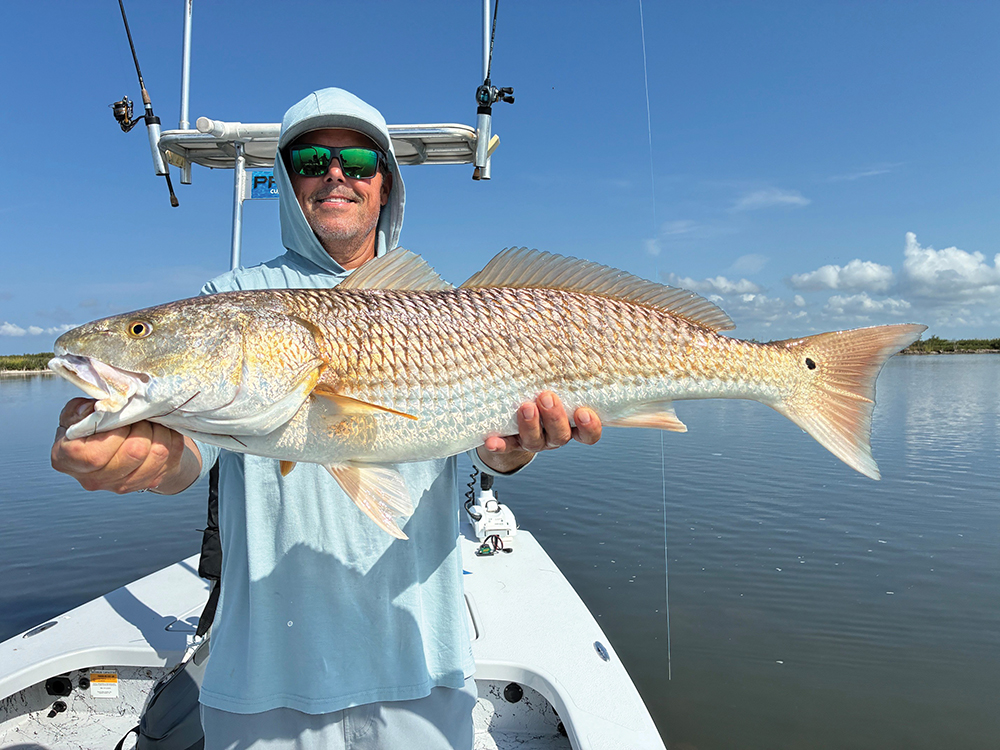
Let’s start this article off by discussing our coming situation on the Texas Middle Coast. Our fall bull tides will soon be here; this increase in tide will level out to a point, but usually remains higher than what we consider normal, right until the first big cold front. Weak cool fronts that happen in late September and early October usually just move water from the north end of our bays to the south end, not really driving much water out of the bays to the gulf. Once the weak north winds switch back to southeast, the bay levels itself off again. Many changes occur each year when this comes about. The easiest change to spot is the abundance of redfish that seem to ride this tide into our bay system. Coming off some tough summer redfishing, this is a welcome sign. Not only are our back marshes thriving with scattered reds, but the number of small groups we have seen in recent days is proof that fall is approaching.
According to past logbooks, we can see freezing temperatures before or around Halloween. If we do get a big cold front like this the bull tide rushes out of the bay, and this brings one of our bay areas biggest changes. Most notably is the white shrimp migration that gets dumped out of the Guadalupe River Delta region. When this occurs, tons of shrimp can be spotted across the bays, migrating to the gulf. For us out of the Seadrift area, this is seen to occur across the vast system of oyster reef that lie in the northern portions of San Antonio Bay. We discuss this on some of the navigational trips we run with clients. I tell them, if you see shrimp popping everywhere on a reef structure, and so thick they seem likely to jump in the boat, you better stop and fish it. Trout will be stacked and gorging on them.
Some of the not-so-obvious signs the fall is approaching are the migration of mullet through the passes to the gulf where they spawn, the physical size of baitfish, and the sheer numbers or rafts of bait we begin to see. With these changes occurring, our lure selection will also start to change during the month of October. We will start throwing bigger soft plastics, bigger topwaters and, under the right conditions, Corkys and MirrOdines will come into play. Many areas we fished all summer are still very fishable in the month of October, but weather can dictate the days we get to fish them. As we have witnessed in the past, cold fronts during this month can trigger some aggressive trout feeds and several big trout will be caught, especially on the pre-front conditions.
Sight-casting reds is a lot of fun this time of year. Winds can be more predictable, but the tricky part is playing the higher tides. Now, I know what you’re thinking, the water is high, the reds will push further back into the marsh. In my experience, it isn’t that the reds push further back; it’s that we can finally get to them. Throughout the 30-40 miles of back-marsh on the barrier island, there are resident fish that never leave it, and they know every hole, creek, and refuge spot to go to when waters do get low and hot. This is the fun part, creeping into these areas via trolling motor because most of the time the big motor simply spooks them too much. When mother nature allows us to fish in these areas, I tell customers we are going to get lost in the marsh. Trolling these flats and depressions for hours around islands and sandbars, by the time you look up to leave you’ve lost sight of the way in. It does take some years to learn some of these deep back-marsh areas but is well worth the time to fish it when we can.
I have said it for years; this is absolutely the best time of year to be on the water. Fall/winter fishing has never disappointed, and I know we are all looking forward to cooler weather. If October brings us a few cold fronts, we will see a shift in feeding patterns that can lead to quality fish being caught, and an open door to areas that get very little pressure. Looking forward to it…
Captain Nathan Beabout