
Mansfield Report: January 2026
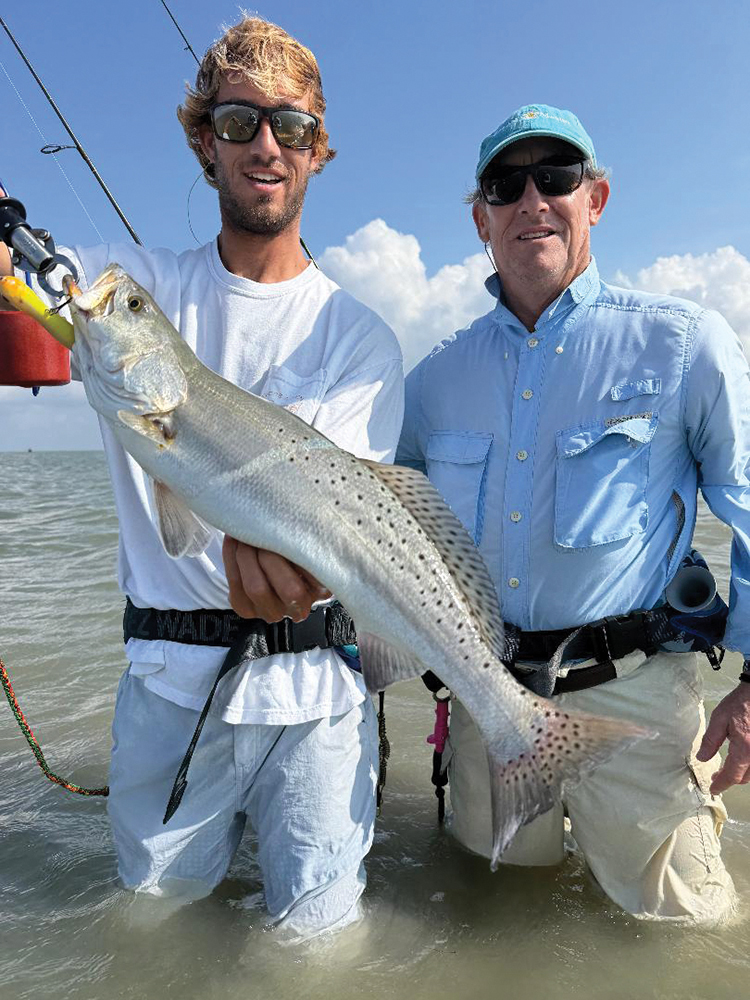
Greetings from Port Mansfield, and Happy New Year! 2025 went by in a flash, and it’s hard to believe we’re already stepping into 2026. That said, I’m optimistic—for this year and the years to come—especially for our trout fishery here in the Lower Laguna Madre.
Winter arrived late this year. Believe it or not, we were still wet-wading through Thanksgiving break and even a couple of days beyond. But as temperatures finally dropped, we began noticing clear changes in our fish—especially trout—in both appearance and behavior. The physical transformation of a spotted seatrout this time of year is remarkable. Just a few cold snaps can pack noticeable weight onto these fish. In my observation, a trout can easily gain half a pound in a short window of cold weather while expending very little energy. The bigger the trout, the greater that weight jump can be.
Let’s look closer at that. When a trout eats a sizable mullet and fully digests it, the fish retains valuable protein and fat. During cold stretches, they hold and build weight because they aren’t burning much energy. That’s exactly what happened two Januarys ago when I caught that 11-pounder a hair over 31 inches. The pattern favored the fish, I was in the right place at the right time, and the trout was both well-fed and genetically gifted.
With another late start to winter, I believe we could see that scenario repeat itself—maybe even better. A twelve- or thirteen-pounder is absolutely within reach this season. I’ve already seen promising fish in our waters, and with an 11-pounder recently on the board, the potential is real. Achieving it will require close attention to every variable, plenty of time on the water, and a little luck. The next few months will be prime time.
Water levels have fluctuated over the last several weeks with each passing norther, and the fish have adjusted accordingly—unless the temperature drop was extreme. When it is, trout will hold steady until the sun warms the flats, and then they start moving again. Don’t be surprised to find them in two feet of water; during winter they often sit in that depth throughout most of the bay. If you find them grouped in a series of potholes, odds are they’re sitting in similar potholes miles away. As temperatures drop overnight, they drift deeper, then re-emerge the following days. If you have time to follow this pattern, you’ll be rewarded with exceptional opportunities.
As for lures, a wide range works—soft plastics, topwaters, and hard and soft subsurface baits. Choosing what to throw depends heavily on conditions. With no wind and water temperatures rising from the low 60s, I’m throwing a topwater. One big reason: distance. I can launch a Mansfield Knocker a mile, cover plenty of water, and work it fast or slow across potholes or mullet swirls.
When it’s windy and murky, with water temps in the high 60s to low 70s, I’m switching to plastics such as a Wigalo or Willow Tail Shad. When the water is “trout green” or trending clear, I’ll work a Ball Tail Shad. Slow-sinking twitchbaits remain great options on calm days and even some windy ones, as long as floating grass isn’t too bad.
In my last article I talked about keeping lure selection simple and included a reference photo. Everything above applies just the same. Here in the LLM, shallow water can warm or cool more than ten degrees in a single day. That vast expanse of skinny water demands that anglers stay flexible, prepared, and open-minded about what to pick up and when.
Until next time, remember—fresh is better than frozen.