

Match the Hatch: Seasonal Variation in Red Drum Diet
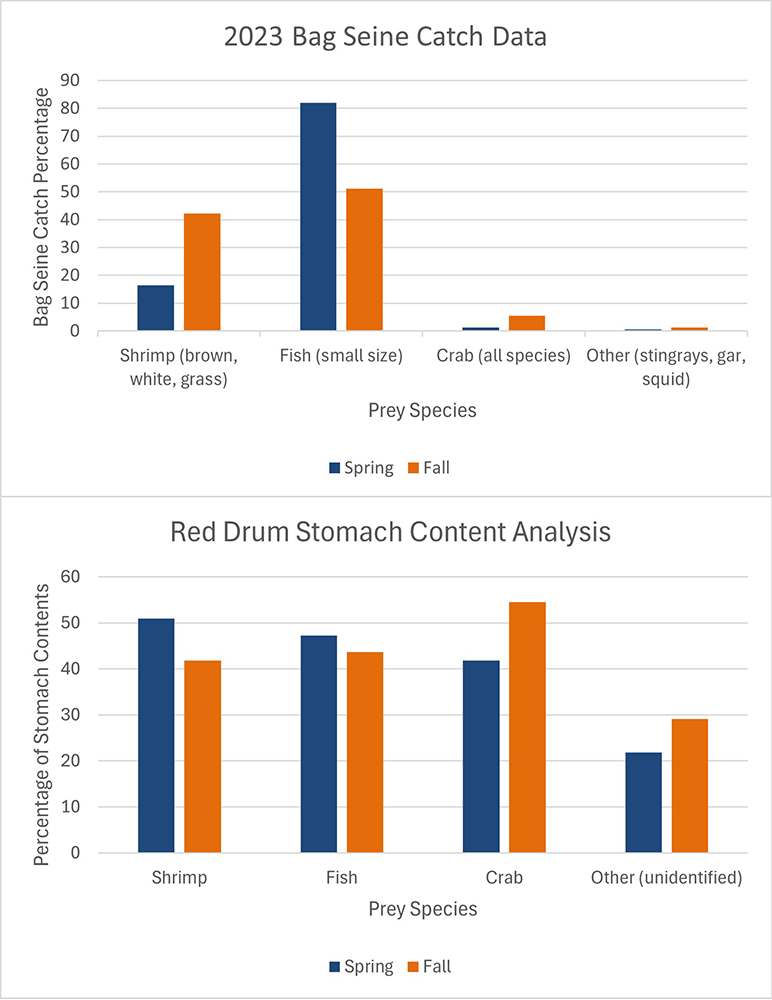
Figure 1: 2023 bag seine catch data showing seasonal differences in prey availability in Galveston Bay.
Figure 2: Seasonal differences in the diet of red drum from Galveston Bay based on stomach content analysis.
Do you ever wonder what redfish are eating and how that knowledge might help you catch more of them? Red drum, also known simply as “redfish,” are one of the most prized sportfish in Texas. They are widely known by anglers for their hard-fighting ability and excellent table fare. Back in the 1970s and ’80s, red drum numbers were on a sharp decline, but thanks to management and conservation measures, their populations have since rebounded. Today, they are considered one of Texas’ greatest conservation success stories.
Red drum are opportunistic predators, meaning they feed on whatever is most abundant at the time. Understanding what’s on their menu not only tells biologists how energy flows through an ecosystem, but it can also help anglers determine which baits are most effective throughout the year. A research project conducted in the late 1990s by the Texas Parks and Wildlife Department’s (TPWD) Coastal Fisheries Division examined red drum feeding habits in Galveston Bay. Results suggested that red drum diets shift as the seasons change and different prey species become available. With the bay’s constantly changing environment over the years, it was time to revisit the big question anglers and scientists are pondering: how do red drum diets change with the seasons?
To find out, TPWD’s Galveston Bay Ecosystem Team partnered with Texas A&M University at Galveston to study red drum feeding habits in Galveston Bay. The goal was to identify seasonal diet patterns using stomach content analysis and bag seine catch data from TPWD’s Marine Resource Monitoring Program. This long-term program evaluates the health of Texas marine ecosystems through various sampling methods that track changes in marine organism populations over time.
Stomach content analysis was performed on juvenile-to-adult red drum collected from gill nets set throughout the Galveston Bay system during spring (April–June) and fall (September–November) of 2023. Bag seine catches documented which prey species were available in the bay, while stomach content analysis revealed what red drum were actually eating.
Red drum stomachs were dissected, and contents were identified to the lowest taxonomic level possible (e.g., species). Three distinct prey categories emerged: fish, shrimp, and crabs. Common fish species found included Atlantic croaker, Gulf menhaden, pinfish, and mullet. Some prey items were too digested to identify and were classified as “unidentified species.” Shrimp were present but grouped together due to advanced digestion. Most crabs observed were blue crabs, with smaller numbers of stone, mud, and fiddler crabs mixed in.
Bag seine data revealed a clear seasonal shift in available prey (Figure 1). In spring, small baitfish dominated the samples, accounting for roughly 80 percent of the catch. These included Gulf menhaden, Atlantic croaker, pinfish, bay anchovy, and spot. Brown shrimp were also abundant during spring. Shrimp species (white, brown, and grass shrimp) made up the remaining 20 percent of the catch, with brown shrimp being most dominant, while crabs were scarce.
By fall, the trend shifted dramatically, with crustaceans becoming more abundant. Shrimp accounted for approximately 45 percent of the catch, crabs about 5 percent, and fish the remaining 50 percent. The fish community also changed, shifting from mullet, croaker, and menhaden to more anchovies, mojarras, and silversides.
When stomach contents were compared to prey availability, an interesting pattern emerged (Figure 2). Red drum consumed roughly the same proportion of fish in both spring and fall—about 45 percent of stomachs contained fish—but their crustacean preferences shifted. Shrimp dominated their diet in spring, while crabs became more common in fall. The slight increase in crab availability during fall bag seine samples likely contributed to their increased importance in red drum diets during that season.
Overall, red drum maintain a balanced diet of fish and crustaceans year-round, adjusting based on availability. Even when baitfish numbers declined in fall, red drum continued to rely heavily on them as a primary food source, though the increased presence of crabs clearly influenced feeding behavior.
So, what does this mean for anglers? Fish, shrimp, and crab presentations can all be effective year-round when targeting redfish. However, adjusting tactics seasonally may improve success—try shrimp under a popping cork in spring, then switch to curly tails dragged slowly along the bottom or other crab-style presentations as fall approaches. No matter the season, remember to match the hatch.