


Octopuses Make Use of Other Creatures
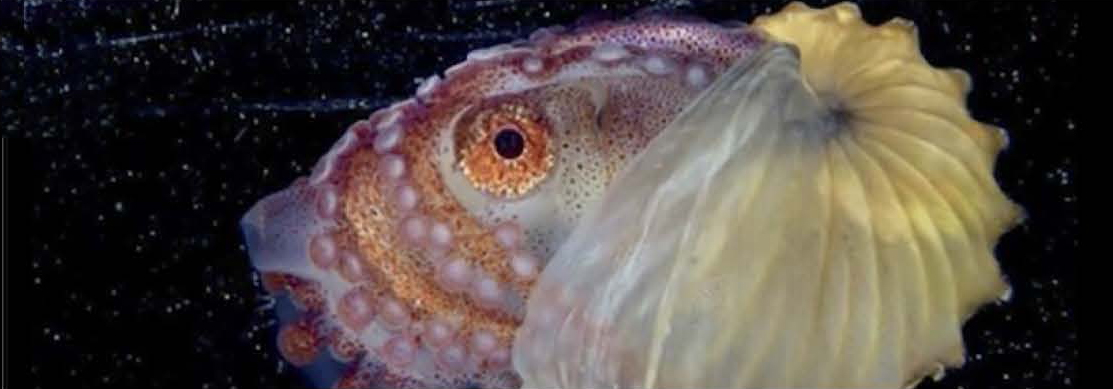
Octopuses use other animals for their own benefit. Argonaut
octopuses, for example, have been observed hitching a ride on
varous creatures, but also other floating objects. Credit: Songda Cai,
Wikimedia Commons, CC BY-SA 4.0.
Few creatures under the sea may be as intelligent, creative, and yet still
mysterious as octopuses. For example, scientists have known for nearly
two decades that octopuses can use tools, which can be an indicator
of higher animal intelligence. In 2009, researchers discovered that the
veined octopus off the coast of Indonesia would collect and transport
coconut shells across the ocean floor to construct shelters to hide in.
Since then, biologists have found that octopuses — even baby ones — are not above using other organisms for their purposes as well. Researchers in Portugal once recorded an instance of a species known as the seven-armed octopus hitching a ride on a jellyfish near the surface of the ocean off the coast of Terceira Island in the mid-Atlantic Ocean. And the octopus wasn’t a passive passenger either. It appeared to be using the jellyfish as protection, steering the jellyfish like an armored tank and directing the tentacles toward perceived threats, including the scuba divers watching it.
Another species of octopus, has also been suspected of using jellyfish not only for defense, but even for offense. As far back as 1963, scientists observed a blanket octopus carrying around fragments of tentacles from the venomous Portuguese man-of-war. They hypothesized that the octopus used the tentacle pieces both to defend itself and as a weapon, and possibly even as a way to capture food.
But not all octopus exploitation of jellyfish is necessarily so sinister. Argonaut octopuses, appropriately named for the famous mythological voyagers who journeyed with the Greek hero Jason on his quest for the Golden Fleece, have frequently been seen riding jellyfish. But argonaut octopuses aren’t picky. They have also been seen cruising along on plastic trash, leaves and other plant debris, and hitching a ride with animals besides jellyfish, such as crustaceans, fish, mollusks, and even other argonaut octopuses!
Since then, biologists have found that octopuses — even baby ones — are not above using other organisms for their purposes as well. Researchers in Portugal once recorded an instance of a species known as the seven-armed octopus hitching a ride on a jellyfish near the surface of the ocean off the coast of Terceira Island in the mid-Atlantic Ocean. And the octopus wasn’t a passive passenger either. It appeared to be using the jellyfish as protection, steering the jellyfish like an armored tank and directing the tentacles toward perceived threats, including the scuba divers watching it.
Another species of octopus, has also been suspected of using jellyfish not only for defense, but even for offense. As far back as 1963, scientists observed a blanket octopus carrying around fragments of tentacles from the venomous Portuguese man-of-war. They hypothesized that the octopus used the tentacle pieces both to defend itself and as a weapon, and possibly even as a way to capture food.
But not all octopus exploitation of jellyfish is necessarily so sinister. Argonaut octopuses, appropriately named for the famous mythological voyagers who journeyed with the Greek hero Jason on his quest for the Golden Fleece, have frequently been seen riding jellyfish. But argonaut octopuses aren’t picky. They have also been seen cruising along on plastic trash, leaves and other plant debris, and hitching a ride with animals besides jellyfish, such as crustaceans, fish, mollusks, and even other argonaut octopuses!