
On the Hunt: Acoustic Research of Gulf-Wide Migration Patterns of Tripletail and Other Gamefish Species
It starts in the early summer, as spring winds begin to calm. Crossing the MLK bridge onto Pleasure Island, I look out at Sabine Lake to see the morning sun peeking over the horizon, revealing water as smooth as glass. Excitedly, I think to myself, ‘today is a perfect day.’ Arriving to work, the rest of the Texas Parks and Wildlife Department’s (TPWD) Sabine Lake field crew and I begin loading the tagging gear and filling ice chests, preparing for another hot summer day in Southeast Texas. After launching our boat, we pull up on a bank in the Sabine Lake to cast net our bait for the day. With our feet wet and hands salty, we head out of the jetties. With the end of spring behind us, the muddy outflow of the Neches and Sabine Rivers begin to slow. The prevailing gentle south winds typical of summer, allow the tides to bring in beautiful light blue water to the nearshore Gulf.
Cruising the beach line, all eyes are peeled. We are looking for Tripletail, Lobotes surinamensis, which at first glance, would appear to be debris floating near the surface of the water. After searching a few miles of coastline, our spotter calls for the captain of our boat to stop the outboard. As the fish floats lazily on the surface of the calm water, we inch closer and take our shot. The first cast flies wide; the approaching boat startles the fish out of its relaxed posture, and it dives out of sight. But after a few moments, patience pays off and our quarry reappears a few yards away. Undeterred, we try again and this time persistence wins the day—fish on! This fish puts up a good fight but is shortly pulled onboard the boat.
Quickly we prepare to tag the fish, while first making it comfortable with a moist towel over its head and its gills submerged in water. A member of the crew records water temperature, salinity, dissolved oxygen concentration, and GPS coordinates, which is standard operating procedure for all TPWD sampling. Then the unique identification numbers for both internal acoustic and external spaghetti tags are recorded. After this brief preparation, the fish is measured. Next, using sterile surgical tools, a small incision is made in the gut cavity where the acoustic transmitter tag is inserted, which will send out a signal that is detected by stationary acoustic receivers. After ensuring the tag is properly in place, the wound is stitched closed with sterile surgical grade sutures. Finally, the external tag is inserted near the dorsal fin, and the fish is allowed to rest in an oxygenated holding tank until it is ready to be safely released.
The Fish and the Study:
Tripletail have many common names, often dependent on the region (e.g. Buoyfish, Black Perch, Flasher, Sleepfish, etc.), referencing their laid-back lifestyle and tendency to aggregate without much movement around structure or floating objects. These fish grow quickly, reaching sexual maturity within their first year with a lifespan of around seven to ten years. Records for some of the largest individuals reach 40 inches (one meter) and weigh nearly 45 pounds (20 kg). They are equipped with pronounced anal and dorsal fins, which, in addition to their caudal fin, form a tri-lobed shape that allows them to exhibit explosive movements, contributing to a robust fighting spirit. Although there is no commercial market for tripletail in the Gulf States, tripletail have become highly sought after by recreational anglers because they are an exciting fish to catch, and not to mention, delicious table fare.
Though tripletail can be found globally, many aspects about their life history remain uncertain. Tripletail have remained one of the lesser-known species of sport fish inhabiting Gulf waters and were not classified as a game fish by TPWD until 2006, when a 17-inch minimum size and three-fish bag limit were established to prevent commercial harvest.
Tripletail residency in coastal Gulf water begins during summer months when they appear nearshore, and ends with their emigration from shallow coastal habitats, as waters begin to cool. Although migratory patterns of tripletail have been observed along the Atlantic coast near North Carolina and Georgia, little is known about where Gulf populations of tripletail go when winter approaches.
Acoustic tagging is a way to track individuals of a species in the Gulf as well as within and between Gulf estuaries. Although TPWD’s tagging effort of Atlantic tripletail first began in 2025, TPWD, along with other state agencies and universities across the Gulf Coast, will be undertaking a new multi-state collaborative research project in 2026 funded through the National Marine Fisheries Service and the Gulf States Marine Fisheries Commission, that involves tagging tripletail and cobia, Rachycentron canadum. Cobia grow fast, reaching sexual maturity in around two or three years. They are a large pelagic species that can grow to up to six feet in total length and can live for up to 100 years. They are strong, aggressive predators making them exciting fish to catch for recreational anglers. It is known that cobia are a migratory species that move away from shallow coastal habitats in the cooler months. However, it is currently unknown where these fish go during their winter migratory period.
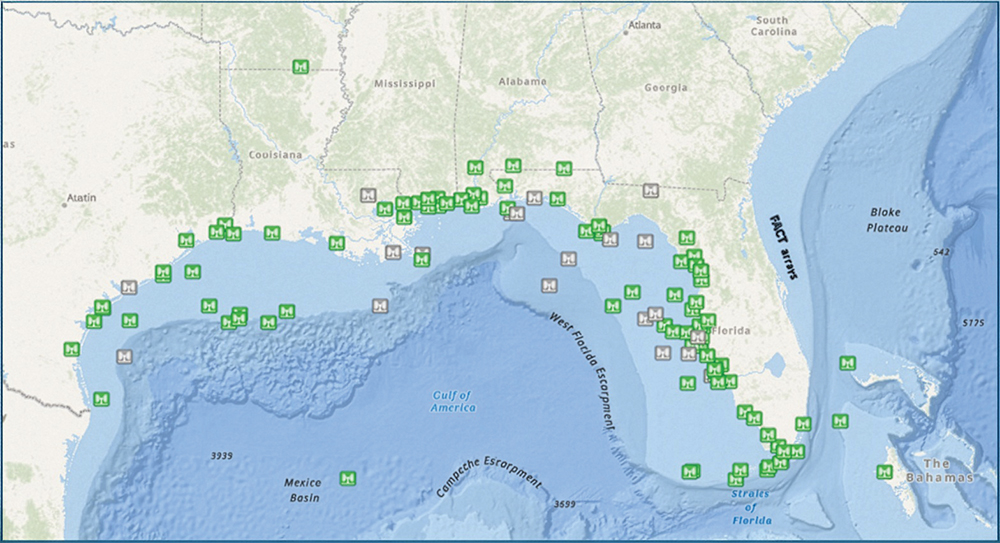
Both of these species will be tracked throughout the entire Gulf Coast of the United States through the research network called the Integrated Tracking of Aquatic Animals in the Gulf (iTAG). The iTAG receiver arrays are set up along coastal waters and estuaries of every state in the US Gulf Coast region, of which; TPWD’s existing receiver arrays are an integral component. Each array consists of several individual recording devices that will receive a tagged fish's unique acoustic signal when it swims within ~0.5 miles of the device. A more complete understanding of both species migratory patterns and habitat preferences will emerge when detections are examined over multiple receivers and arrays. The unique cooperation of this study, including its large-scale geographic coverage, will provide valuable data to inform Gulf Coast conservation efforts and will facilitate cooperation between interstate agencies and the scientific community.