

Plankton to Predator: Inside the Hatchery Effort to Restore Southern Flounder
Southern flounder are a highly sought after sport fish on the Texas Coast, but in more recent years have experienced declines across their range in the Gulf and up along the Atlantic coast. With inconsistent and warming winters, this species is experiencing higher male sex ratios from spawning events in the wild. These environmental conditions mounted with the popularity among fishermen makes them a concern among conservationists and play a role in their range wide declines.
To help address these concerns and better manage the species’ natural population, the Texas Parks & Wildlife Commission implemented stricter fishing regulations in 2021. The current daily bag limit for southern flounder is five fish per day, but the most impactful change in recent regulation has been the annual fishing closure. This closure currently lasts from Nov. 1 to Dec. 14 and helps prevent the harvest of mature females during the spawning migration period.
Alongside progressive fishing regulations, stock enhancement has been a useful tool to help alleviate the decline of wild populations. TPWD’s Coastal Fisheries Division Stock Enhancement Program has been working towards replenishing this species since 2009, both at the Marine Development Center (MDC) in Corpus Christi and at Sea Center Texas (SCT) in Lake Jackson. These hatcheries have developed a method of spawning adult flounder to produce offspring which are then stocked into Texas bays to help supplement natural populations. To date, 1.4 million post-metamorphic juvenile southern flounder have been released into the wild from these hatcheries!
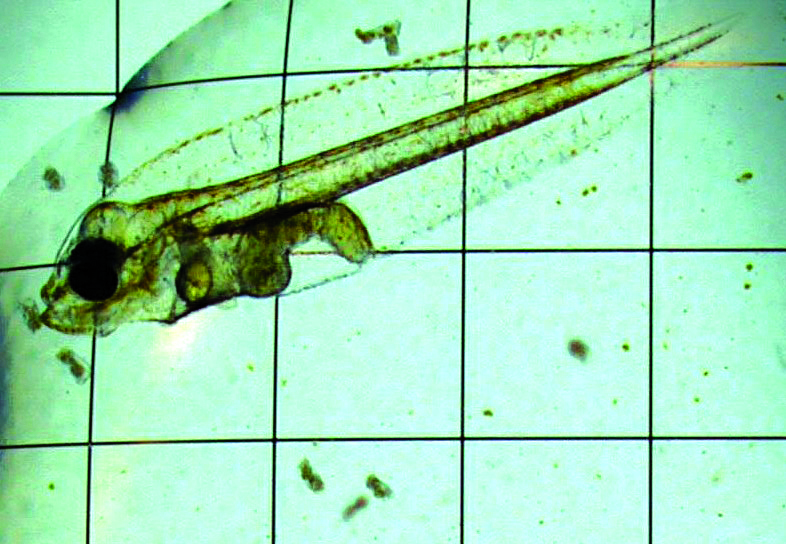
To ensure proper growth and development of southern flounder in a hatchery setting, water quality parameters must be monitored. Eggs are incubated in fiberglass tanks directly after fertilization and set with a proper saltwater flow rate that ensures correct temperature, oxygen levels, and pH for the development and hatch out. Since the eggs will not survive if water temperature is too warm or if there is not enough dissolved oxygen available, this water flowing through the incubator is vital to maintain stable water quality. Once the eggs hatch, a yolk sac from the egg provides nutrients to the growing fish for the first three to five days, depending on temperature. The warmer the temperature, the faster the absorption. Once the yolk sac is fully absorbed, the eyes, mouth, and digestive system are all developed and the fish is ready for live feed. Proper temperature, oxygen, and pH must be monitored and maintained throughout early life stages and continuously as live feed is offered.
To grow southern flounder in the hatchery, a live food source of rotifers, Brachionus plicatilis, must be available to offer in high densities daily. Rotifers are a microscopic zooplankton found in abundance in warm brackish waters. Their small size makes them the perfect candidate for first feeding of many larval fish. Live rotifers are sustainably grown, or cultured, because females will clone themselves and continue populating even when large amounts are removed and used for feed. Culturing live rotifers in large volumes is a challenge and a bottleneck for the growth and survival of southern flounder within their first 17-20 days post hatch. Southern flounder will spend their entire time at the hatchery in incubators, so providing the proper nutrition is critical to survival.
To maintain optimal growth, rotifer cultures are moved and rinsed every three days. This new water helps clear debris from the cultures and maintain a healthy pH which is important for rotifer growth. Ideally, a minimum of three tubs are cultured at any given time to prevent disturbing cultures as they replenish between moves. Every day, one tub is rotated out and used to prepare feed for the incubators, then reset for another three‑day cycle.
Some challenges rotifers can face are unfavorable conditions, such as low pH or too much debris which can cause ciliates to take over the culture. Ciliates are a single-celled microorganism that can develop with excess debris or food and will compete with rotifers for tub space and feed. This can create a mortality event in the rotifer culture leaving no viable food for the fish.
During their early life stages, southern flounder lack the ability to digest a commercial diet, a manufactured feed that provides balanced nutrition, which makes the live rotifer feeding critical to survival. Once the fish are three to five days post hatch, they are ready for that first offering of rotifers. Each incubator of fish requires a minimum of 13 million rotifers every day and MDC has 20 incubators, which can lead to an aggressive daily rotifer demand. Many incubators may also be stocked with heavier spawns which leads to a higher feed demand than the minimum. Biologists assess rotifers remaining in incubators every morning to determine how many should be fed each day.
Around the 17-day post hatch mark, the southern flounder are offered a larger food source that is much more reliable than rotifers, Artemia (brine shrimp or sea monkeys). What makes these more reliable are the abundance and ease of hatching. This species is not cultured for extended use. Cysts, or dormant Artemia eggs, are hatched overnight for feed the next day. The unhatched cysts and egg casings are separated from the live nauplii, or young Artemia, which are enriched with additional nutrients and fed to the incubators. The challenge with feeding live Artemia is the introduction of a new feed type to the fish. This process needs to be done slowly enough to not overwhelm the system, as they can outgrow the fish quickly, but also heavily enough to be a viable option for them to consume.
The Artemia will be visible in the guts of the fish as they continue to grow and undergo metamorphosis. During metamorphosis, southern flounder’s eyes will migrate to the left side of the body and the gut will elongate as the body begins to flatten. Once post-metamorphic, the juvenile fish will settle on the bottom or sides of the incubators. This process typically occurs about 30-45 days post hatch. At this point, the juveniles are 10-20mm and ready to be released into the wild.
Challenges among southern flounder larviculture are extensive, but lack of food in the early developmental stages has proven to be the most detrimental. If rotifer cultures crash, or have massive die off, incubators are susceptible to high mortality events due to lack of food. Over the years, live feed growth and management continues to be the largest hurdle in flounder production, constricting the actual output of juveniles released. However, identifying the problem is beneficial moving forward, as increased effort and attention to the rotifer cultures can help overcome that bottleneck. Many improvements have already been implemented to increase rotifer culture stability, including temperature control, vessel type, extensive staff training, and more strict protocols. Overall, these hatcheries aim to continue their efforts and increase the number of flounder released each year!