
Restoring Wild Oyster Stock Through the S. Reed Oyster Buyback Program
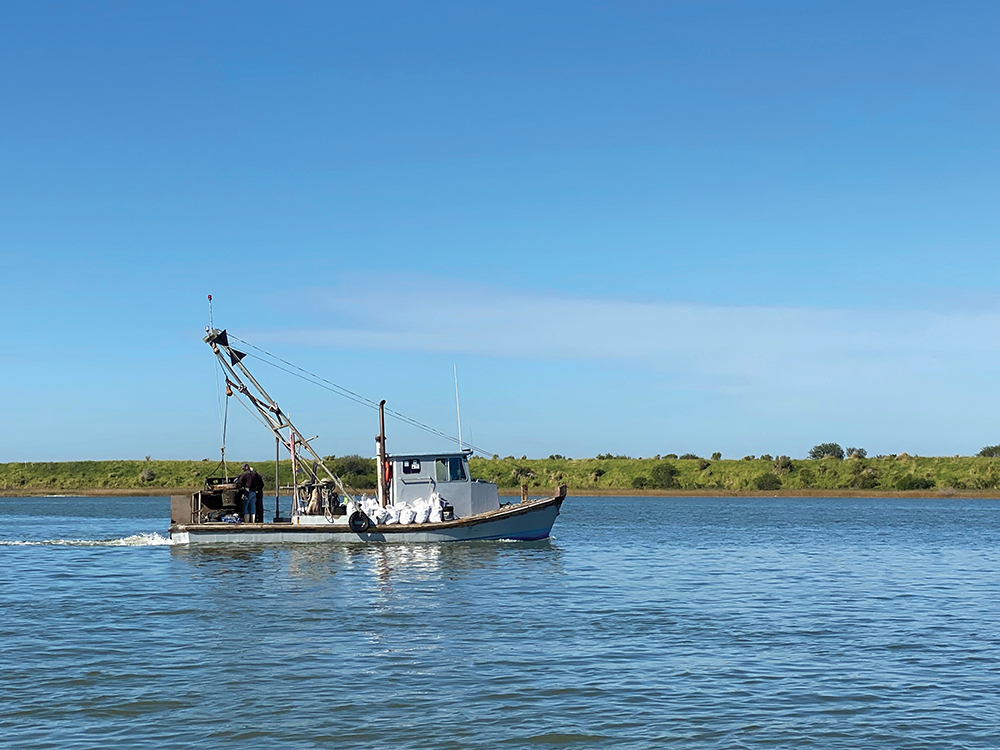
The most recent round of Oyster License Buybacks yielded an astonishing 112 licenses being offered for retirement.
This year, during the ninth round of the Commercial Oyster Boat License Buyback Program, the Texas Parks and Wildlife Department (TPWD), with the help of key partners, bought back and retired an astonishing 112 commercial oyster boat licenses. The purchase and retirement of these 112 licenses will ultimately result in a 21 percent reduction of all oyster licenses in Texas.
Due to the negative impacts of hurricanes, droughts, floods, overfishing, and other habitat pressures, oyster fishing in Texas continues to decline significantly. As a result, the state’s commercial oyster fishery has become overcapitalized, with more licensed oyster boats harvesting from public reefs than the fishery can sustainably support. To help stabilize oyster fishing efforts and support healthy fisheries stock in the commercial oyster industry, TPWD’s Coastal Fisheries Division established the Commercial Oyster Boat License Moratorium in 2005, following the passage of Senate Bill 272 in the 79th Texas Legislature, whereby no new oyster licenses were issued by the department.
Through the passage of House Bill 51 in the 85th Legislature, the Coastal Fisheries Division established a commercial oyster boat license buyback program in June 2017. After receiving authority from the Texas Legislature to “buy back” oyster licenses that same year, TPWD held its first official commercial oyster buyback round in 2018. Although the newest buyback initiative solely relates to oyster licenses, the department had previously established commercial buyback programs for inshore shrimp, crab, and finfish fisheries, which had also been under license moratoriums since 2005 or earlier.
Like the buyback programs established before it, the oyster buyback program offers willing license holders a special opportunity to exit the fishery voluntarily, helping reduce pressure on wild oyster stocks and oyster reefs. The program’s initial eight rounds, which ran from 2018 to 2024 (with license year 2021 offering two buyback rounds), operated like a reverse bid auction, where sellers bid the prices at which they were willing to sell their licenses. Only a total of three oyster boat licenses were bought back during those eight rounds.
This year, however, TPWD switched gears and tried a new approach.
After receiving feedback from the oyster industry and key stakeholders on how to improve the program’s effectiveness, the department offered a fixed buyback price for each license instead of using the reverse-bid process. This year’s unprecedented buyback round offered a fixed purchase rate of $30,000 per license—made possible only through outside philanthropic support.
To help raise funds for this year’s buyback initiative, TPWD partnered with the Texas Parks and Wildlife Foundation (TPWF) to create a public-private partnership and establish the S. Reed Morian Oyster Buyback Program. The new TPWF program was named in honor of the former TPW Commission Chairman, a lifelong champion of coastal conservation. A volunteer-led group of conservation-minded individuals and foundations pledged their support, with key funders including: the Laurie and S. Reed Morian Foundation, Coastal Conservation Association, the Brown Foundation, the Earl C. Sams Foundation, Jeffery and Mindy Hildebrand, Beaver and Joanie Aplin, John and Mary Eads, and Bobby and Sherri Patton.
Reducing pressure on the oyster fishery and the number of oyster licenses in Texas has remained a top priority for both the oyster industry and conservation groups. Healthy oyster reefs act as nature’s water filtration system, removing harmful particles from the water column and improving water quality throughout our bays and estuaries. Oyster reefs also act as wave buffers, protecting shorelines from destructive erosion and storm surges. In addition, various species of fish and invertebrates rely on thriving oyster reefs for refuge and nursery habitat.
What’s more, oysters support a significant coastal economy and are vital to the socioeconomic welfare of Texas’ coastal communities. Commercial oyster fishing is the second most valuable commercial fishery in the state. In a typical year, oyster landings are well distributed throughout the six-month season, which runs from November to April.
Although TPWD initially sought to purchase and retire 150 commercial oyster licenses along the Texas coast, the agency is still incredibly grateful for the milestone of retiring 112 licenses in a single round.
“Given the limited success in prior years, we knew we needed to adapt our strategy and could not have done that without the help of our partners,” said TPWD Executive Director David Yoskowitz, Ph.D. “Reducing pressure on the wild oyster population is critical, and this represents a significant step toward that goal.”