
Shelling with Sarah for Seashells on the Seashore
There is nothing like a low tide and rising sun for a shell collecting enthusiast. From the calm shores of the bay to the roaring shores of the Gulf, shelling is a fun and free activity that many beach goers on the coast enjoy. However, what some may not realize is that the beautiful shell souvenirs we collect and admire were once the external skeletons of living marine organisms. These organisms belong primarily to two major mollusk groups: gastropods, which include snails that typically possess a single coiled shell, and bivalves, such as clams and oysters, which have shells composed of two hinged valves. Shell collectors are most often drawn to a handful of visually striking shell types—lightning whelks, olives, horse conchs, oysters, fighting conchs, bay scallops, quahogs, angel wings, and others.
In the wild, the living organisms that once occupied these shells greatly contribute to the overall health of the ecosystem. They provide a food source for commercially and recreationally important finfish such as sheepshead and black drum. In addition, some organisms, like oysters, help create habitat for finfish and other various invertebrate species by forming reefs that stabilize soft sediments. Many bivalves also serve as crucial filter feeders that improve water quality and reduce harmful algal blooms. Sometimes, the remaining shells of these gastropods even serve as homes to hermit crabs, which are another beloved creature of the Texas coast.
The ecological importance of these species is part of the reason why they are monitored along with finfish and other invertebrates by the Texas Parks and Wildlife Department’s (TPWD) fisheries‑independent monitoring program. As one of the longest‑running fisheries datasets in the United States, this program uses standardized sampling gears and methods to monitor population trends over time. This data is then used to set regulations to manage the harvest of marine resources which contribute to the conservation of our bays and estuaries.
On the topic of harvest of marine resources – beyond collecting the uninhabited shells of these gastropods and bivalves, you can also harvest some of the organisms for table fare! Oysters are among the species of bivalves that are most frequently harvested because they are so delicious and can be enjoyed in a variety of ways: raw, steamed, baked, or fried. A common way to harvest is by “cooning” or gathering by hand. Although it’s not always an easy task, there’s nothing like a fresh oyster!
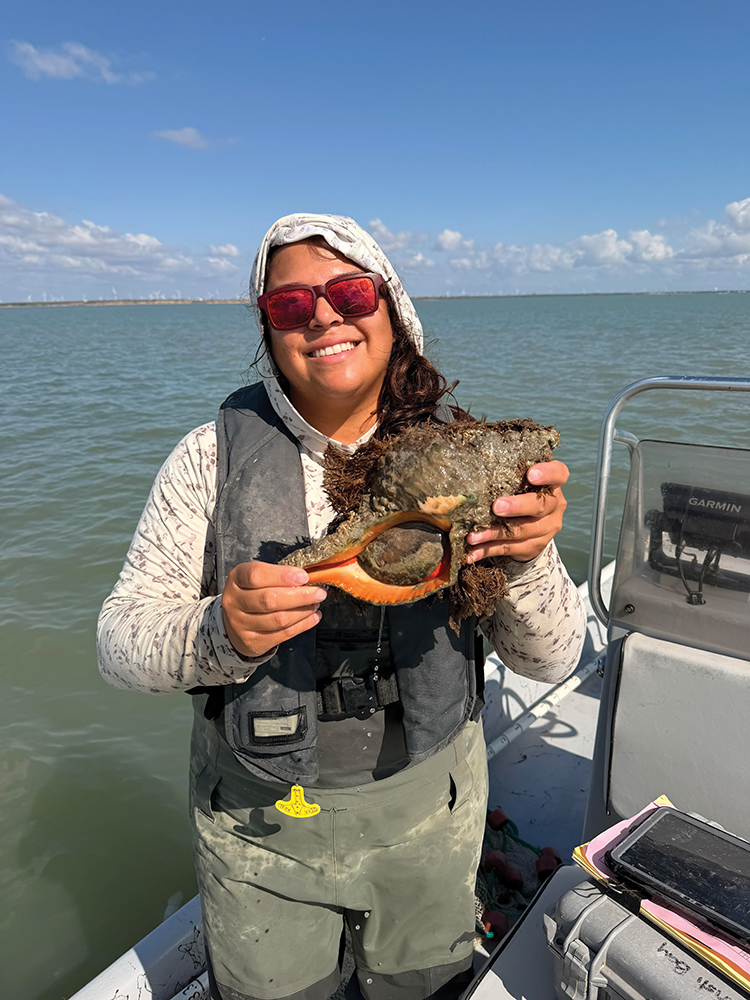
Other popular species that are sought out for their tasty meat are bay scallops, quahogs, and horse conchs. Horse conchs are the largest gastropods in North America and are carnivorous. They eat other mollusks such as snails, clams, and fighting conchs. If you are lucky enough to find and harvest one, horse conchs can be especially delicious if you know how to prepare and cook them. The key is to make sure the meat is tenderized to improve texture, then season to your liking. Common dishes made with horse conch include fritters, ceviche, stews, curries, and chowders. Not to mention, their shells are glorious and could make for quite a statement piece in your home.
Bay scallops are also a delicacy! They can be found in shallow seagrass beds, collected either by hand while wading or if you’re adventurous enough, you can also find them while snorkeling. Bay scallops are most enjoyed in a creamy pasta dish and are prepared by searing in a hot pan. Just be careful not to overcook them, as that can be easy to do. Lastly, “clamming” for quahogs (pronounced “koh-hawgs”) can be a fun and rewarding activity! The most common way to find them is by using your feet to feel for the hard shells in the mud, or simply looking for them in shallow, clear water. It can be messy business but rewarding in the meals they provide. Quahogs are great steamed or baked, then thrown into pastas and/or chowders.
There are countless ways to find, prepare, cook, and enjoy these Texas treasures. So, if you’re not shelling, consider harvesting one of these animals yourself! These recreational opportunities require a bit more time, gear, and knowledge than shell collecting if you want to be successful. You’ll need a valid TPWD fishing license with a saltwater endorsement and be familiar with the state’s regulations. For example, it is unlawful to take more than 15 live univalve snails a day, which includes no more than two of each of the following snails: lightning whelk, horse conch, Florida fighting conch, pear whelk, banded tulip, or Florida rock snail. So please make sure to review the current harvest seasons, restricted areas, and regulations before your next clam or snail harvest.
The seashells of Texas are cherished by all who walk a shoreline, comb the sand, and find the perfect one. Sometimes, the shell you find shelters a quiet life that you gently return. Other times, you may want to harvest it for a tasty addition to your seafood dinner. But every so often, you will find a vacant shell, perfectly polished by tide and time to take home and display. Just remember the next time you pick one up that they are connected to a much more complex story about our coastal ecosystems, ecological connections, and the long-term health of Texas bays. Understanding where shells come from—and what they once supported—helps highlight why they are such an important part of our ecosystem.