
South Padre: April 2026
Seems that spring is suddenly upon us, and if it’s anything like last year we are in for lots of catching. April is one of our windiest months, and I can say windy conditions while out on the water irritate me. You can barely hold a conversation because of it and some of our best fishing areas get churned into muddy soup. Wind can cause things to fly off the boat, especially your trash, and nobody likes getting beaten by chop while navigating the bays. But, and a very big but, the harder the wind blew last April the better the fishing got. So we learn to tolerate the wind.
For this month’s article, I want to start by preparing you for everything I know and see out on the water on a windy spring day or evening during the spring shrimp hatch on the Lower Laguna Madre, and then follow up with this month's video displaying what I am talking about.
As spring is known for everything coming alive, the year’s brown shrimp crop begins to emerge this month and, like clockwork, our redfish and trout take full advantage. You should take note that these shrimp appear mostly in shallow water during periods of strong wind in areas with muddy bottom. The birds will point the way.
The strong winds aid the seagulls in remaining aloft, sometimes just a few and other times a dozen or more. Either way they are easy to spot, and this is when catching becomes easy. The commotion under the birds will be fish rooting shrimp out of the mud and grass and gorging on them. Between the birds and the fish, the shrimp don’t stand much of a chance.
In my opinion, the best way to approach these miniature feeding frenzies is drifting in quietly from upwind and setting the Power Pole as soon as the action can be confirmed—about 30 to 40 yards away. Look for tails wagging above the surface in areas that appear freshly muddied and with shrimp skipping across the surface. You can fish from the boat or wade to the action. Keep an eye on the direction the fish seem to be moving and try to stay ahead of them. A twenty-yard cast is where I want to be. The closer you are, the more accurate your cast will be and, when you hook a fish, you will have more leverage to pull it away from the school.
Now, for lure placement; there are almost always a few trout mixed with the reds and they tend to hang on the outer edges of the action. An ideal cast is toward the outside edge of the muddy area in the direction the fish are heading. A fairly slow retrieve works best, but not so slow as to get hung up on the grass. This is where the Z-Man 1/8 ounce Eye Strike Texas Eye weedless jig head comes in handy. You can almost drag your lure on the bottom without catching grass.
What you don’t want to do is plop the lure down right in the middle of the fish, as this will usually spook the school and cause them to scatter. Yes, you will probably get a bite, but it will likely be the only one. As you cast toward the edge and hook up, keep your rod low and try to wrestle the fish away from the center of activity. Another good lure placement strategy is casting beyond the pod and bringing your lure across their path. This technique almost always garners a strike.
As I mentioned earlier, the method of catching fish under the birds described here is greatly enhanced by strong wind. The best time to experience “working birds” is in late afternoon toward evening during daily solunar feeding periods. The harder it blows the better…so let ’er blow.
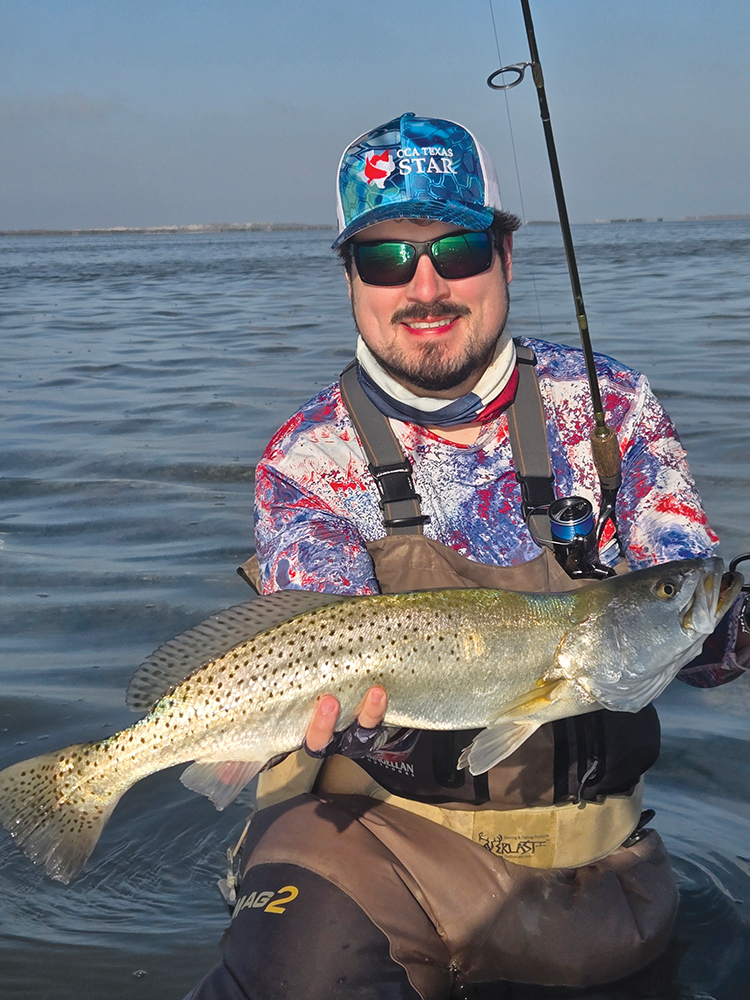
Trout action has been very steady with strong numbers and some big ones in the mix. Full and new moon periods will mark the beginning of spawning in April, so if larger trout are your targets you should concentrate on these periods—focusing efforts on shallow grass flats and potholes.
Can’t fail to mention our snook population also appears to be in a very healthy state. Anglers will do well to focus efforts on periods of strongest tide flows when targeting them. Warming waters will encourage snook to leave deeper haunts where they spent the winter and take up residence on the flats again.
Tighten your cap and best of luck!