

South Padre: July 2026
When July comes around my first thoughts are of scorching heat and calm bay waters. And then while I am out there, I find myself hoping for a breeze, even though I was complaining nonstop about the wind just a few weeks ago. Air temperatures usually hit the high 90s and sometimes go over 100. This type of heat also causes the bay water to rise higher than normal. I remember one July when it hit 100 degrees. That is the only time I have seen it that high, and there were no fish around in those conditions.
During summer, it is normal for water temperatures to rise into the low 90s, which feels more like a hot tub than a place to fish. When it gets this warm I fish in depths of 3- to 4.5-feet when wading, and even deeper if I’m drifting. I have always encouraged to equip your boat with some type of device to measure water temperature; this is equally important in February, our coldest month, as in July, our hottest month. During summer, deeper water stays cooler, the same as it stays warmer in winter. Locating the most favorable water temperatures during exceptionally hot and cold weather can make a big difference in your fishing success
Fishing around the full and new moon is usually best because of the two tidal movements each day. This month, the new moon is on July 14th, and the full moon is on July 29th. You will notice stronger tides four to five days before and after these dates, which are the best times to fish.
Based on my research there will be 20 days with favorable tidal flows in July. Check a tide chart for two-tide days and a lunar calendar for moon phases. Or, you can find all this information in the foldout center section of this magazine.
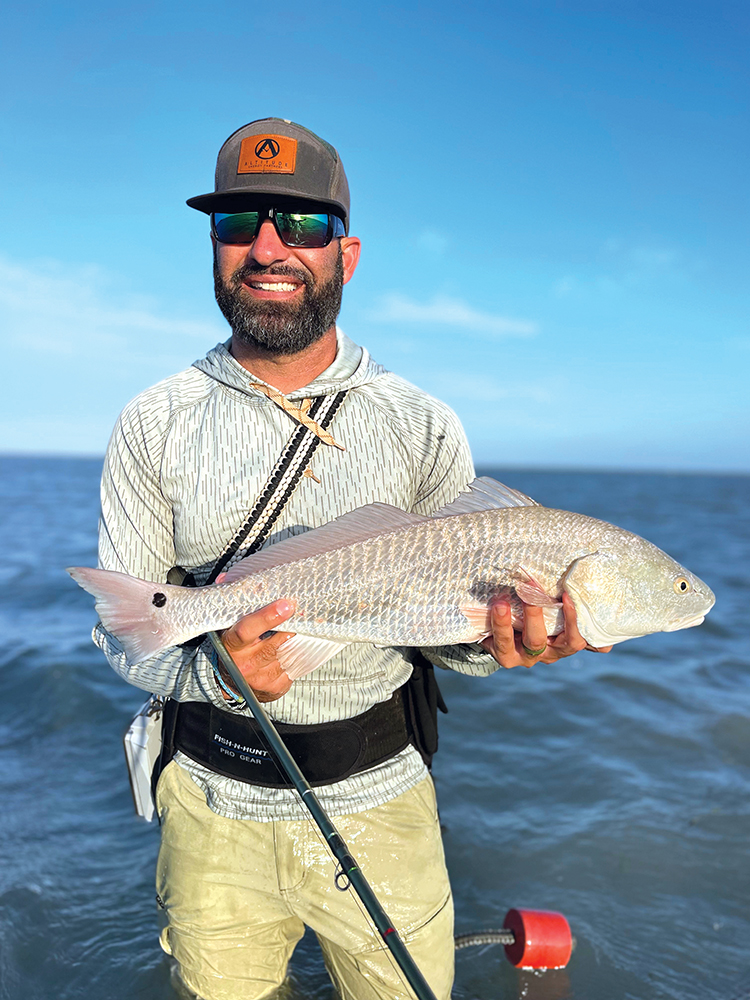
Catching redfish in the hottest part of summer is not always easy, but we do a fair job of it. During July, try the shallows early in the morning. With little or no wind, you might spot tailing redfish in shallow water. Do not underestimate how shallow they can go. Productive areas include spoil island shorelines, deeper portions of back bays, and the eastside sand. You will often see large schools of mullet this time of year, and where there’s mullet there’s usually redfish.
As the day gets hotter, redfish move to deeper, cooler water. Good places to try are flats along the edges of the ICW and deeper potholes on flats. You can catch redfish any time of day if you find the depth and temperature they prefer. Fishing late in the evening can be excellent as the water cools and there is less boat traffic. Gold spoons are always effective, I also recommend ZMan’s Paddlerz scented baits along with their Diezel Kickerz. That twin tail action is hard to beat.
Trout can get picky when water temperatures go above the mid-80s, so in July, you’ll mostly find them in deeper water and the ICW is always a great place to start. When I fish the ICW I use a 1/4 oz jighead and let it sink to the bottom, no matter whether I’m fishing the middle or the edges. A slow jigging presentation is usually the best way to get bites. And the best part is, when you find one you can usually catch several.
Early in the day, trout will leave the cooler depths of the ICW as the shallow flats have also cooled during the night. Perhaps the best signs that trout have entered the flats are slicks appearing nearby. Potholes on the flats are good spots for trout all year as they serve as both deeper and cooler resting places and perfect ambush points. Like I said above, trout can get picky in the hottest month. If short-strikes become a problem, try downsizing to four or even three-inch baits. Snook are in full spawning mode this month, which means it will be even more important to target the strongest two-tide days. Remember, snook always feed best when the tide is moving. Flounder numbers always seem to increase during July and you will often see tarpon rolling and jumping along the beaches near the Mansfield Jetties and Brazos Santiago Pass on South Padre Island. Overall, this month is going to be hot, so plan to fish early and late for best results. Pay attention to the tides, keep track of moon phases, and focus on deeper water.