
Tails It Is!
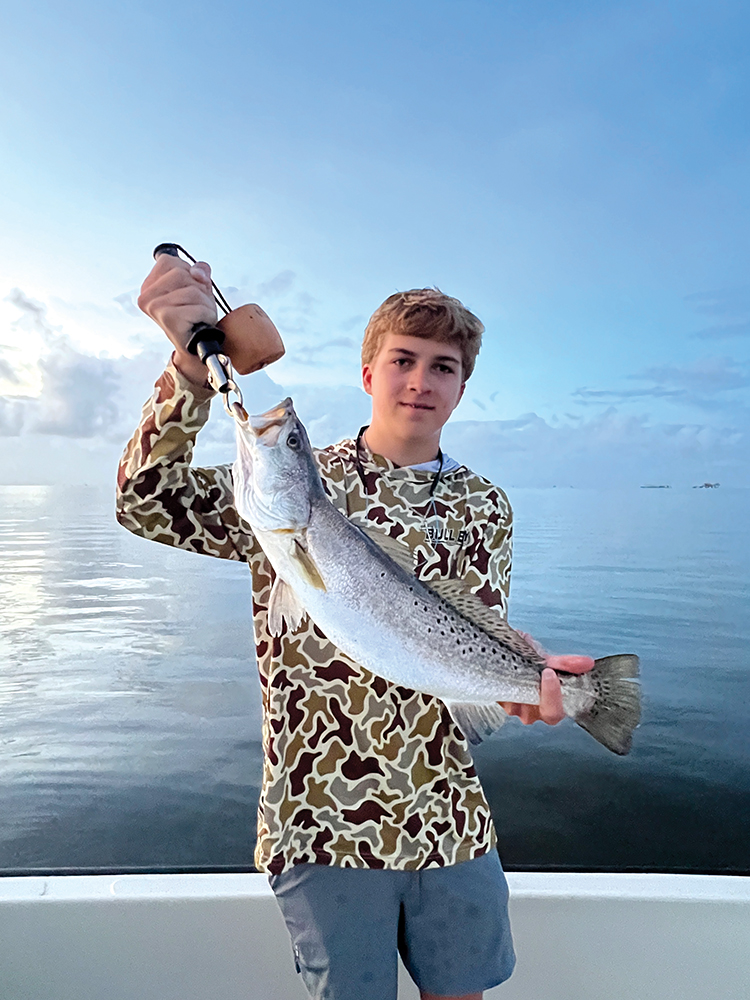
From the Crème Wiggle Worm to the Boone Tout Tail to the Bass Assassin - soft plastics have continued to pave the way to our success in salt and freshwater fishing for years. Just in my lifetime I’ve witnessed the introduction of literally hundreds of shapes and styles of soft plastics. Excluding worms, crawfish, lizards and frogs for the freshwater game, the saltwater ones I recall using throughout the years consisted of many styles and sizes and have definitely evolved over time.
In my early years of saltwater fishing, the Kelly Wiggler shrimptail was king. I remember my favorite color was root beer. We would dip the tips of the tails in white then chartreuse tail dip paint to take mimicking a real shrimp's tail to the next level, not to mention it greatly increased my confidence level. If you only dipped the tail in chartreuse, then it wouldn’t have that vibrant fluorescent brightness of chartreuse. You had to dip it into the white first. Red with a white tail was also one of our favorites. There were several other shrimptail manufacturers but in my memory the Kelly Wigglers stand out as our go-to tails during those years.
There was a stretch of time following the shrimp tail craze when shad body and minnow shaped soft plastics came onto the scene. These days we typically just refer to them as swimbaits. My favorite was a 3” red and white paddletail shad made by Mister Twister, that was originally designed to target bass and walleye. It’s called a Sassy Shad. There was another paddletail soft plastic that I threw a lot, too. It was a slightly slenderer bodied lure, with more of a minnow profile. It’s called a Major Minnow and is made by Hogie’s Fishing Lures right here in El Campo, Texas. Two other similar body style baits we used during that time were the H&H Cocohoe Minnow and the Stanley Wedge Tail. All of these baits are still produced to this day.
In the early to mid-90s I was introduced to a soft plastic that, little did I know, would become my go-to lure to this day. A good friend and I were wade fishing the north shoreline of West Galveston Bay and he was catching three trout to my one. I asked what he was throwing and he said, “it’s a Bass Assassin.” Upon closer examination and after looking at the package once we got back into the boat, it was more specifically a 5” Limetreuse Bass Assassin (straight tail). Straight tail (eel style) soft plastics became even more popular by the early 2000s and remain so to this day. I usually refer to the straight tail versions as rattails and the paddletail versions as simply paddletails. I employ both on a daily basis along with a variety of other styles that Bass Assassin offers, such as the Lit’l P&V and the Artemis Shad. The sheer variety offered by Bass Assassin allows me to always have something in my arsenal to entice fish under almost any scenario.
By the time this fine magazine hits your mailbox, store shelve or inbox, it will almost be August. When folks think of August here on the Texas Coast, they immediately think of the heat. As fishermen we tend to think in terms of how the fish will react to these hot bay waters. Most will automatically assume that more trout will be found in deeper water because that’s typically where the cooler water is. This is true most of the time, and this is where I’ll spend most of my time in the next couple of months. When I’m not drifting in the deep stuff (7- to 13-feet) I’ll be wading near the passes. Especially if there’s an early morning incoming tide, bringing in cooler water from the gulf. This is one of the only serios exceptions to the hot summer/deeper water thinking.
Regardless of the areas we choose, we will primarily be chunking soft plastics this time of year; not because other lures won’t work, but because we can work more water at a faster pace with worms as opposed to most plugs. I also like the fact that I can pinch down the barb of a single hook jighead, which allows for quick releases and lower mortality of the specks we catch compared to lures that carry trebles. The fewer holes we poke in our trout and the less time we handle them the better – during August heat.
Water depth helps me determine which style of soft plastic I should throw. If we’re fishing in deep water, I typically like a worm with a faster sink rate, such as a rattail Assassin, Lit’l P&V or MirrOlure Lil’ John. Which jighead I rig them on depends on just how deep the water is, the current velocity, and the wind. Salinity level should also be considered, as our lures tend to be more buoyant in high salinity water.
With little to no tide movement it’s not uncommon for me to rig our worms on 1/8-ounce Assassin Pro Elite jigheads, even in 10 feet of water. If there’s moderate flow and maybe a light breeze, then an 1/8-ounce conventional Assassin jighead also works well. If the tide is really ripping and I’m dealing with some wind, then a 1/4- to 3/8-ounce is not out of the question. This being said, if the tide is ripping that hard, I’m probably going to relocate because our trout in this bay usually shut down when there’s too much current.
When fishing shallower waters or when we need our worms to hover in the water column, I rely heavily upon baits with greater buoyancy. These are typically lures that contain more plastic and are of the paddletail persuasion. Bass Assassin Sea Shads and Artemis Shads fit this bill perfectly. I almost always rig these baits on either 1/16 or 1/8-ounce Pro Elite jigheads. These paddletail style worms rigged on lighter jigheads not only sink much slower than their rattailed cousins but give off vibrations from their tail action. These can be deadly for tricking stubborn trout that are suspended in the water column.
The type of line we’re using can also affect sink rate. Folks using monofilament line will experience a faster sink rate than those of us using braid. I like to use a 6-foot leader of Seaguar Gold Label 20-pound fluorocarbon for added stretch, sink rate, and invisibility.
Seagrass is apparently making a comeback in some areas of Galveston Bay. I witnessed this on a recent trip, and I can’t tell you how happy this makes me. Split belly rigging with the point of the hook buried or just barely exposed (weedless style) all but eliminates the grass issue. Also, rigging a rattail Assassin where the hook comes out through the split instead of through the back (upside down) allows it to swim perfectly straight. A worm that spins during the retrieve is far less effective on average.
The styles and color choices of today’s soft plastics are endless, and it seems like there are new numbers popping up every week. Of all of the choices out there, the Bass Assassin family of plastics provides me with the most variety and well-thought-out options of baits anywhere. Their plastics are softer and provide more action than most other worms. They have scent-impregnated baits for those hard to trick fish in murky water. They make tails that stay suspended and ones that sink faster. Some are made for jigging (rattails) while others can be worked on a straight retrieve with great success (paddletails). Their color choices are endless, and last but not least, the versatility and the many different styles of Bass Assassin’s line of jigheads takes it to a whole new level.
Regardless of what brand of worm, tail, tout or jig we choose to throw, we must first assess what’s going on beneath the fiberglass. Is the water salty or fresh, and how will that affect the sink rate? What kind of current are we seeing? I always try to look at the channel markers when I can because I trust my eyes more than a tide chart. Is there enough wind to affect my sink rate? What weight and style of jighead should I use? What’s the water clarity like? Do I need to switch to a darker color?
In murky water, I like colors like Red Shad, Texas Roach, and Morning Glory. In clear water, and when there’s a good amount of sunlight, I usually opt for Flamingo Flash, Laguna Shrimp, or Chartreuse. My two go-to best all-around colors in most conditions are Slammin’ Chicken and Chicken on a Chain. Apparently, they’re not just my favorites because they also happen to be two of Bass Assassin’s top sellers.
I hope this piece provides folks with a few extra tips and thoughts that will help trick more trout this summer. If you’re having trouble deciding what to throw, this just flip a coin. I promise you it’s going to be “tails” most of the time.