
The Bountiful Gulf

I’ve sometimes wondered why so many farm families, a half million Americans back in the 1930s during the Dust Bowl, were tricked into moving to California. Parts of five other states were affected, including the Texas Panhandle, but Oklahoma was hardest hit.
Oklahoma farmers had been there since the land rush in the 1890s, Anglo families originally from further east. After 45 years they became vulnerable after plowing up the land. Banks were foreclosing because of failed crops from terrible dust storms and a multi-year drought. Then flyers (sent from California) appeared, posted in many towns, advertising workers were needed to pick fruit in California, the land of milk and honey. Soon Highway 66, the only route leading west from Oklahoma, was speckled with jalopies like the Beverly Hillbillies, packed high with families and furniture. Camping on the side of the road for 1,200 miles. Finally arriving in California, they were treated badly: underpaid, hungry, children with malnutrition, living in work camps. It was hard to survive making 15 cents an hour. And too late to turn back.
My question is, why didn’t they move down to Texas and the Gulf Coast, one third as far away and downhill? One would think these so-called “Okies” could have visited the nearest library in their county seat, and read a few newspapers or magazines. Or sent a son down to the Gulf Coast to check things out. Instead they bought second-hand jalopies and headed west. Born and raised on the farms of Oklahoma, they were mostly ill-educated.
Did none of them hear of the Texas oil boom that had been going on since Spindletop struck oil in Beaumont in 1901? New fields were also sprouting up in East Texas around Kilgore and the Permian Basin, among others. Refineries were built on the coast. Houston became the center for the oil industry. Roughneck workers were paid $6 a day ($147 in today’s money) with long shifts trimmed down to eight hours by Humble Oil in 1932. Much of this work was near the coast where it was impossible to go hungry like so many did in California.
My family left West Texas and its spring dust storms in 1967, about 35 years later. Moved to Port Arthur, which was a seafood-gathering paradise, also with amazing waterfowl hunting. Starting the 9th grade, I became well-versed at bringing home the bacon, so to speak, more seafood than our big family could eat. We caught steel garbage cans full of big, male blue crabs at Pleasure Island Marina in June, using just three handlines and also just scooping out crabs from the marina’s oyster shell boat ramp early in the morning. My first 20 redfish were caught from those docks that autumn. (Nothing big, just 2-3 pounds). In the sailboat basin were plenty of sand trout each autumn and slot-sized black drum in March. Early new friends in high school that autumn were made when I told them there were 3-4 pound trout hemming in acres of 3-inch menhaden against the seawall every evening. We went three evenings in a row and menhaden were spraying everywhere. One throw of the castnet and it could hardly reach bottom, we had to dump out most of the menhaden, but we all caught our first “big trout” using those live baits.
Sabine Lake was mostly too murky to wade and gig flounder for most of the year, but that dark water protected a lot of flounder. Two years later we caught a great many. And there were other seafood items to target:
>With a home-made castnet you could sometimes fill a five-gallon bucket with white shrimp, caught from the seawalls. Been there, done that, you didn’t need a boat.
>In our local waters fresh or salt were tons of alligator gar up to five feet long, they’d slap their tails like beaver on the ICW, and you could hear them a quarter mile away. When I fished with finger mullet during summer, I had to deal with about 10 gar for every redfish landed.
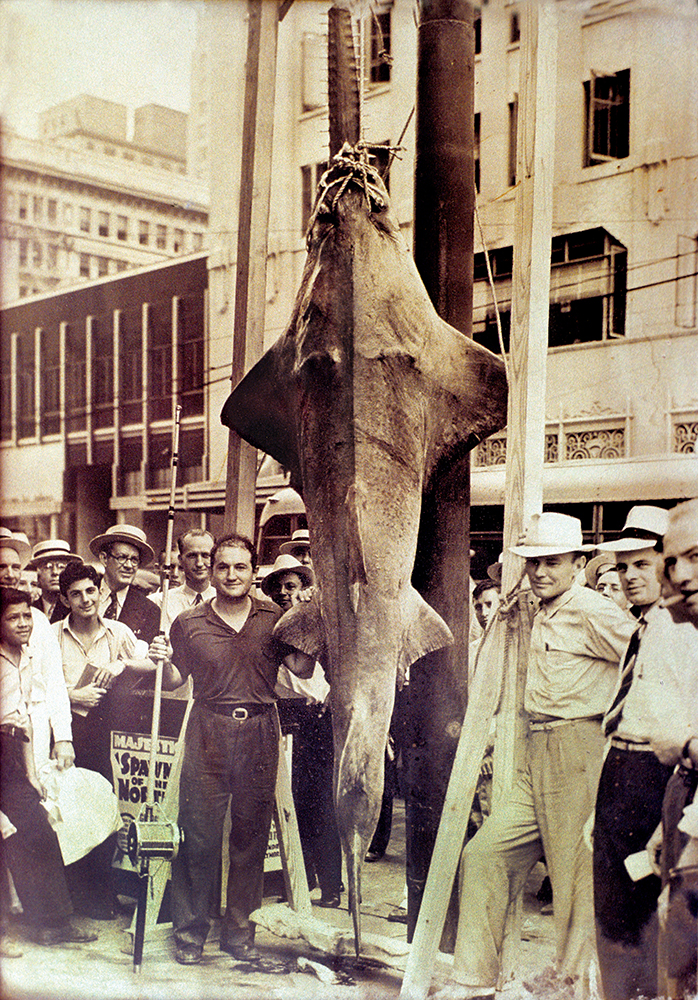
>Sabine Lake was full of small menhaden, shrimp and trout; during my first autumn the Port Arthur News reported catches of 300 plus trout in several boats during November. We couldn’t hike to the Sabine’s west jetty much, it was all marsh and slippery rocks, but the Galveston jetty saw lots of fish caught by rock walkers, record fish that still stand today, like sawfish and goliath grouper. At small fishing piers near the Bolivar jetties were pictures of people with stringers of 20-30 flounder caught each November. Nearby Rollover Pass was built in 1955 and saw elbow-to-elbow crowds using cane poles (very few rod and reels), filling burlap sacks with big, tasty golden croakers that ran the Pass every October. A river of tasty fish. Big sand trout were caught, too.
>In Port Arthur we could rent a cotton beach seine and pull it along the nearby Louisiana beach, usually catching 30 trout each summer day. Those seines were made of cotton and had to then be rolled up on big racks and hosed down and left to dry, to keep from rotting.
>Port Arthur was also a duck and goose hunting paradise; supposedly the town was started with the idea of bringing in waterfowl hunters by train. Sometimes many thousands of snow geese would just fly right across town. To a young hunter, the sky in nearby marshes not two miles from town was sometimes full of passing waterfowl. We’d bang away and eventually one would fall.
***************
Like everything else, times have changed. There are now daily bag limits on many fish species as our own population climbs. There are now lots of big fast boats on the water, often blaring music, ready to swoop in when seagulls reveal a school of feeding trout. Years ago you could stay with a flock of diving gulls on the bay all afternoon, without another boat showing up. Rollover Pass from the Gulf to East Galveston Bay saw countless shorebound anglers starting in 1955 but is now closed, but they’re building a big fishing pier in the surf there, scheduled to open this December. It will replace the old wooden pier at High Island, now long-gone, where we camped out in the 10th grade. While there in summer we had flat, olive green water to the beach but didn’t yet know what a gold spoon could accomplish on trout, mackerel and redfish. Our Zebco tackle would have been hard-pressed for such work.
Times have certainly changed since the 1930s. Very few people had boats then; even a jonboat would have lent a huge advantage. The vast majority of saltwater fishermen were shore-based on the piers, jetties, seawalls and beaches in Texas. When a run of golden croaker, flounder or sand trout appeared, a crowd would quickly gather. Bull redfish were hard to find except during approaching hurricanes and surf piers saw people fishing late at night with huge waves thundering mere feet beneath the planks.
Blue crabs were worth two cents a pound in 1935 and you could buy seatrout for eight cents a pound at the dock. Many Asians arrived in Port Arthur starting in 1975, and some turned to using traps to catch crabs. An empty Sabine Lake suddenly had a lot of traps. There was literally no laws managing blue crabs in Texas until 1980, when a limit of 300 traps per fisherman was imposed, later reduced to 200 traps in 1994.
The big golden croaker runs dwindled away, the result of intense shrimpboat efforts, where hundreds of millions of small croaker were discarded to the seagulls. Many shrimping licenses have now been bought out by the state, but big croaker remain scarce and their runs each October are now considered part of history. Small croakers are now targeted by marina shrimpboats, where these small fish are coveted on summer weekends, used for catching thousands of trout, whose daily bag limit has shrunk to three fish per angler.
Even alligator gar that have been in Texas for tens of millions of years have seen their population shrink, and the Trinity River is now said to be their last stronghold. They only spawn in flood water years, so these droughts haven’t helped.
When World War II arrived, the economy picked up and there were lots of factory jobs. I have an old friend who moved from Kingsville to Rockport during the war. He fished as a teenager every day in the harbor and says there were plenty of trout. I thought maybe he had tales of fishing Baffin Bay for monster trout back then, but like everybody else, his family didn’t have a boat. You could rent a rowboat and be towed out in the bay and left until afternoon however, which must have been an adventure when a storm came up.
Anyway, the tide has now shifted. These days, its Californians who are migrating to Texas.