
The Port Mansfield Beach & Cut Clean-Up
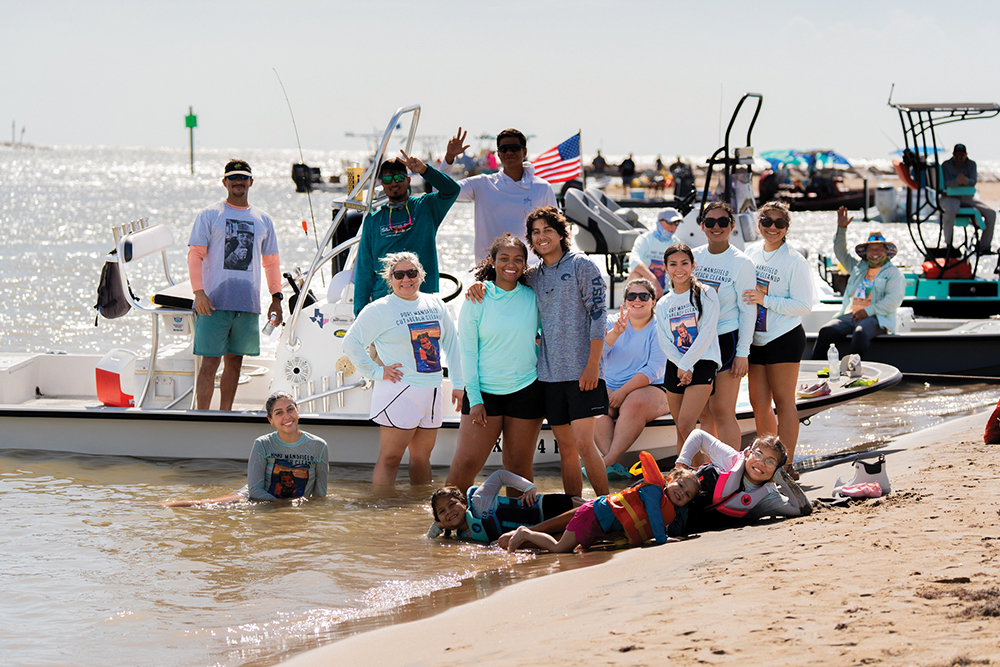
Volunteers of all ages participate in the Port Mansfield Beach & Cut Clean-Up every year.
It’s 6:15 on a Saturday morning, and my family is looking out over the Lower Laguna Madre from a Port Mansfield pier. Typically, our only company before sunrise on the docks would be a handful of other anglers and some prehistoric-looking pelicans, but on this particular Saturday, the human population of the sleepy fishing community has just about doubled. The old piers creak with the bustling of people, who sip coffee, carry trash bags, and load bottled water onto boats.
It’s time for the Port Mansfield Beach & Cut Clean-Up.
For the last 17 years, volunteers have rolled into Port Mansfield every June to pick up thousands of pounds of trash that accumulate along the area’s jetties and coastline. Launched by Miller and Kathie Bassler, the clean-up started as small but focused action taken by the Bassler family to try and preserve a place they love. It’s since grown into a large-scale operation––still helmed by Miller and Kathie––that draws hundreds of volunteers. The event now has funding from sponsors, too, including BB’s Tex-Orleans––founded by the Bassler’s oldest son Brooks––Valley Telephone Cooperative, Inc., Prasek’s Family Smokehouse, Y-Knot Rentals, and scores of other businesses, individuals, and families.
My husband Shawn, our two sons, and I headed to Port Mansfield from Houston for the fourth consecutive year this summer. What began as desire to support the admirable efforts of our friends evolved into one of our family’s most beloved traditions and official kick-off to summer. Our boys––Gus (13) and Guy (7)––both eagerly await the clean-up each year. At home, Guy is always outside, handling chickens, chasing lizards, and digging in the dirt. Perhaps somewhat predictably, he’s also our fisherman, for whom Port Mansfield has become a refuge. Then, there’s Gus: a guitarist and songwriter who plays, writes, and records music constantly. He’s not outside a lot, opting instead for air conditioning and his instruments. But for several years now, Gus has told us, emphatically and repeatedly, “The beach clean-up is my favorite weekend of the year, in my favorite place in the world.”
What is it about picking up dirty plastic, crusty beer cans, and old tow ropes in a tiny coastal town that hooks young children, angsty teenagers, callused outdoorsmen, and tender-footed artists?
Veterans of the clean-up know its appeal lies in its purpose. The event’s volunteers don’t feel like tourists, passing through paradise. We don’t enjoy views from a distance, but instead, climb and crawl through the Laguna Madre’s gorgeous vistas, up close and personal, removing harmful objects as we go. Then, after our work is finished, we see a real difference. Kids and adults feel useful––and proud.
On June 13, 2026, about 275 people boarded 45 boats, driven by volunteer captains. Many of the captains are professional fishing guides who forgo a lucrative Saturday’s worth of bookings in order to taxi volunteers to and from the designated clean-up areas.
It’s an early morning, but each year, a devoted crew of kitchen volunteers rises even earlier to make breakfast tacos and brew coffee for everyone. While munching on bacon and eggs wrapped in warm tortillas, we listened to Miller and Kathie explain where we’ll go and how to stay safe. A crew of trained medical professionals arranged to set up a tent near the jetties to ensure any minor emergencies could be handled quickly. After breakfast, we picked up gloves then made our way out to the docks to stock up on water––in eco-conscious cartons––plus plenty of trash bags.
This year, we all headed to the Mansfield Cut, Padre Island National Seashore jetties, and South Padre jetties. It was the clean-up’s first year on the south jetties. The threat of thunderstorms that day made the south jetties’ proximity to the mainland appealing in case we needed to make a quick return trip, but the Basslers warned us it’d be tedious work. The south jetties had been neglected for quite some time, due in large part to their precarious cragginess.
Out on the dock, our family met Captain Mike McBride, a well-respected fishing guide in the region, who agreed to take us to the south jetties. Captain McBride’s friends, Sam and Vizi Caldwell, joined us on his boat. A beloved painter of scenes from hunting, fishing, and the outdoors, Sam is a familiar face along the South Texas coast. His paintings crackle with life: A kingfish leaps amongst a sunrise’s thick brush strokes of auburn, blue, and cream waves; a tarpon surprises a wading fisherman, haloed by golden sky. Most of us left our phones behind, but Sam brought his, determined to capture images––and perhaps reference photos for upcoming masterpieces.
The ride out to the beaches and jetties always hums with anticipation. This year, the hums turned into excited shouts as Guy, our younger son, spotted dolphins swimming not far from the boat. The pod stayed with us for a few minutes before racing ahead.
When we anchored at the south jetties, we hopped into the shallows and got to work. Every year, hauls of huge old ropes, giant tires, and other heavy trash require plenty of teamwork. The south jetties were a different beast, however: Tiny pieces of plastic, rubber, glass, and metal, all lodged into deep crevices in the imposing granite, called for volunteers willing to climb down into the cracks to retrieve the trash. Gus, Guy, and I all took turns cautiously lowering ourselves into the narrow spaces, like amateur spelunkers rushing to beat the tide.
We filled bag after bag with salty junk. We celebrated every time one of us dislodged a particularly stubborn piece of debris. Shawn and Guy trekked off to comb through the grass in search of scraps, swatting large horseflies as they walked. Gus and I marveled over the sheer volume of cans, nets, and brittle plastic, joking that some of the immovable trash wedged under the granite would haunt us for months to come.
After a few hours of work, it was time to head back to the mainland. Heaping plates of lasagna awaited volunteers for lunch, while a wrap party with complimentary tacos and margaritas from Blues Chill & Grill beckoned that evening.
Guy slid into the seat next to me, tired and happy. A fly fisherman who loves wading through the flats among the reds, Shawn chatted happily with Captain McBride, asking the captain questions about wade fishing in the Laguna Madre. Captain McBride asked Gus about his music––he’d heard Gus plays guitar. Gus discovered the captain plays the cross, or blues, harp. The two made plans to jam together later.
New friendships cemented, we started across the water. Suddenly, the dolphins leaped back into view. Captain McBride approached them slowly. Other boats slowed down, too, as everyone on board stood and tried to get a better look. This time, the dolphins loitered around the small vessels, seemingly in no hurry.
The volunteers collected almost four tons of trash this year. While the total weight may have been less than previous years, the overall impact was unprecedented: Thousands, if not millions, of bits of lightweight hazards, pulled from the south jetties, dramatically improved the ecosystems that thrive there.
That night at the party, the mood was festive, but also determined. Volunteers of all ages, from all walks of life, couldn’t wait to get back out on the water. There is more trash to be collected––more work to do. Now, we all know we can do it. – Elisabeth Carroll Parks