
The Price of Saltwater

Owning a boat is a little like having a pet, except you can leave a boat in the driveway while away on vacation. During peak fishing season, the upkeep on a boat has to be more frequent. Each birthday and Christmas now bring presents related to fishing or boating. This is especially true if you fish salt water.
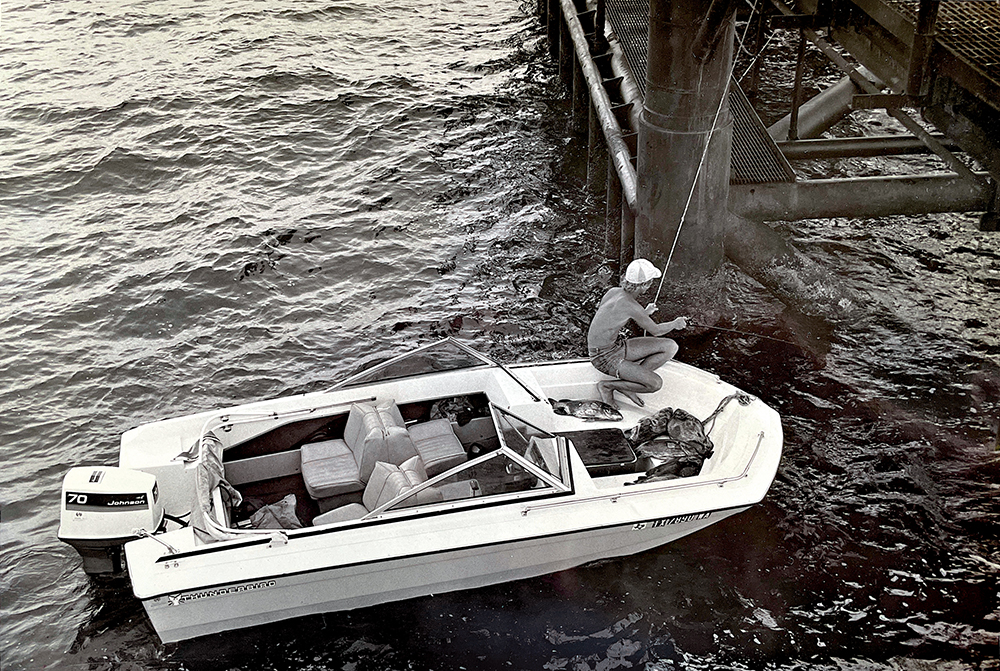
Many years ago while planning another long trip from Port Arthur to Key West, where the water is very salty, my friend’s dad declined to let us use their family boat, a 16-foot Thunderbird kept at Toledo Bend, with the excuse that he didn’t want it exposed to saltwater. It had a walk-through windshield and a very dependable 70-horse Johnson outboard that had never seen anything but sweet water. Instead, we had to take my smaller boat, which may have been the only bassboat with stick steering ever to fish Key West waters for two straight weeks. However, a year later my family got a good deal on that same Thunderbird. We named it Old Yellow and fished it offshore Sabine Pass for the next seven years, plus an even longer trip back to Key West, where there was always clear water, plenty of fish, cheap little motels, no cruise ships or summer tourists. (That town was greatly changed for the worst only a few years later).
In Southeast Texas that boat would end up catching more trout than most people have dreamed of. Also, some 30-pound kingfish, big ling, lots of tripletail; all sorts of fish. We went out as far as the 27-mile rigs, never further, which required 15 gallons of gas. Even launched it in the surf at the Arco plant east of High Island, which bent the trailer and required welding that afternoon. The years were hard on that boat and upkeep was minimal. Every Saturday, it was jump in the boat and go; if it ran last time it must be okay.
Old Yellow suffered a lot and if it could talk it would have howled. Or cried, anyway. We were in our 20s and could take the punishment of three-foot waves all day. The left seat collapsed so we removed it and Amy or friends had to sit on a big Igloo for years after. The trailer had no functioning trailer lights, except when a new set was installed for Key West trips. Our local cops didn’t mind the short, no-trailer lights drive from Sabine Pass to Port Arthur, and anyway we almost always returned at sunset.
That saltwater was hard on everything it came in contact with. And nowhere was it saltier than Key West. At the boat ramp each morning it burned our toes like acid, because we had blisters from too many hours of spear fishing, until we finally bought protective booties.
We may have had the most dependable outboard in the world because it always cranked up. The boat’s running lights were long gone, but nobody ever stopped us on the water, even when fishing for mangrove snappers until midnight north of Key West in 12 feet of water. While fishing offshore of Sabine a coil did give out late in the day and we had to idle back a dozen miles at night, but we stopped at the 6-mile rigs and used their phone to call Amy. It was a pleasant night with a quarter moon and we drove right through the jetty’s narrow safety cut, meeting her at the first boat ramp, which was Mobley’s. Piece of cake. My stepdad did not fish and taking him and mother out to the jetties one day was probably his first and only boat ride. So, my boat maintenance skills were rather stunted.
However, a friend’s dad, Lewis Mingle, fished offshore years before us and he often debriefed us after a big day, offering cautionary advice and we learned from that. Lewis fished with a friend all the way to Oil City 30 miles off Cameron, back when boats were small and outboard motors less dependable, when it was far safer for two boats to fish together. Snapper were getting scarce, and that’s why they made the long run from Sabine Pass. He said the inside of the Sabine jetty looked “mighty good” after their long runs offshore. He was a no-frills guy and his Johnson 9.5 motor and jonboat used for duck hunting or the jetties were immaculate. His snapper rod carried a commode plunger on the butt end, so he wouldn’t get bruises or a hernia while wrestling big fish. Locally, there was no such thing as rod belts like we use today.
In the decades since, my years of equipment neglect have greatly improved. Lately I’ve taken up a “saltwater maintenance” program, replacing items that prematurely rust and corrode. We have to, to keep fishing the salty Gulf. Sadly, there are still people who refuse to put their trailer and boat in salt water, denying themselves a lifetime of experience fishing the Gulf, which is difficult to imagine. But there are enough boats on the coast these days, and if some folks want to fish rivers and reservoirs, that’s okay.
Boating equipment failure can be costly. Last weekend on the Interstate, traffic was held up for several miles and when we finally passed the accident scene, I was dismayed to see it was another 16-foot jonboat much like my own. Somehow, a boat trailer tire and piece of metal was jammed under a pickup truck’s tailgate. Under the truck’s front bumper was a mangled boat trailer. Some 20 yards ahead lay the jonboat in the median between the lanes, none the worse for wear, having skipped off into the grass. Did the trailered boat pass the truck? Did somebody else hit it? The guy may have run over his own trailer, but the boat escaped. The guy’s wife didn’t look too happy. I would have taken a picture, but serious-looking state troopers waved us by to keep traffic moving. It was sobering; I’ve trailered boats many miles on Interstate highways without seeing a serious boat or trailer wreck. Although one of our four tires with wheel departed then rolled across the divider on IH-10 where a Mack truck ran over it in 1996. Our new trailer that had just been built in Pasadena.
This all comes back to me while running errands around town, replacing worn-out boat parts. The safety belt’s metal parts got rusty after just one year. The boat driver seat's back support sags and underneath that, the ball-bearing swivel frame again was rusty. We had to order a new trailer hitch, because ours was rusting out; it seems the hollow boat trailer tongue filled with saltwater and gushed all over the hitch, when we pulled the boat out of the water. The trailer jack got rusty, either from rainwater or salt from the trailer tongue. The trailer’s light plug near the hitch has to be cleaned with dielectric connecter grease to get a good connection. Otherwise, that big-bellied sheriff in the next county will pull me over again because my trailer lights (just before sunrise) aren’t lit.
Even today’s fishing plugs need cleaning from the salt. Back in the day, we lost so many Acme spoons to mackerel or jetty rocks, that we never washed them; they didn’t survive long enough to rust. Today, with so many fancy plugs, some costing north of $20, I rinse and hang each plug, jig or spoon on a bucket’s edge while fishing, the better to collect them at day’s end, when they are thoroughly washed and hung up to dry.
Those rods and reels have to be washed too. Mine are lined up close on the lawn after each trip and lightly sprayed; you don’t want to blast salt residue into the reels. Back in high school we each owned just one outfit, the red Ambassadeur reel with a whippy Shakespeare Wonder Rod. We could swim to the jetties with that outfit and it never seemed to rust. Although we had reel-cleaning get-togethers on Thursday nights and the entire house smelled like WD-40. Nerds cleaning their reels. (Dating came later.) The red reel was king and took care of our needs on the reservoirs while bass fishing, for coastal trout and redfish, to jigging offshore at the oil rigs and even from the sterns of partyboats.
That salt even creeps under the outboard engine’s cowling, requiring constant wiping of salt crystals and gently rinsing with the hose. Fortunately, the newer four-stroke engines are now quietly flushed with a garden hose. Our trailer is backed into a river boat ramp just deeper than the mud guards, during the drive home. Oil, spark plugs and water pump impeller are now changed every March. More often, during a busy year.
Old Yellow could have lasted much longer, if only I’d known then what I know now. It was sadly sold to a neighbor with even the steering froze up, but I was ready to move on to bigger boats.