
Tidbits for Late-Summer Success
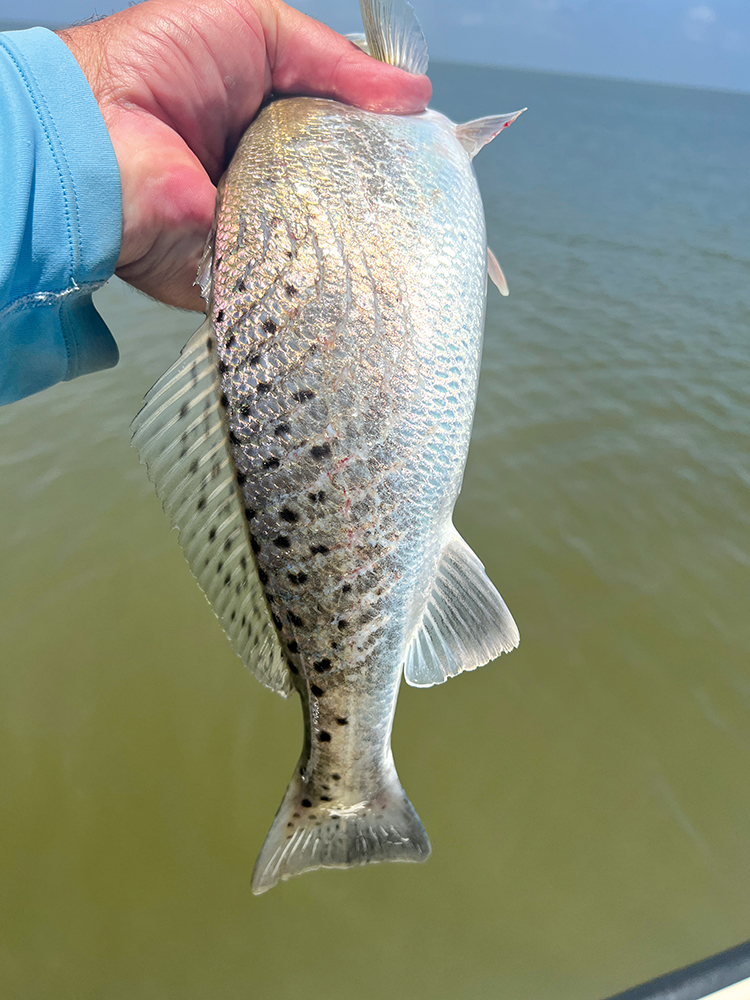
Teeth marks (scrapes) from dolphin are almost a daily observation.
We rolled out of the marina around 5:45 on a recent muggy-hot summer morning. That dreaded southwest wind was pumping at about 17 mph and the tide was lower than I like, especially for this time of year. I had two new clients with high expectations so this was certainly not a best case scenario. Luckily, I had one semi-protected spot in mind that was holding some decent trout over a small oyster reef in about six feet of water. There were quite a few undersized trout mixed in but enough legal ones to make it worth the effort. Besides, given the conditions, it’s not like I had the full menu to order from.
The fish we were on were tide runners (in from the Gulf) and they seemed to move a little more each day. So instead of just pulling into the area and slipping the anchor over the gunwale, we had to make a couple of drifts to pinpoint the school. Sure enough, after two drifts I realized they were about 100 yards from where they had been the day before. On our third drift I got just upwind of where I had marked them on the first two drifts and then put the anchor out, allowing enough scope to where the anchor line would come tight the right distance from the school. Ideally, we wanted to reach those trout at the end of our casts and my anchor line came tight at just the right spot. Zach, Ann and I caught trout after trout with most of them ranging from 16- to 18-inches. I’m not a big proponent of poking more holes in them than we need to so we left them biting to go look for redfish and flounder.
After a long run across the bay to a protected shoreline in a back-lake, I killed the big motor and trolled into the area which consisted of a shallow flat loaded with clusters of live oysters. We were entering a solunar major feeding period as well as a tide change. The shad and mullet were very active and there were a few slicks popping up in less than 2-1/2 feet of water. Although we were targeting reds and flounder at this point we ended up catching dozens of really good trout, up to five pounds, on the oyster-covered flat. It wasn’t what we were after but you won’t hear any complaints from me. Zach and Ann were plenty thrilled as well. The moral of the story is trout aren’t always in deep water late in summer like we think they are (or should be).
I believe there are several factors that contribute to trout swimming up shallow, even in this summertime bathwater we’re fishing. If there’s live habitat such as live oyster reef or seagrass beds then there’s typically also forage species (food). Predator fish will seek out forage species even if it involves easing up shallow for a short period to do so. There is one other reason I’ve witnessed trout moving shallow in the heat of the summer and it involves survival. Dolphins and sharks feed very aggressively on trout and other species and it seems to become worse every year. I’ve seen trout get in less than a foot of water in the middle of a hot August day in an effort to escape dozens of hungry dolphins.
Just the other day my two clients and I were drifting a long stretch of revetment rocks catching trout after trout. We caught twenty-six trout of legal size in two long drifts. Joe and Jim kept their six trout, so we obviously released the other twenty. The dolphins would not leave my boat. I guarantee you they ate almost every one we released. I truly believe that with fewer shrimpers these days dolphins can no longer rely upon a steady diet of bycatch. Now, they’ve had to revert back to the true apex predators that they are, and let’s face it, where there are trout there are fishermen in boats. The dolphins seem trained to follow us now.
I frequently talk about fishing over live habitat like oyster reefs, but as we get into late-summer a lot of our trout will actually travel short distances and get off of hard shell bottom and stage over mud and/or clay bottom because it’s cooler. We saw this play out on yesterday’s trip. We were drifting a narrow stretch of oyster reef restoration rocks but only catching a few. I told my clients we were going to have to try somewhere else because this wasn’t feeding the bulldog. We had just drifted off the shell when I said that and one of them set the hook on a nice trout. Then one of the other guys was hooked up. I slipped the anchor over and they proceeded to catch 20-plus trout a short distance from the reef, over a mud/clay bottom. I had hell pulling my thirteen pound fluke anchor with 10 feet of 5/16 chain out of that mud but it was worth it.
As usual here in the Galveston Bay Complex we have to think outside of the box at times when it comes to patterning trout because of the influences of the Trinity and San Jacinto Rivers. Just when I thought we may actually have a normal summer for a change with stable salinity levels conducive to establishing new resident populations of trout, the fresh water came. We started getting double barrel action from both rivers dumping more than 60,000 cubic feet per second of freshwater into our system! However, I’ve managed to not only stay ahead of the fresh water wedge coming down the bay but also take advantage of the “stack up” scenario it created. It’s been fun but I’d rather things just stay normal. All I can say is thank God for today’s conservative trout limits. It could’ve gotten kind of ugly otherwise, due to the number of anglers and boats who caught on fast.
As most folks know, saltwater stays near the bottom because its dissolved mineral content creates a higher density than fresh water. For this reason we’re working our Saltwater Assassin Lit’l P&V’s and Sea Shads very slowly, along the bottom in the salty layer. There’s a fine line between working them too slow and not slow enough. It’s kind of crazy. We’re pretty much deadsticking (completely stop reeling) our soft plastics to get bites. When we’re fishing in the lower reaches of the bay where the salinity is higher we’re chunking more topwaters and working the entire water column as usual.
Our bay system is constantly changing as are the conditions brought on by Mother Nature. We have to stay on our toes to stay on the fish. Time on the water is essential. We have to stay cognizant of all of the moving parts and understand the variables that influence our trout patterns. Salinity, water temperature, habitat, fishing pressure and bait migrations all have to be taken into consideration when planning a successful day on the water.
Stay cool and safe out there my friends. Good luck!