
Tight Spots
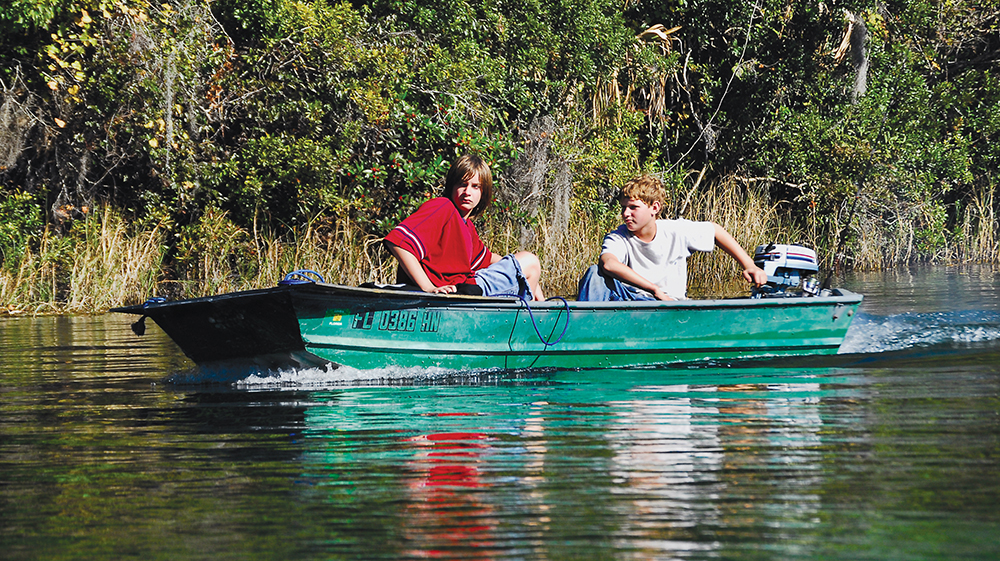
Fishing from boats has been described as a series of misadventures, although every now and then, everything goes right. Or something like that.
The longer I’m on the water, the more I’m bewildered at the ease folks can plunk down money to buy a big boat with no experience or training required. Those born after Sept 1, 1998 are required to take a boating safety course, but what about those 40-somethings who never owned a boat and decide to take a walk on the wild side?
For example: a longtime friend from high school days missed out on owning a boat in our early years. After settling into a steady job, he bought a 20-foot twin-engine (top-heavy) center console and headed out to the jetties. On one of his first trips, they forgot the drain plug and while walking the jetties, he looked over and noticed the boat sinking by the stern. Where it soon rolled over, requiring a tow home and rehab of the engines and wiring. A few trips later they banged their way offshore, running too fast, and somehow their 12-volt battery bounced over the low transom, dragging in the water until the battery tore loose from the cables. After fishing that first oil rig, he turned the key to move to the next spot, but it was no dice; the battery cables were trailing in the water. They had to hand-crank both engines, now fortunately warmed up. They probably kept fishing, too.
In today’s education circles, this might be referred to as “experiential” (a $10-dollar word) learning through direct experience, rather than solely through traditional instruction. For the rest of us, it’s known as learning the hard way.
Anyone with 50 years of boating experience on the Gulf coast has been in a few tight spots and I’ve certainly had my own. I share them here with hopes that others may combine their own experiences with additional lessons others have learned. To avoid getting into a tight spot.
> A paddle can be a boater’s best friend: Our first year with a 12-foot Gibson jonboat in the 10th grade, we pulled ashore in north Sabine Lake and made a campfire on a cold winter’s day. Used the boat’s three-gallon gas tank to start a fire with ample driftwood. When it was time to go, we headed back out my the 5-horse Evinrude suddenly quit, 50 yards from land. Talk about a rookie mistake: we’d left my gas tank on the beach. A north wind was blowing 20 knots off the shore and the wind could easily carry us across Sabine Lake over the horizon into marsh country, where there were no roads or trees. I told my buddy to lay flat in the boat, while I paddled like a mo-fo at the bow, back to the beach. It was hard work but I rowed with enthusiasm, knowing we had no food or water. Or cell phones; they were 40 years in the future.
> Decades later in Port O’Connor with a different paddle, we were returning from the end of the big jetties. Barely inside the bay, the 18-horse Mercury shut down, apparently we had water in the gas. A south wind began to carry us briskly out into the bay and we hadn’t brought an anchor. It was sunset and next stop was Palacios, somewhere over the horizon. Wife Amy grabbed the paddle, sat on the bow, and paddled furiously right up to the beach beside the jetties, and we soon walked up to the nearest house and sat on their front porch, mostly above the mosquitos. It was two days after Labor Day, and the crowd was gone. Our two boys were being watched by a babysitter who was locally home-schooled and somewhat…a rookie in many matters, including common sense, let alone fishing and boating. Our sons had been out on boats since age three, and could sense that something was wrong. It was 10 p.m. on a school night. Our close friend Marilyn was called up, and she set out in her flounder jonboat. Soon we could see her navigation lights crossing the big bay. I’d brought a decent flashlight and began signaling from our two-story perch. Twenty minutes later we were being fast-towed back to POC, none the worse for wear.
> Always Look Twice: I needed to gas up a company boat, a 23 Mako, at what is now St. Christopher Marina in Port O’Connor. For some reason I cranked both engines, even though the gas dock and boat ramp were 70 yards away. Not another boat in sight. Idling along in the ICW, warming up the engines, I looked ahead at a 45 degree angle to starboard, searching for a parking spot at the gas dock. No problem, it was a very quiet weekday. Getting closer, I was looking 70 degrees to starboard. I had a bad feeling and glanced ahead, where a tiny center console boat maybe 12 feet long and only four inches above water, appeared like magic. Dead ahead, 30 feet. It’s owner was staring straight ahead and couldn’t see a 23 foot boat bearing down on him. I slammed both engines into full reverse, but the Mako kept gliding forward. When my boat finally stopped, it was poking two feet into the other guy’s boat, who leaned away from it, visibly annoyed. Then the Mako began to back up. That tiny scooter boat had zipped out of the marsh and into the ICW without looking left or right. We tied up to the gas dock. The owner of that tiny scooter boat glared from 30 yards away, while cranking his boat onto a tiny trailer. Colliding with another boat would not have looked good with the Coast Guard.
POC still doesn’t have a speed or no-wake zone for boats passing by in the ICW. Mix fast boats with the growing popularity of kayaking, and something is bound to give. No doubt kayakers and small boats around there have their own close call stories. Some of the big, fast boats now play their AC/DC on quad speakers way too loud to hear even another boat’s horn sounding a collision alarm.
> Fish with an experienced crew if possible: Big business owners are generally smart enough, when they buy a sportfisher (billfish boat) to hire an experienced captain, but not all. A big boat out of Freeport didn’t hire a captain and the new owner ran out 40 miles for big amberjack, which soon wore everyone out. On the way back, the boat was set on auto-pilot and everyone took a nap. A big nap; hours passed and the shallow water alarm went off, waking them. Someone stumbled to the bridge and was shocked to see the boat paralleling a strange beach, their boat running along almost in the surf. They were near Johnson Bayou, Louisiana, having missed countless shipping, buoys, the 18-mile lighthouse, and numerous oil rigs off Galveston and Sabine Pass. It seems that someone had set the wrong course back to Freeport. That would be tight spot(s) with an S, because nobody knows how many solid objects they missed.
> Overnight trips carry extra risks: Back in the day of overnight kingfish tournaments, we were anchored on a snapper rock, sleeping under the stars, and were startled awake by a bright spotlight. It was early July and a fleet of Florida shrimpboats were moving into Texas waters for the annual opening of shrimp season. Four big shrimp boats plowed by, all around us. One alert captain had either seen our navigation lights or spotted us on radar. From then on, we never again anchored and slept in open water. We tied up instead to offshore platforms without loud horns. Some had plenty of lights and maybe a crew above. Not the quietest venue, but safe from being run over. Of course that meant staying alert for current changes, which can drift your boat inside the platform where waves can grind it up. Also, if they’re sand-blasting at night, your hair can turn gritty. Or a crewboat can arrive and you have to move your boat from the best spot. Anchoring nearby isn’t advised; we once snagged a cable on the bottom and had a hard time pulling it to the surface to free the anchor. We avoided navigating at night if possible, to avoid hitting floating objects.
> Own a proper anchor: A lack of decent anchors dogged us for years back in the ‘70s. (I fished mostly oil rigs and walked the jetties). Anchoring in calm surf and wading ashore to duck hunt a few miles from the Sabine jetties, for instance. A south wind and surf picked up and my bassboat dragged anchor and washed ashore, full of water, waves breaking over the motor, impossible to move. We hiked out 3-4 miles in gentle rain. That boat disappeared, but after a hot tip I recovered it the following summer, it was hidden in a barn west of Sabine Pass. Another time, our anchor came untied off Key West at sunset, my bassboat’s motor wouldn’t start, and the tide carried us briefly towards New Orleans in a different time zone. The only other boat in sight, a houseboat 100 yards away, with four Cubans, saw our frantic waving and drove their skiff over to check us out. Towed us back to their houseboat and they cooked up my trophy 12-pound mutton snapper. We slept on their roof.
> Double check those knots: Back in Texas in the 12th grade, we climbed many an oil rig back in the day, it was like fishing on the dock of the bay, reeling up snapper and various other fish. Great fun on a calm, moonlit night. One day we tied up in a hurry, climbed up and started fishing, and minutes later noticed our boat drifting away. The current was fairly brisk and my friend had seconds to decide whether to let his dad’s boat go, or swim after it. He kicked off his shoes and dove. From my view the boat got smaller on the horizon, several hundred yards. My friend later said there was no turning back, it was swim or die. Reaching the boat, he was too tired to climb aboard, so clung to the transom and rested for a few minutes. In those days, boats had low transoms and he finally clambered aboard. Looking back, we should have let the boat go, and kept fishing until a friendly helicopter arrived to monitor that day’s oil and gas readings.
Mine is just old-fashioned advice but if you have kids, start them young with a small boat, preferably aluminum, so they can learn how to handle a boat. We were fortunate to have Sam Rayburn and Toledo Bend reservoirs with summer camping and boating, where we learned to slow down and dodge miles of flooded trees without a second thought. (Local rented jonboats were also available and cheap). As young boaters we learned to dock and tie up without banging up more expensive boats. We learned that propellers are dangerous. It’s important to carry enough fuel and have a proper anchor and chain for those waters. Watch for currents and sandbars. Learn the rules of the road. Use navigation markers on the coast. Watch the weather and stay alert out there. And remember: you never know what other boaters will do.