
What I Wish I Knew
If you follow any of the Texas fishing pages, you may have seen the post about spotting the “Box-Man,” who is often seen around the Galveston area. It is an older man in a simple red-and-blue boat that looks like a fiberglass box, with limited gear, who fishes in highly accessible locations. I cannot say for sure, but I would bet that old man puts some great fish in that unique little vessel. While the Box-Man might be a bit extreme, the anecdote effectively highlights one’s ability to be simple yet effective when fishing.
When I think about the lessons I’ve learned from seasons past, overarchingly, I am reminded to keep it simple. When trips didn’t go my way, I always assumed it had to be fishing gear-related. Seldom did I focus on location, winds, tides, and other factors that actually can improve fishing success. My go-to alibi was that the fish were there--I just didn't have the right lure. I can honestly say I was on a mission to own every style and color of fishing lure I could find. I was determined that each new lure would make a difference in my results. I will be honest, though, while I still like some lures over others, most all of them have worked for me on various occasions.
I have since developed a reasonable and practical approach to choosing a lure. While I know there are numerous types of lures available, when I use the term lure in this article, I mean a 4-inch paddletail. I typically like three lures that cover all of my needs on the Texas coast. The first lure is a cop-out, as it is technically two lures in one, since it varies based on condition. I fish a simple dark or light pattern, depending on the water clarity and conditions. The light pattern is the Slam Shady by Salt Strong. The Slam Shady is the staple lure from Salt Strong and naturally comes in white. My preferred dark pattern is the Super Model Series - Texas Roach by Down South. A package of six only costs about $5.00 at Academy.
If water clarity is good and the sun is out, I typically throw the white or lighter pattern. If I am fishing stained water or have exceptional overcast, I’ll tie on the darker one. A small tweak I typically make is to utilize a darker lure when I get super shallow. I have seen occasions when the white lure will spook marsh redfish. However, I know a few excellent guides who swear the bone or white color is lethal to shallow redfish.
I also like to keep a scented lure setup handy. I really like the Gulp Mantis with the chartreuse claws. I know what you’re thinking, go ahead, laugh it up. I know there is a large segment of the population that thinks Gulp lures are the punch line at the end of a joke. However, I have consistently caught more fish on Gulp than any other lure.
Finally, my favorite lure to keep rigged and ready is an unnatural color. Anything works here, but my favorite is a red and white paddletail. I never saw a baitfish with a red body and a white tail, but trust me, it works. This color combo seems to work well when fish are aggressively feeding. I also like a wild color profile when I expect to do a lot of blind casting. It helps me key in on what the fish are doing one way or the other. They either bite the lure or blow out because they don’t like it. Either way, they’re telling me where they are.
Jig heads are much simpler. For inshore fishing, I typically use 1/8 oz and 1/4 oz screw lock jig heads. Screw lock jig heads look like someone molded half a spring out of a ballpoint pen into the lead portion of the jig head. As you can imagine threading the lure onto that spring holds the bait very securely.
A weedless-rigged lure is always worth keeping in the box. While weedless setups can sometimes have a slightly lower hook-up percentage, they definitely help us earn strikes we would not otherwise achieve if our lures are clogged with grass or weeds during the presentation. Typically called worm or swimbait hooks, they come in a range of sizes, both weighted and weightless. Rigging in a fashion that leaves only the hook point exposed will snag the least amount of grass, but don’t let the name fool you. There is no such thing as a completely weedless hook.
Rods and reels…let’s argue. I began this article by discussing simplicity, and I intend to maintain this theme throughout. I agree wholeheartedly that there are better rods and reels, but few will beat the value of my picks. Reels are easy for me; the Shimano Sedona series in the 2500-3500 range will catch monster reds and finicky trout, all the same. Rods are more precise; I’ve always been partial to Waterloo. The Phantom series, which is considered Waterloo’s mid-level rod, is a great value and built to last. If you’re limited in rods, get a medium-fast action 7-footer. The Phantom's sensitivity compared to similarly priced rods is remarkable, resulting in more hook-ups.
I know the temptation of walking through aisles of lures, baits, and rigs that will be “the one.” More than once I have succumbed to irrational compulsive fishing purchases. It makes me laugh when you read marketing like – guaranteed to catch more fish – fish love it – and nothing catches more fish. I am going to break some hearts by saying this, but you’re not guaranteed to catch more fish, fish do not actually love it, and other things do, in fact, catch more fish than the marketing wants you to believe.
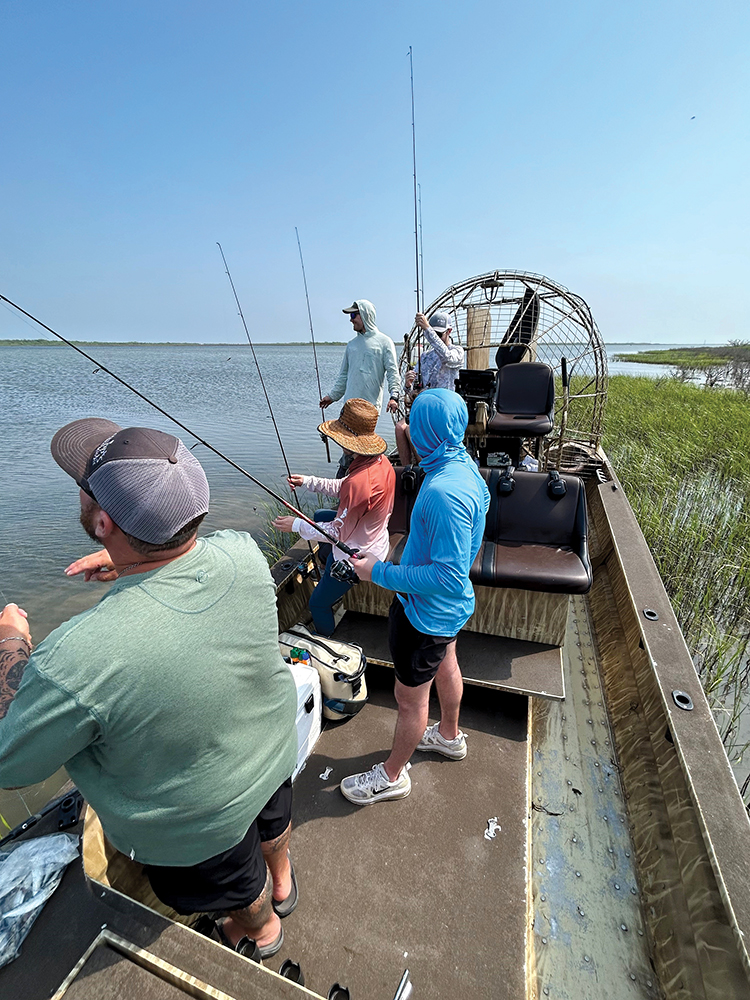
What I learned the hard way is that all that gear just gets in the way. I like a landing net, a fishing measure board, a good set of pliers, a small knife, a de-hooker, and a stringer. I try to avoid clutter as much as possible when I fish, which means only bringing things I can store. One lesson I learned the hard way was to keep your knives covered and stored. I, unfortunately, grabbed my bare blade this spring, while reaching into my lure box. Five stitches later I can report a valuable lesson learned.
The other concern about surplus gear is that it not only gets in the way but it will eventually get lost or broken. If you have ever landed a big redfish on a cluttered deck you know what I am talking about. This includes soft plastics, miscellaneous tackle, snacks, drinks, everything.
From safety to success, a decluttered boat, kayak, or pier cart truly makes a massive difference. Build a simple tackle box and keep it stocked with a few good lures you trust. Buy tackle that makes sense and buy it as you need it. We all know how hard the coast is on gear—an added plus, your wife will appreciate your adjusted fishing budget.