


A Rock and An Island

The only son of a long-haul trucker, Cayde Dwight Stone grew up fast and hard, not far from the shoreline of Trinity Bay. His mother died when he was still a toddler, so he spent most of his childhood running around wild and free. By the time he reached his teens, he hated school, most likely because he was too smart for his own good.
After his Pop drove the semi off a cliff in what they called a single-vehicle fatality, Cayde never went to school again. He felt much more useful at the marina, tending bait wells, shucking oysters and cleaning fish. Jim Johnson, who owned the bait camp, had a soft spot for the kid he and the others called Cay, which sounded like Key.
While the youth tried to find his way, Jim let him live in a rundown trailer on the lot. He also let him borrow a boat, so he could fish for trout and reds before and after work. Back in those days, a guy could sell plenty to local markets and restaurants. This Baytown boy could fill up the cooler faster than three or four normal men; he often threw tandem rigs to catch two at a time and just flipped them into the bottom of the boat.
But a boy can't really become a man just by catching fish. One day, over beers at the bar behind the wharf, a wealthy customer said something the young Stone would never forget, when he was asked, "What's the secret to getting rich?"
"Never buy anything you couldn't pay for in cash," the man mused. "Of course, you gotta make good money too."
Cay took those words to heart and came up with a plan. He stayed in the trailer for years, working and fishing and saving his money. Eventually, one of his customers at the marina offered him an opportunity and he quickly parlayed it into a career as an importer/exporter. Shrewd and savvy, he located the right stuff, snatched it up and moved it fast. The gig reminded him of fishing. He enjoyed the independence the work provided more than the money he made.
Through the prime of his life, C.D. Stone evolved both as a businessman and an angler, setting out on a quest to fish every named bay, lake, cove, pass, flat, point, reef, rock, sand bar and shoreline on the Texas Coast. Early on, he loved the North Ridge, Jack's Pocket, the Refuge Shoreline and the Bolivar Flats. Over time, he began going farther from the house, to fish the Car Bodies at San Luis Pass at night, also the Surfside Jetty.
In all these places, he encountered other fishermen, some of them flashy types whose names found their way into the mouths of many. He knew he would never be like them. Whenever forced to tell someone his name, he gave strangers lots of different ones―Cay, Cayde, Dee, Dwight, C.D., Stone...and others. He liked having a bunch of names, because it meant he didn't have one.
Before East Matagorda became a big deal, he was there. He also had good runs in all the bays of the Coastal Bend, before crowds of anglers tossing live croakers took a heavy toll from them. When Troutmasters started up, one of his few friends told him he should participate. "It'll be like taking candy from babies," dude said.
But when the outsider from the north shore of Trinity showed up at his first captain's meeting, intending to enter an event, he stopped on the way from his truck to the door. Cay could see throngs of men strutting around, laughing, telling lies, slapping backs and bumping fists. He touched no one and no one touched him; instead, he turned around and left, losing all interest in the idea of fishing to prove himself to others.
The longer he worked, the less he liked working. The more money he socked away, the less he needed to work. While this happened, he fished more than ever, and he just kept getting better. After seeing and fishing most everything in Texas, C.D. realized he liked the Upper Laguna Madre and Baffin best―so many places with clear water, and so much space. And most important, catching 30-inch trout proved much easier south of the JFK Causeway than north of it. After he moved to Padre Isles Subdivision, or The Island, as locals know it, he perfected the art of sight-casting monster trout from the deck of a skiff. Though he never entered the S.T.A.R., he could have won it several times. Some years, the anonymous captain caught two or three trout bigger than the winner.
As the population of North Padre Island exploded, and faster boats carried more people to every corner of the ULM and Baffin, the man came up with a new plan. Not so much because he caught bigger trout, but because he could fish without interference from others, he began fishing almost exclusively at night. Just as he didn't want people to know his name, he didn't want them to know where he fished, nor even that he existed. Hunting blind, he waded in most of the same places where he'd tamed many monsters after spotting them. As the years stacked end to end, he became satisfied with this nocturnal habit.
The single-minded Cay never married. Truth is, he preferred solitude over the kind of servitude relationships require. He did like women more than men, and over the course of his life, he knew many girlfriends. The last was the best; she had a sincere smile and a supportive demeanor, but she also had a fatal flaw, and he couldn't save her from herself. When her demons summoned the angels, he mourned, but he did not weep. An island never cries.
When he realized he was really sick, he didn't go to see a doctor. He always hated the baggage which comes along with asking for help. He knew what the choice meant. He'd heard stories about the demise of men like him. Covid and cancer came for some; others drank too much and shattered the glass. The ones who drew the shortest straws lost their minds while they went.
Cay didn't know exactly what was wrong, but he feared finding out and trying to fix it would break the bank, clear the accounts he had left. He saw no point in that, wanting to end his life more like the famous black Alpha wolf who once led the Lamar Pack in Yellowstone. The proud canine wandered off up the hill and never came back, once he knew his time was up. Baytown's son wasn't scared of dying, but he wanted to control the circumstances of his exit. So, as was his way, he devised another plan.
When he could tell his time was almost up, he'd get in the boat at night, ride to his favorite spot and let nature run her course. He'd leave instructions in a dry box on the console, apologizing to whoever found him, directing them to a wad of cash to cover their trouble and a way to find his last will and testament. In it, he left some money, with conditions, to the neighbors' son. He had befriended the boy down by the bulkhead; the teenager hated school, but loved to fish, was smart and independent, a lot like Cay. The will left the bulk of the money to the people who monitor the things the departing one loved most―the fish and the fishery.
The plan played out in the middle of a calm summer night, after C.D. had eaten nothing for nearly a week. Drowsy and irritable, he watched Gran Torino for at least the fifth time, falling asleep halfway through, waking up when the gangsters' bullets martyred Walt Kowalski. "It's time," he mumbled. Then he grabbed the dry box, stumbled down the stairs and lowered the boat into the canal.
By the time he blasted off in the Intracoastal, he had nearly fainted twice. On the long ride down the lagoon and through Baffin, he passed out briefly a half dozen times, but the boat remained on course, as if it did not need hands on the wheel to know where to go. When the bow turned north into Alazan, the man with a plan knew he would make it.
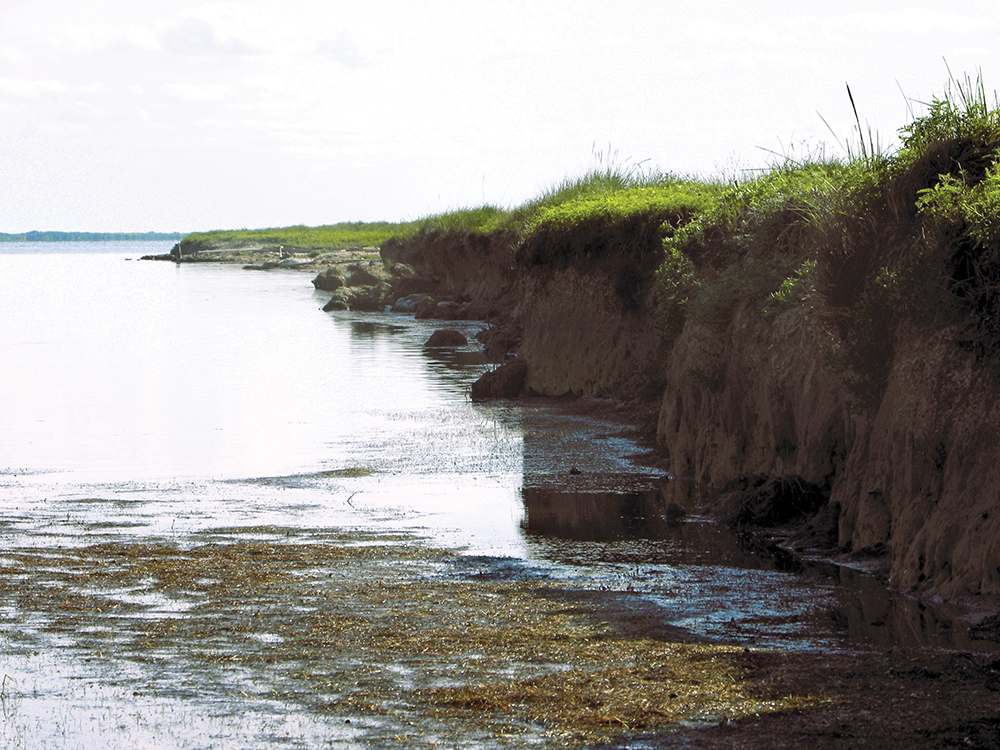
After punching the Power Pole into the mud in the northwest corner of his favorite cove, the old boy remembered to leave the box of papers on the console, summoned all the strength he had left, waded ashore and struggled up the bank, to the top of a brush-covered bluff. When he collapsed against the front of the thicket, sharp thorns slashed his skin and drew blood, but Stone felt no sting. A rock feels no pain.
During the last hours of his final night, standing at the threshold, the man drifted in and out of consciousness, dreaming and hallucinating. His visions centered on cherished places, from Coffee Ground Cove to Boca Chica. Mostly, he recalled the seductive contours of Baffin hotspots like The Platter and The Mirror. Like armor, the memories protected him, shielded him from sadness. There, in his favorite part of the A-Bay, Cayde Dwight Stone felt not alone; he felt at home. When his eyes opened one more time, he barely discerned a single star twinkling in the coming light. Never had he felt more proud to be a Texan.
When the light of day was on him, he could see the thrashers coming. While the morning sun colored the clay face of the bluff, the solitary captain navigated through the cut, into that perfect cove where souls at rest reside. When he passed, his shoulders slumped, his chin dropped to his chest, and his cheeks clenched, etching a counterfeit smile on his face.
Minutes later, the first angler arrived in a center console boat. Seeing no evidence of a wader, he decided to fish the cove and parked at its mouth. He jumped into the water and headed toward the escarpment where the scene had just ended. A roadrunner emerged from the thicket and started singing, like he knew the score. The wader looked intently, hoping to spot the calling cuckolid, but he saw no paisano. His gaze fell instead on the remains of a man who had perfectly executed a terminal plan.