
A Sportsman’s Dream

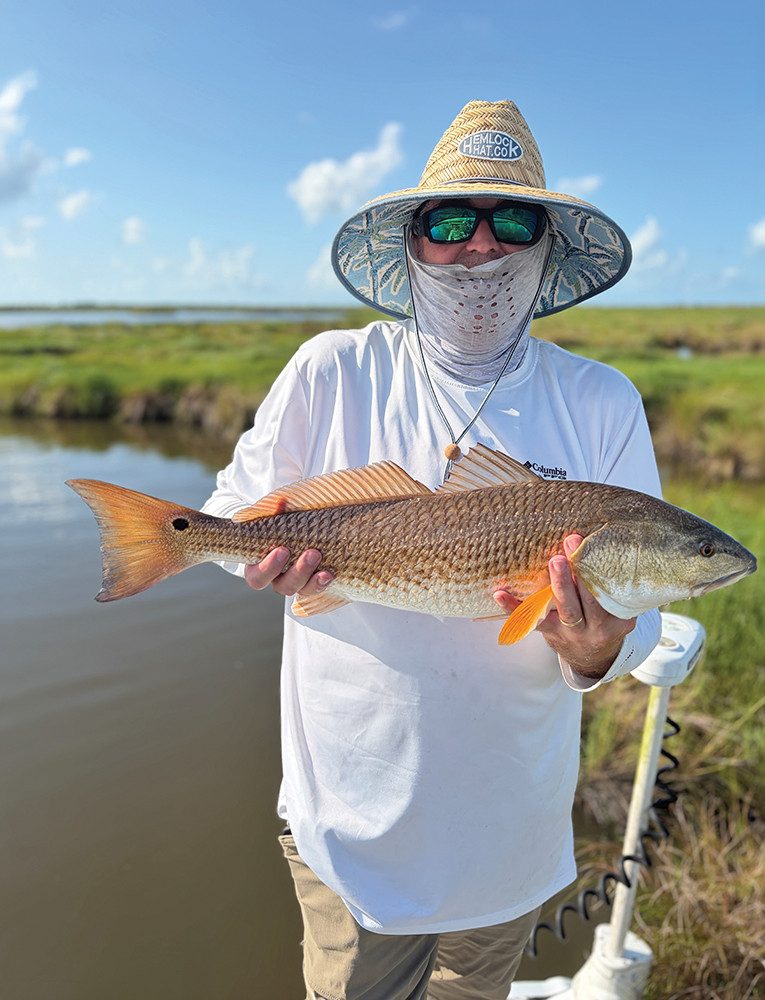
Well, I believe congratulations are in order for all Texans for having survived another brutal summer! The temperatures are beginning to decline and doing your outside chores seems to be a little more bearable with each passing day. However, we are not the only creatures enjoying the cooler temperatures. I was in the marsh earlier this week, and I had a big group of teal buzz over my head. That is always a sure sign that things are starting to get right in the world of outdoors sport.
When I was younger mostly my college days, I finally landed a job that would give me paid vacation. For several years I would save one full week throughout the year and burn it all on the last week of October. I would fish every day for ten days straight, putting in a full 10 hours. It was exhausting but the fishing was just so unreal that I could not pass it up. It was nothing for me to land 30 to 40 fish a day. I remember after about the fourth day of being in the marsh, I would stop casting at schools and just follow them. During this time I learned a lot about their movements, which helped me put together some of the puzzle's pieces.
For example, there is one area of a large pond I frequent often where you could cast completely in the middle and it was always good for a fish. Looking at it blindly, there was no rhyme or reason to it, until I followed a school of reds one day. The group pushed south down a shoreline, got to a slightly defined point and then darted out into the middle, about a full cast length from the shoreline, and then circled back to the shore they’d just left and headed north again. It was as if that was their highway and no matter the time of year, they were going to follow it.
As I got a little older and fished more often, I began to realize that fishing was great from early October to mid-December, assuming there had not been any major cold fronts in the days immediately leading up to me getting out there. From what I have found, the peak of it all was the week before and leading up to Thanksgiving. I personally believe that is the best time of the whole year to be on the water. By that time, there should have been a few fronts come through, and the shrimp are pushing out of the marsh in their migration toward the gulf. The redfish should be schooled up on nearly every shoreline, and the trout should be easily found under the flocks of working birds.
When it comes to locating fish this time of the year, the most important thing to pay attention to are birds. Schools in the main part of Sabine Lake are immediately identifiable by the groups of gulls hovering above them. With experience, and if you pay careful attention, you can predict what kind of fish will be underneath. Birds that are flying high and diving abruptly to the surface will almost certainly be covering speckled trout. There might be a few redfish mixed in, but the majority will likely be trout. This is because the trout are constantly on the move and feeding sporadically, which in turn keeps the birds guessing where the next shrimp will pop to the surface. They therefore tend to hover higher in order to maintain a wider field of view. Whereas gulls that are tightly bunched and hovering nearer the water’s surface are more than likely covering a school of redfish, with but a few if any trout in this mix. The reason being, the redfish tend to school more tightly, very near the surface, which means the gulls need to work lower in order to snatch a shrimp as soon as it pops to the surface…lest a redfish beat them to it.
Besides gulls, shorebirds such as herons and egrets will point you exactly to a shoreline that has cruising redfish. The reds will swim down the shore and push shrimp out of the way. A majority of the time, the only way for them to go is towards the grass at the shore. This makes for an easy meal for any bird that is standing nearby. If you are running the boat and happen to notice 3 or 4 white egrets lined up – stop and fish. Another great sign is watching them fly 50 feet down the shore and land again; they are resetting and waiting for redfish to come by again.
Once you locate them, catching them is the easy part as they will eat nearly anything when in these frenzied feeding modes. One thing that can make your trip more successful is not crashing the birds or the school – give them space. If you see birds working, stop a good ways out and run the troll motor into them. If you can keep from spooking the birds with your boat, they will point you directly to where the fish are staged. Even when casting at a school of redfish, there is a chance that you can cast to the outer edge, pull a fish off of it and not spook the rest. If done correctly, and you get lucky, meaning that a fish does not dart back through the school, you can sometimes pull several fish from it.
For the next two months, the fishing is going to be about as good as it gets. I am eager to have to put on a light jacket for the morning boat ride and scouring the lake for groups of birds. I am also ready for the sounds of ducks buzzing overhead, screeching gulls, and the unmistakable slurping and popping of a school of redfish moving down a shoreline. That’s what a fisherman’s dreams are made of!