
Adaptability Through Versatility
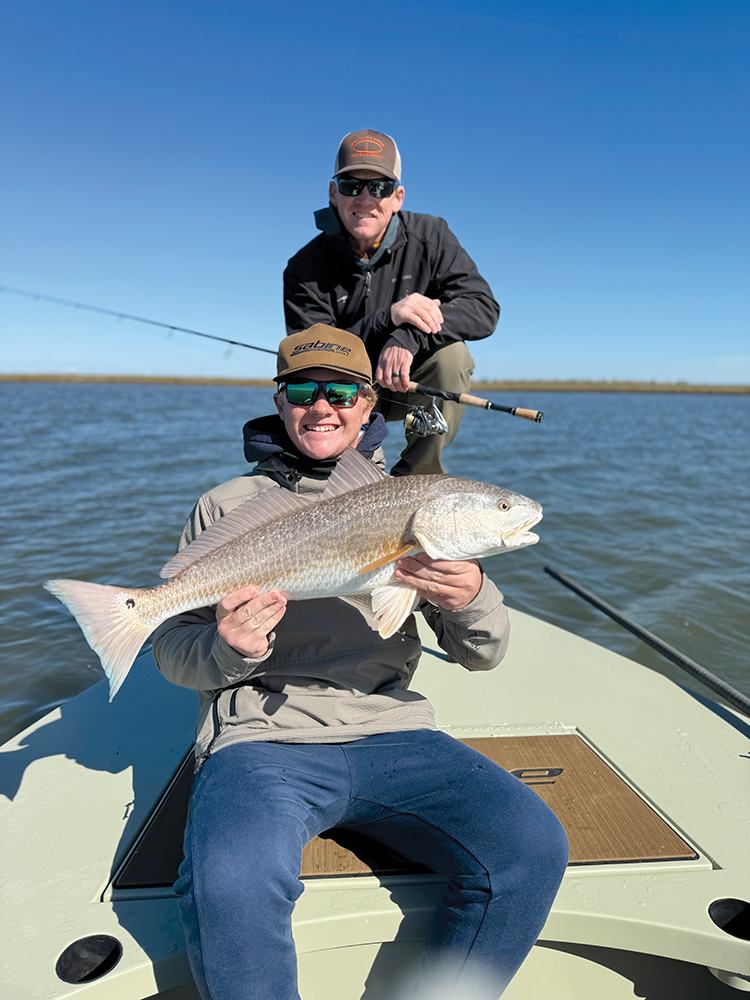
As I sit in my tackle room looking through notes for another potential topic to bore y’all with, something grabs my attention. No—not the cluttered mess of a fly-tying station that desperately needs reorganizing—but the light-tackle outfits collecting dust after a year of surprisingly little use. It’s not that I haven’t been on the water. It’s simply because most of my clients this year have been fly-only anglers.
A guide buddy and I often joke, “Where are all the light-tackle clients?” Somewhere along the way, many anglers began assuming that poling skiffs are meant exclusively for fly fishing. That couldn’t be further from the truth. A skiff is a fish-hunting tool. What weapon you choose to fire when you get within range—fly rod, spinning rod, or casting gear—is entirely up to you.
Now, not all skiff guides are created equal. Some purists would rather watch their clients whip themselves into knots with fly line and go fishless all day than dare place a spinning rod on deck. I am not one of those guides.
There was a time—at least for me—when fly fishing felt like a “step up the ladder.” Once sight-fishing with conventional tackle became second nature, fly fishing became the next challenge. And honestly, learning to sight-fish with conventional tackle is an essential step toward becoming what I call a fishy angler—someone who can read the fish, make the right move, and create the eat without much instruction.
For example, when a redfish is inches from inhaling my fly during that heart-stopping moment, I’ll sometimes pulse the rod tip instead of stripping line. It’s a trick learned from lure fishing that translates beautifully to fly angling and often triggers explosive strikes.
Anglers who have never sight-fished with conventional gear are easy to spot from the platform. If I don’t coach them through the process, they'll drag the fly to the fish, stop moving it, and expect the redfish to pick it up like dead bait. BUMP IT. TWITCH IT. MAKE IT ALIVE. Our flies and lures aren’t scented; we must imitate prey trying desperately not to get eaten. Playing dead rarely works for a shrimp or baitfish in the wild.
Don’t get me wrong—I love my fly clients. Fly fishing is my niche and my passion. But there is nothing wrong with throwing conventional tackle to sharpen your game, especially when cloud cover, wind, or dirty water make fly fishing tough. Yes, we can adjust by targeting tailers or finding protected shorelines, but sometimes a fly-only day turns into storytelling and birdwatching. And hey, that’s still better than sitting in the concrete jungle.
For anglers wanting to stay productive regardless of conditions, here are a few artificial lures perfect for blind-casting yet deadly when a sight-fishing opportunity appears:
1. MirrOdine (Slow-Sinking)
Perfect when fish suspend high in the water column. It hovers in the strike zone and can even tempt big trout lurking beneath redfish schools.
2. Small Paddletail (Down South Burner Shad)
A staple. Covers water quickly yet precise enough to drop right on a fish. Great for both sight-casting and blind work.
3. 1/8-oz Johnson Weedless Gold Spoon
Less intrusive than the 1/4-oz model and ideal for shallow, spooky fish. Still plenty effective blind-casting.
4. Banana-Head Bucktail Jig
Tied with a bit of flash and EP Craftfur or Foxy Brush. Works on a straight retrieve, jigged, or bounced along bottom. A killer sight-casting lure and a reliable blind-casting option.
Rig any of these on a 6–12 lb spinning or casting outfit with light braid and a 2-foot stretch of 15–20 lb fluorocarbon connected with a loop knot.
The point of all this?
Versatility catches more fish.
Fly, spin, and casting gear are all tools in the shallow-water toolbox—and all should get some use. As we enter 2026, I challenge you to pick up the form of tackle you’re least confident with and practice. Conditions will eventually throw you a curveball, and having another skill in your arsenal may save the day.
Until next time…