


Blacktip Bonanza
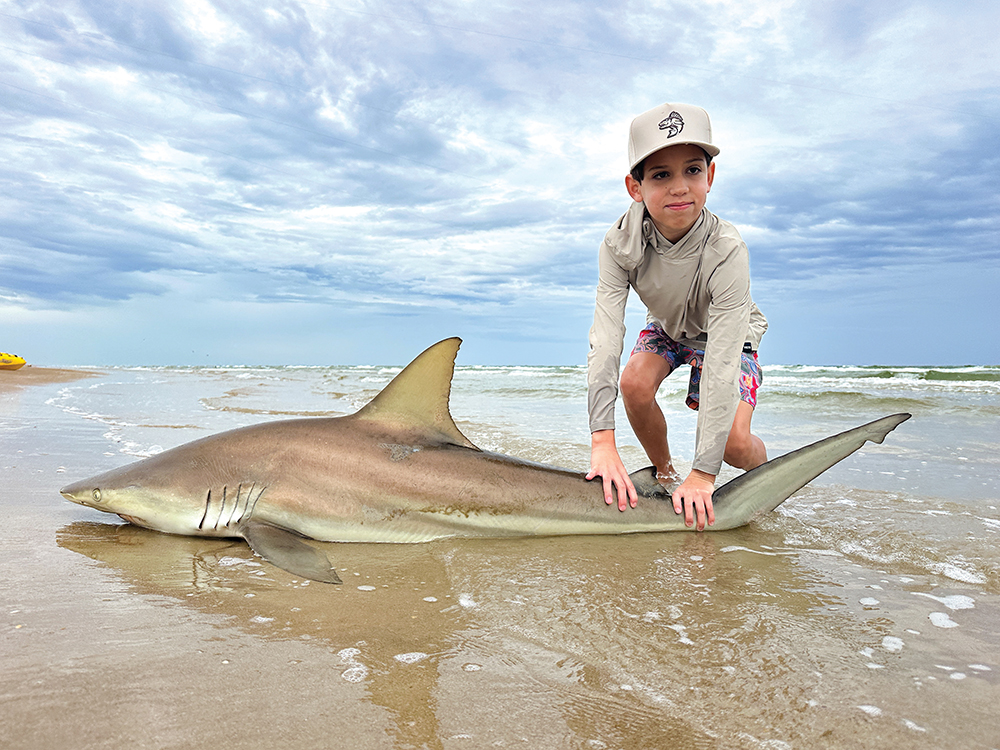
Overall, this has been an interesting year for anglers fishing the Texas surf. Our weather pattern from late-spring through the end of July has been turbulent. We've endured nearly constant, strong south/southeast winds. Breezes blowing near the 180° heading run parallel to the beach in South Texas, creating a strong south-to-north current.
When south winds blow for extended periods of time on southern stretches of our coastline, relatively cool water flowing out of the Rio Grande is blown north, along the beachfront. This creates an especially messy situation when heavy rains increase the volume of water entering the Gulf at our southern border. The cool, dirty rainwater rides the current northward, creating problems for anglers trying to catch fish from the beach. This year, when we should have had crystal clear, warm water, we've mostly had ugly water measuring at least ten degrees below expected temperatures. Unfortunately, for people like me, big sharks don't like the cool water.
The baitfish on which big sharks feed generally avoid the dirty, relatively chilly water. And we all know the main key to locating predatory species is to locate concentrations of the fish on which they prey. In years like this, many of the forage species move north, in search of warmer, clear water. Species like jack crevalle follow them, with the sharks trailing the jacks.
In upwelling events as severe as we’ve seen this year, large tiger sharks and even hammerheads venture up the coast, showing up from Matagorda to Galveston. I know of giant monsters that have been hooked in these areas this year, though they'd typically be feeding off Padre Island. This fact frustrates those of us who hunt for monsters down south, where we normally find much better action than our Upper Coast friends.
The scenario leaves us with one dominant type of shark, one I'd argue would be the "state shark," if the Lone Star State had such a thing. Around here, most saltwater anglers with more than a few trips under the belt have caught a shark, most likely a blacktip. Blacktips are by far the most common species of shark found in our waters.
These medium-sized predators with the iconic shape max out at less than seven feet in length, but their ravenous appetites seem better suited to creatures twice their size. Blacktips, even medium-sized ones, often take bite after bite out of whole large stingrays and jacks, meant to attract the attention of giant hammers and tigers. Unlike some other sharks, blacktips can be caught from the beach, at a jetty, off a pier, in the bay and in both nearshore and offshore waters.
They're often found schooling in great numbers, chasing balls of baitfish for miles and miles. Importantly, blacktips have traits which make them the perfect species to introduce new and young anglers to the world of sharking. Because they take to the air regularly after they're hooked, they provide big thrills for the anglers on the other end of the line.
In an average year, we have plenty of blacktips to target in our coastal waters, and this year has certainly been no exception. In fact, I've encountered more of them this year than ever before, especially throughout the warm months. Even during shrimping season, a huge percentage of them remained inshore, pushing back against the widely touted theory that culling shrimpers pull them out of the surf zone. They seem to like the cool, dirty water, because the number of them prowling in it this year has been staggering.
While blacktip sharks can seem like an annoyance to hardcore sharkers, they provide plenty of excitement to others, especially when they're hooked on relatively light tackle.And while they're smaller and easier to handle than the giants, they're still dangerous predators, and people get excited when they see one, particularly if they've never seen a shark in person.
These numerous sharks are suckers for fresh whiting, which can be caught on just about any trip throughout the year. Whether cast out from the beach or kayaked, whole whiting will attract these sharks in various depths of water found close to our beaches.Blacktips are an important part of the marine ecosystem, and I'd much rather hook one as "bycatch" than not have a single shark around, so I'll continue to think of catching them as a blessing.
While the cold water pushes out our usual giants, it also gives us a shot at one of our rarest big sharks. Typically, this species resides in cooler, deeper water, well offshore. In Florida, beach fishermen catch them on the coldest winter days, but here in Texas we only see dusky sharks on the beach during summer, when cool water fronts the beach. Dusky sharks look much like giant blacktips, some reaching lengths greater than ten feet and weighing more than 500 pounds.
In the midst of a severe upwelling event, it's possible to hook and land numbers of these rare gems. On my personal best trip, we landed five, and I've done it twice. My biggest dusky measured a shade shy of eleven feet, which likely made it a contender for the state record. But since they're federally protected, I had to release it. Doesn't matter, all I ever wanted were some quality photos.
They're only encountered in the cool, dirty water, and their numbers are low, so we don't catch many dusky sharks. We do catch plenty of blacktips. Most likely, this is because the cooler water attracts lots of food on which they like to feed, one species being the gafftop catfish. These and hardhead catfish inhabit the upwelling waters in prolific numbers, and blacktips find them delicious. In off-colored water, the sharks can easily ambush and catch them. The dirty water also makes it easy for the blacktips to catch plenty of whiting and pompano.
As long as food sources like these, favored by the blacktips, remain abundant in the surf waters, they'll run the beach in great numbers. If the waters warm up and turn clear again, the big sharks will move back in and replace them. The blacktips likely retreat and move offshore to avoid becoming part of the food chain which sustains the true monsters we spend an average summer trying to entice into fights.