


Cold Front Confidence: Let the Conditions Do the Work
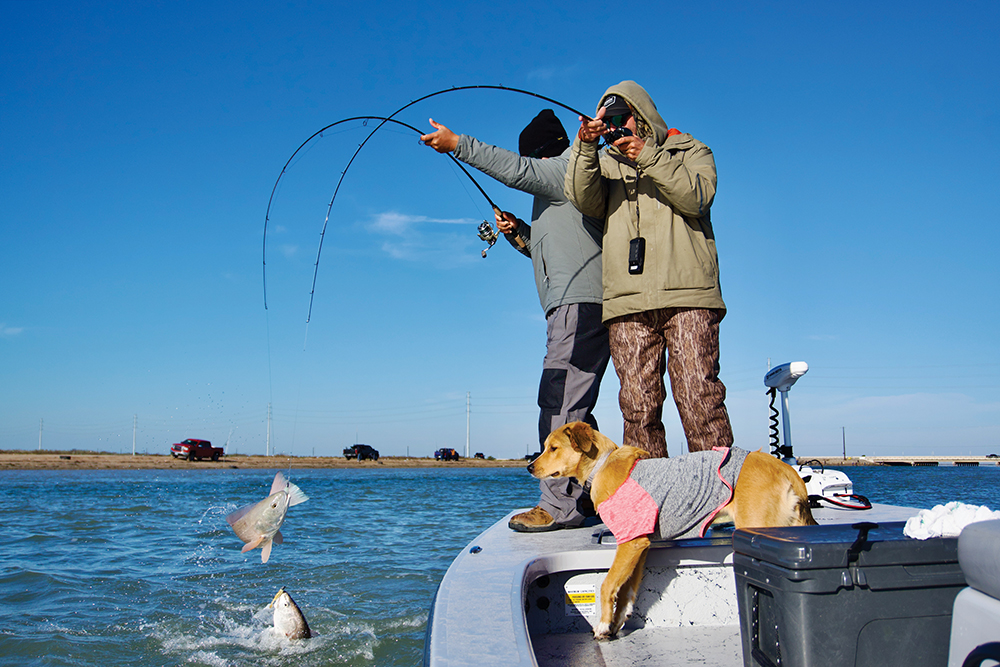
On the Texas coast, cold snaps fire everybody up. You hear it at the ramp, see it on the forecast, and feel it in the air when that north wind starts pushing. A lot of anglers treat a cold front like a problem. I treat it like a pattern reset. Cold fronts don’t make fishing harder; they make it more honest. If you follow the conditions and adjust to cold-water behavior, these fronts can actually simplify things.
Down in South Padre Island, a winter snap reshapes the fishing picture very quickly. Water temperatures fall, tides dump, and bait tightens up. Fish stop wandering and start reacting to comfort. Instead of scattering across acres, redfish and trout move with purpose. They’re either sliding shallow to find the sun’s warmth or bundling up deep to hold in the warmest depths. Look for fish where the water temperature makes sense. Once you understand that, your job becomes easier.
One thing I change immediately after a front is how I rig. On the flats, I downsize. Cold fish aren’t racing, so a lighter jighead lets your lure glide instead of crash. That slower fall keeps the bait in the strike zone longer and looks natural to fish that are thinking instead of chasing. I want my presentation to hover, not hammer the bottom—most of the time, anyway. When I move off the flats and into guts, channels, and drop-offs, I do the opposite. That’s where heavier jigheads shine. After a really hard cold snap, fish push deeper and stack lower in the water column where temperature stays consistent. A heavier head keeps you connected, lets you feel bottom, and keeps your bait in front of what I call “bundled-up fish” instead of drifting above them. Same lure, different tool for different water.
Cold fronts also push fish in two directions at once. On sunny, calm afternoons, redfish will slide up real skinny trying to soak up any warmth they can find. Mud, dark bottom, and protected shorelines become heaters. That’s where sight-casting still plays. You’re not looking for fast-moving wakes anymore. You’re looking for slow pushes, tails barely moving, and fish parked instead of cruising. Those are the ones you can feed.
At the same time, other fish go the opposite way. They push into guts, troughs, and deeper pockets to bundle together and find a stable temperature lower in the water column. Trout especially love this. Instead of spreading out, they stack tightly together. When you find one, you usually find more. That’s why after a front I spend less time covering water and more time dissecting lanes, edges, and drop-offs.
Retrieve speed becomes everything. Warm-water fishing rewards movement. Cold-water fishing rewards patience. After a snap, I slow my clients down on purpose—shorter hops, longer pauses, and keeping the bait in front of the fish instead of pulling it away. A cold redfish isn’t hunting; it’s evaluating. Give it time and you’ll see more committed eats instead of half-hearted bumps.
Boat control matters more in winter too. Cold water is clear, and cold fish are cautious. Noise, shadow, and pressure travel farther. When guiding after a front, I treat every approach as though we are stalking the fish. Long pushes, wide angles, and letting fish settle before we ever cast. You can’t rush winter fish for fear of spooking them.
What I love about cold snaps is how much they reveal. These fronts strip away the randomness that pervades other fishing patterns. Fish stop roaming and start positioning based on temperature, protection, and comfort. If your lure is getting followed but not eaten, slow it down. If you’re marking fish but not feeling bites, change depth. Every reaction is feedback.
Cold fronts don’t shut fishing down; they organize it. When you match jigheads to depth, slow your mindset, and fish where temperature makes sense, winter will cease being a grind and become more predictable. And predictable fishing is the kind that puts more fish in the net. South Padre’s mix of turtle grass, sand, and mud makes winter special. We can follow warmth, not just bottom structure. One shoreline might be dead while another is alive because it picked up a few extra degrees of the sun’s warmth. Paying attention to that detail is what turns a cold, windy day into an easy one.