
Cold Weather Approaches and Strategies
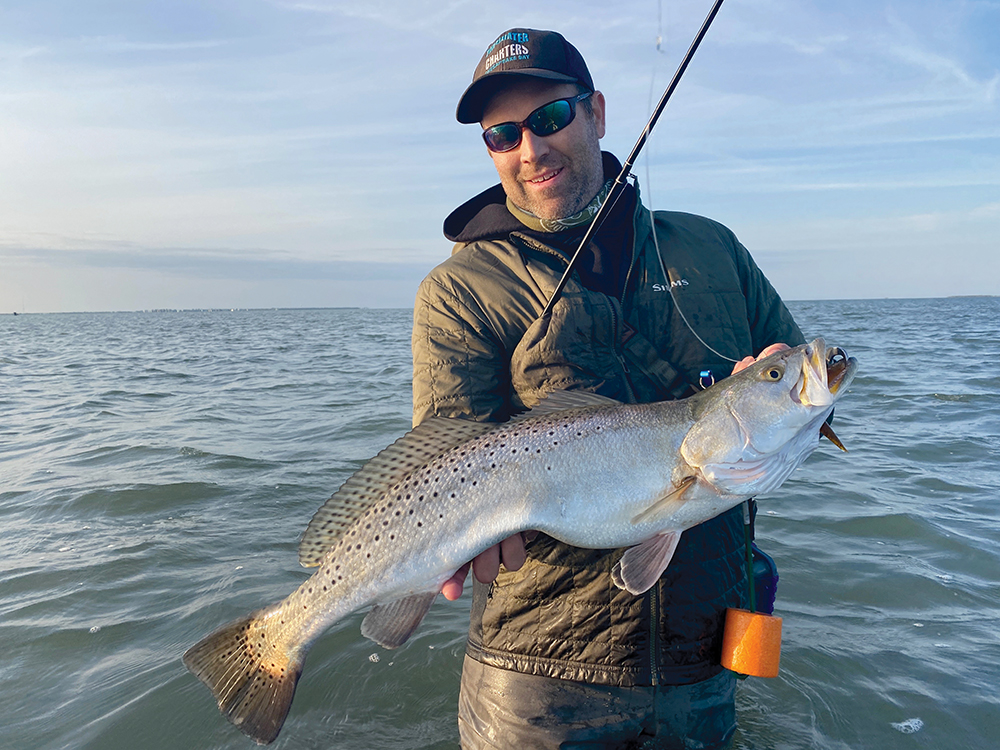
Since we are presently in the thick of winter fishing, I believe it fitting that I write something about my attitude and approach to areas I intend to fish during the coldest times of the year, especially in some of the very small areas I like to fish. Too many times we place ourselves behind the eight ball, so to speak, by the way we approach the areas we intend to fish. I say this because I do not believe the majority of anglers are aware of how sensitive fish are to noise, especially sounds that can be transmitted through the water.
Ask a seasoned tarpon guide what happens when you put the trolling motor down and bump it into gear. Ask today’s top bass anglers how bass respond to trolling motors and forward-facing sonar pings. Ignoring these facts would be unwise. I’ve noticed myself becoming careless and inattentive at times with my approach, and it hurts the odds. Don’t even get me started on loud music on the boat while you are trying to fish.
When seeking trophy trout, I prefer small coves or pockets along barrier islands or ICW spoils in colder weather. Over the years, I’ve gathered information on many coves and pockets with strong bottom structure, shallow feeding and warming areas, and quick access to deep water. I like deeper water nearby with similar bottom structure as the area being targeted, but even areas without structure can still attract fish.
I start a minimum of 150 yards away from the zones that I intend to fish. Wading in carefully and attentively while fishing lets you observe and spot where bait is present. Incidentally, bait isn’t only found by watching baitfish themselves break the surface. Birds also show us baitfish presence. They can also show us the fish we are targeting.
I remember early in my career, I was wading the Bray Cove area of Mesquite Bay when I noticed brown pelicans diving repeatedly in a shallow cove. While seeing pelicans diving is by no means out of the ordinary, these birds would suddenly abort their dive as they got close to the water. Once in the area, I realized that the fish the pelicans were seeing were large trout and reds—too large for the pelicans to attempt to eat. I will never forget that lesson, and to this day I sometimes still see this happen.
Our focus as we approach our intended fishing area is the most important aspect of the day. The discipline I will describe here must become second nature—something you do without thinking. Ospreys are my favorite bait-finding birds. They typically live close to the areas they fish and communicate with one another through their calls while hunting. Most of the time there are only one or two working the small coves or pockets, but I did once see a flock of 18 in one pocket. It was on a day after a dramatic drop in water temperature and tide. Stunned mullet were hugging the thermocline just off the bottom in the muddy offshore of the pocket. I could feel the lure bumping the baitfish as it fell to the bottom. A slight lift off the bottom was greeted with a light but very distinct thump—the thump we all wait for.
We must monitor the water temperature as the day develops. Often, both baitfish and gamefish remain in deeper offshore waters until sunlight heats the uppermost layer of the water. Fish acclimate to the cold and will be more active in colder water than some might think. This is evident by the numbers of big fish that are caught in the most brutal winter conditions. Any time I can coordinate a moonrise or moonset minor feeding period with a warming trend, confidence is high for me. Many of my very best days occurred during the shorter minor periods versus the longer major periods.
Once you’ve reached the targeted area, slow down and be patient. Fan-casting the entire area lets us cover more water by presenting the lure to a wider range of targets. Creating some bend in your cast helps in allowing anglers to bring the lure out in front of the fish, which is definitely a more natural approach. With a natural angle, predators react with instinct, and that is always the best chance for us to get a big fish bite.
Often, I’ll settle into one spot for most of the day if I’m getting enough signs that the right fish are present or likely to appear. If you get impatient and feel the need to leave, ease out if you are planning on returning to the area later in the day. I usually consider several locations and can relocate as needed, so I don’t always follow my own advice. Tournament fishing taught me to pick an area and camp there, knowing that the field of excellent anglers would be occupying some of the other high-potential areas. You can learn more about an area by committing to it and allowing yourself to watch the bites turn on and off, which they do. If I know the right fish are present, I am not leaving—period. Sometimes, this mindset comes back to haunt me. Even with that said, I don’t regret not moving, knowing that I had placed myself in an area with high potential.
One thing that is hard to teach is the seeing of the unseen. I know—how does one see something that can’t be seen? I am talking about the movement of baitfish and also the gamefish within the pocket or cove. We see the bait moving as the water warms—little flips and pushes on the water’s surface that can be observed if paying close attention. Gamefish follow and set up under the baitfish. This is especially true with larger trout holding under or with larger mullet. I follow the movement and try to position myself where I can stand and cast to much of the area without moving very much. Moving creates noise, and I have become far more concerned these days with how this is affecting our outcomes.
I am always mapping out the movement in my head as the day progresses. In doing this, one can predict where the bites are going to come from next and be prepared. The ability to anticipate the bite is huge. You are simply more ready when that opportunity presents itself. This results in a higher hook-set ratio and more fish being brought to hand.
I prefer lures that allow me to keep them in the strike zones longer. Custom Corky Fat Boys, Floaters, Soft-Dines, Texas Custom Double D, MirrOlure Lil John/XL series, 6th Sense Party Paddle, and Jay Watkins Series soft plastics. Each lure enables different fishing techniques for this pattern.
Along the middle to lower Texas coast, wintertime waters will likely be clearer, so there are many times when a clear-bodied bait is required. This is especially true when skies are clear and the sun is bright. Darker-bodied lures also work well in clear water if we have heavy cloud cover or fog—Morning Glory, June Bug, Plum, and Watermelon are my favorites. On bright days, I prefer Pistachio, Truth, Spanish Bone, Pink, Clear Chartreuse, and Moulting-colored baits.
Last week, during a post-front warming trend, the new Texas Customs Pistachio soft plastic was killer for me and my guys. Simple rule of thumb: dark day, dark bait; bright day, bright bait.
I hope some of this helps you the next time you are in the water. Always be mindful of the increased fishing pressure on the resource and release all the fish you don’t need. Just keep less and fish more!
May Your Fishing Always Be Catching!
—Guide, Jay Watkins