
Dealing with Pressured and Spooked Fish
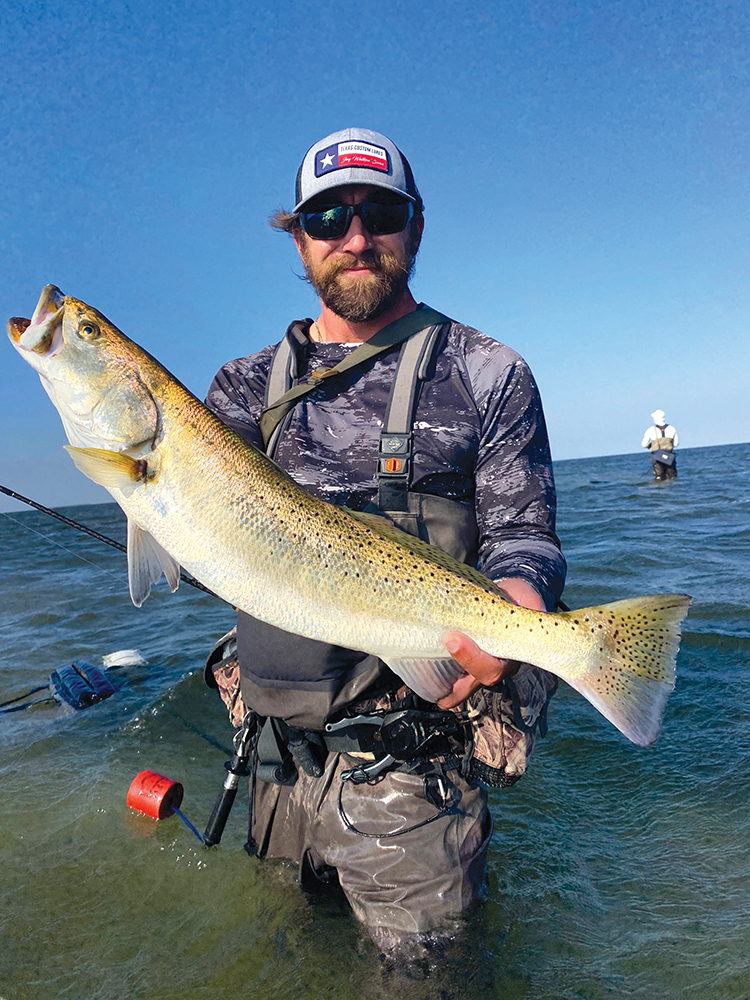
Shane Overstreet also got in on the fun this day.
As water temperatures begin to warm between the few remaining frontal systems, and tides start rising with the approach of the March equinox, I begin focusing on large expanses of grass flats in both the Aransas and Corpus Christi Bay systems. In spring, increased warmth and sunlight cause bottom grasses to grow rapidly. Depending on winter water temperatures, tidal levels, and even the number of ducks we’ve had in the area, we may see an abundance of grass growth or a noticeable decline. I enjoy every fishing season, but I always look forward to warming waters and the opportunities found across large grass flats.
March also brings wind, which actually helps when fishing big grass flats along the Middle and Lower Texas coast. Southeast and northeast winds blowing 20-plus mph are not much of a problem when tides are high. As Rockport guides, we’re fortunate to be able to fish effectively even on windy days thanks to these expansive shallow flats. That’s likely one of the reasons Rockport remains one of the best places along the Texas coast to be a fishing guide.
Greatly increased shallow-draft boat traffic over the past decade has changed how fish feed and behave on these flats. I was fortunate to wade and drift these areas back when boat traffic was minimal. It wasn’t uncommon to have trout and redfish cruising right alongside the boat, creating incredible sight-casting opportunities. That still happens occasionally today, but with constant pressure, fish are far more aware. They respond by dropping into the grass or sliding off into deeper zones on the flat. Identifying and prioritizing these areas has become essential. Fish don’t only use these zones during low tides—pressure alone will drive them there until conditions improve.
Every day, I watch boats running across the thick grass flats where I fish. It’s common now for fish to move off long before boats ever get close enough to see them. I watch wakes and water movement carefully and make mental notes of how fish react and which direction they move. Just so you know, they’re not always moving directly away from the noise. If you’re paying attention, you’ll notice these movements and can plan for them in the future.
I arrange my anglers, our wading direction, and my boat position so that boat traffic works for us rather than against us. I don’t drift my boat behind my waders because I want to create a quiet zone around us. Boat traffic will often naturally veer away from my boat and waders, allowing a pocket of undisturbed water to form—“safety for the fish,” you might say. As unlikely as it sounds, this approach has worked for me from San Antonio Bay to South Padre.
Years ago, while fishing Port Mansfield, I noticed heavy and predictable boat traffic in one area. One morning, after seeing boats and waders working a known sweet spot, I wondered if the pressure had pushed fish east of their normal staging area. I ran roughly 600 yards east and offshore to avoid disturbing them if they had moved.
As we eased back west, I noticed the active bait line was about 200 yards east of where pressure was being applied. Boats were drifting through, then circling back repeatedly, cutting both inside and outside groups of waders. I positioned my anglers far enough behind the pressure so that when boats stopped to reset, fish had time to settle. That allowed us to wade into position and cast without intruding. Each time a boat made another run, within minutes we began hooking large trout. As long as my clients kept their distance, the boat movement pushed fish toward us.
There’s a very fine line between being far enough away and being just a little too close. After two solid hours of success, a nearby boater pushed too close and shut things down. Watching dark gray missiles shoot past me in clear water once again reinforced how fishing pressure affects fish—and how, when understood, that pressure can be used to your advantage.
So why can we still catch fish—especially trout—that appear to have been recently spooked? While I can’t cite scientific studies, my 48 years on the water provide a solid foundation for these observations. Fish today react to boat traffic from farther away than ever before. That’s no longer true “spooking” in my mind—it’s relocation to safe zones until pressure subsides and they can resume normal behavior.
Predators react instinctively to movement. “What I am seeing, I am creating” is how I explain this to clients. I learned this in my redfish tournament days. We’d spook a redfish on the flat, then cast ahead of the wake it created and immediately hook it. That fish was clearly spooked, yet instinct took over when the lure appeared in the right place.
Trout are more challenging than redfish, but with patience and enough space between disturbance and presentation, they too can be fooled.
Understanding where slightly deeper water lies within a grass flat is critical. Even a few inches of depth provides security. Many anglers only target these areas during low tides, assuming fish are forced there—but boat traffic sends them there as well.
Often, the easiest way to locate these zones is by color change. Deeper water shows as darker green on the flat. High-quality polarized sunglasses are essential. I use Waterland Co. sunglasses with glass lenses in the Milliken Green Mirro color. After lens-replacement surgery last September, returning to glass lenses gave me noticeably sharper vision. Being able to detect subtle color differences is crucial—plain and simple, you can’t catch what you can’t see.
If you fish anywhere along the Middle to Lower Texas coast, you will encounter pressure—especially on weekends and holidays. My hope is that the perspectives shared here help you approach pressured areas with confidence. Stick to your plan long enough for it to work. Believe in it and let the pattern develop.
Lure choice right now isn’t as critical as many believe. I’ve seen fish transitioning between areas eat a wide range of offerings. Feeding aggression fluctuates throughout the day, peaking during Solunar periods, but fish can still be induced to eat even when they aren’t actively feeding—if the bait is presented correctly. At this stage of my career, getting a fish to eat when it doesn’t want to feels more rewarding than anything else. That said, downsizing can be especially effective in these situations.
Smaller lures I favor include the MirrOlure Lil John, 6th Sense Party Paddle, Texas Customs Double D, and Custom Corky Soft Dines. The smaller MirrOdine is also very effective. Larger trout often choke these smaller baits, so take care during hook removal and release.
May Your Fishing Always Be Catching!
—Guide, Jay Watkins