

Dog Days
My uncle asked, “have you ever worked so hard that you’ve laid under your truck like a dog?” “Why would anyone want to lay under their truck?” I asked in return. Later that summer I found myself out on a job, on a particularly humid July afternoon, with the kind of sweat worked up that soaks through your socks. With no shade trees in sight, I remembered my uncle’s smart-ass remark. A short army crawl later I was in an oasis. I’ll be damned, he’s not crazy after all.
What I experienced was quite remarkable; the breeze seemed to just come out of nowhere. When I was standing out in the open, there was hardly a breath of wind, or so it seemed. Lying under the truck seemed to compress the air and made the variable wind feel like a nice breeze; the shade didn’t hurt either. Once I realized I wasn’t near death, I got to thinking; I wonder if this is what the fish feel like sitting on the edge of a flat next to a channel during the heat of the day? Funny how my brain works sometimes, but when you’re as mentally ill for the game as I am you just never know when or where inspiration will strike.
I really enjoy fishing in the heat of the summer as I have probably mentioned before. To me, the fish become very predictable and there are typically a lot of options on the table. Fishing on days with some decent tide movement usually helps, and one thing is for certain; getting an early start this time of year is definitely in your best interest. I’m not typically one that wants to be at the ramp before the sun is up, but this time of year is an exception. It’s unmistakable, the magic that occurs on the water as the sun is rising on a hot summer day.
Right now, you’re probably questioning how can you sight-fish before the sun is even fully up? Well, I can give you a few scenarios that might help explain how and when that can happen. First would be the fact that summer mornings with low tide levels are notorious for congregating schools of reds in the marsh. These are easily spotted by the wakes they create, and the gulls that hover above them. How’s that for a target to cast toward?
Second would be tailing reds. Quite often when there’s a strong tide movement sweeping across shallow grass flats at first light, we see redfish tails wagging above the surface as they root bottom for whatever forage might be present.
Lastly, and probably my favorite when sight-fishing at daybreak, would be chasing “backing” redfish. This is where the fish are swimming and feeding so shallow that the top half of their body is exposed. Stalking these fish can be challenging as they’ll often disappear briefly while slumping down in slightly deeper water. Putting the sun to your back does little good here as the angle is so low that your shadow is projected farther than usual, often spooking fish. I’ve actually found it helps to work towards the sun or at a slight angle whenever possible. This way your shadow doesn’t spook fish and, better yet, the rising sun reflects off the redfish’s head like a beacon. You can literally spot them from a hundred yards away at times. Now it’s all on you to sneak close enough for a good shot at them.
After the early morning festivities have played out, I will often go to areas of open flats with favorable water clarity for spotting fish. Seagrass flats are a great place to look as the sun is reaching its optimum angle. Single cruising reds are often the target here. This game can play out for the rest of the day at times with good tidal movement. However, when tidal flow begins to weaken and the water temperatures begin to spike, fish activity can come to a screeching halt. That’s when a lot of people simply give up and pack it in for the day.
This is a perfect time to look along channel edges. Deep channels have cooler, more oxygenated water than shallow flats, giving fish a break from the brutal heat, and somedays boat traffic. Speaking of boat traffic, if you are easily angered by boats driving by while you’re trying to fish then this tactic may not be for you as some channels are often highly trafficked boat lanes. As I try to explain to customers, it’s kind of like going deer hunting on the side of the highway…only this is legal. Anyways, the channels have large amounts of water flow, even at times of weaker tide movement. Hence, the reason they are a good place to look when things aren’t fishing well in the shallow backwaters.
The edges of these channels simply give the fish an opportunity to slide up quickly to look for a bite to eat, then slide back off into the deeper, cooler water. I often look for edges with seagrass, but scattered oyster, riprap, articulated brick mat, or even barren sand bars are all edge structure that will produce shots at cruising fish. It takes some experimenting in your local area to find which type of structure will work for you. This strategy is probably the most reliable opportunity for sight-casting during the heat of the day.
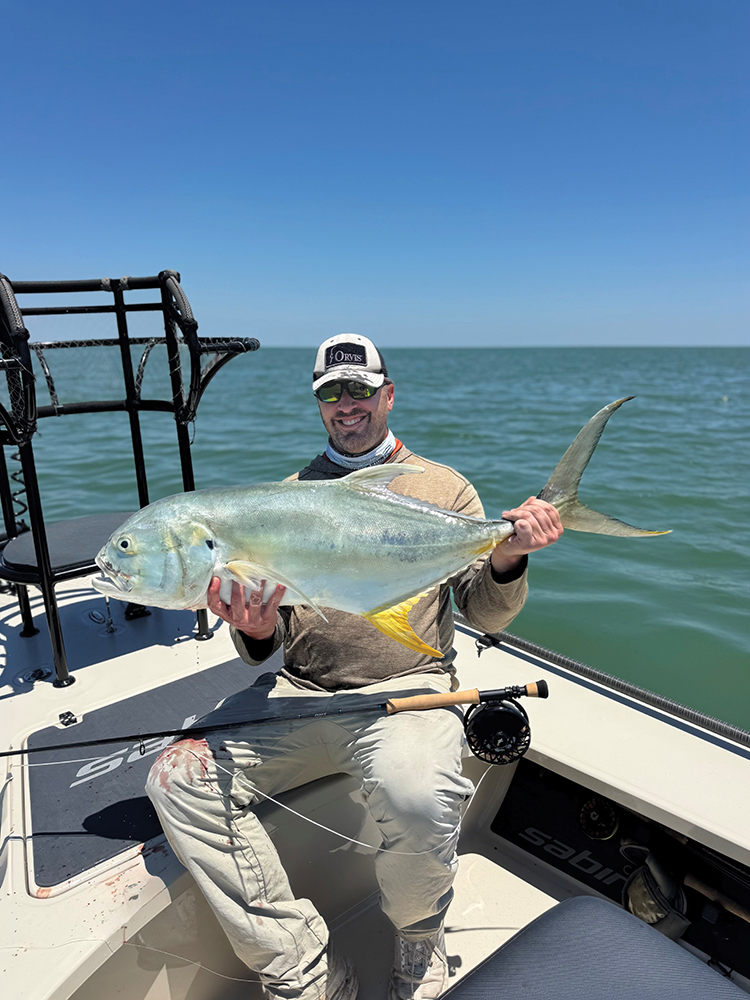
However, when this tactic isn’t working, another thing you can do is cruise around open water hoping to spot some birds working above a school of jacks or bull reds – two species with reputation for feeding vigorously when all others have shut down. Knowing the likely areas for them to feed in your local waters helps as they’ll often show up in the same places time and time again in the summer months.
So, when you start to hear the cry of cicadas in the trees and see dogs panting in the shade of a pickup, think about what the fish are likely doing to survive in hot bay water. I bet if you put yourself in their shoes, you might find more fish than you thought possible in the dog days of summer. Until next time…