
Embrace the Suck
Years ago during the Iraqi Freedom campaign, the U.S. military popularized a slang saying that encompassed the need to accept and persevere through difficult or unpleasant situations without complaining. It was called embrace the suck. To truly embrace the suck one must be willing to confront things that make them uncomfortable so they can overcome them and become a better person. The month of August forces many of us to do exactly that and embrace the suck as conditions on the water tend to become quite unpleasant as the mercury bumps the top of the thermometer. Extreme summer heat will be the name of the game this month and anglers from all parts of the Texas coast will be trying to figure new ways to deal with it. From the backwaters to the gulf every angler will need to make adjustments this month in order to not only be successful but to also be safe.
Let’s begin with the obvious patterns and the most familiar is focusing fishing activities early and late in the day. Many anglers will start their days an hour or so before sunrise and stay until the sun starts beaming a couple of hours after daybreak, and then calling it a day before the temperature becomes unbearable. Other anglers will apply this same philosophy, only in reverse, and start late in the afternoon, staying out until well after dark. Both are great options and can provide outstanding action when coupled with favorable tides.
For as long as I can remember there has been a dedicated bunch of anglers who call the jetty rocks home during the summer months and it’s virtually impossible to get there before they do. If I didn’t know any better I’d swear they camp out down there, waiting for the ideal conditions to happen and the fish to get active. I personally don’t fish much in the dark with clients for a variety of reasons, but I enjoy doing it myself when I get the opportunity. I know several guides who run trips at night in the summertime and do very well, so it’s certainly another great option. If you do intend to be on the water after dark be sure you let someone know where you’ll be, that you have all your safety gear in order, and have all the necessary lights in case you encounter any navigational or mechanical issues. Bad things that happen in daylight are almost always exponentially worse in the dark.
On the subject of safety gear I really feel the need to pass this along as it hits home for myself and others. I have always been good about wearing a life jacket or PFD (Personal Floatation Device) while underway in a boat. Like most folks, though, once I reached my destination, I removed the PFD and went on with the business of fishing or doing whatever activity I had planned. Over the past several months I have developed a new perspective on the PFD situation and have converted to the newer style that is self-inflating. These PFDs will activate automatically if you end up in the water, or can still be activated manually. I know most of you are thinking, “What’s the big deal here? It’s a life jacket, let’s move on to the fishing stuff.” I actually agree with some of that thinking but it’s the reasons to wear one all the time that I’m going to talk about.
For example; let’s say you get the opportunity to take some kids or new anglers fishing, and they are not proficient swimmers, nor are they familiar with water safety when something happens and you might fall out of the boat. At this point anything can happen; you can hit your head on the side of the boat during the fall or a submerged object in the water – and now it’s up to those folks in the boat who have no water safety training to rescue you.
Another prime example is a sudden medical condition such as losing consciousness due to overheating, blood pressure issues, or anything similar which could lead to you falling overboard. If you are wearing a PFD your chances of getting back into the boat and getting appropriate attention increase at least a million percent compared to someone without the PFD.
As a guide or even a friendly host, there are plenty of times you get people on your boat with no clue whether they can swim or handle themselves in the water, so you need to take precautions. The new self-inflating PFDs are comfortable, affordable, and take up much less storage in your boat due to their slim profile. Think of them as a very worthwhile investment that could keep you from having a really bad day on the water.
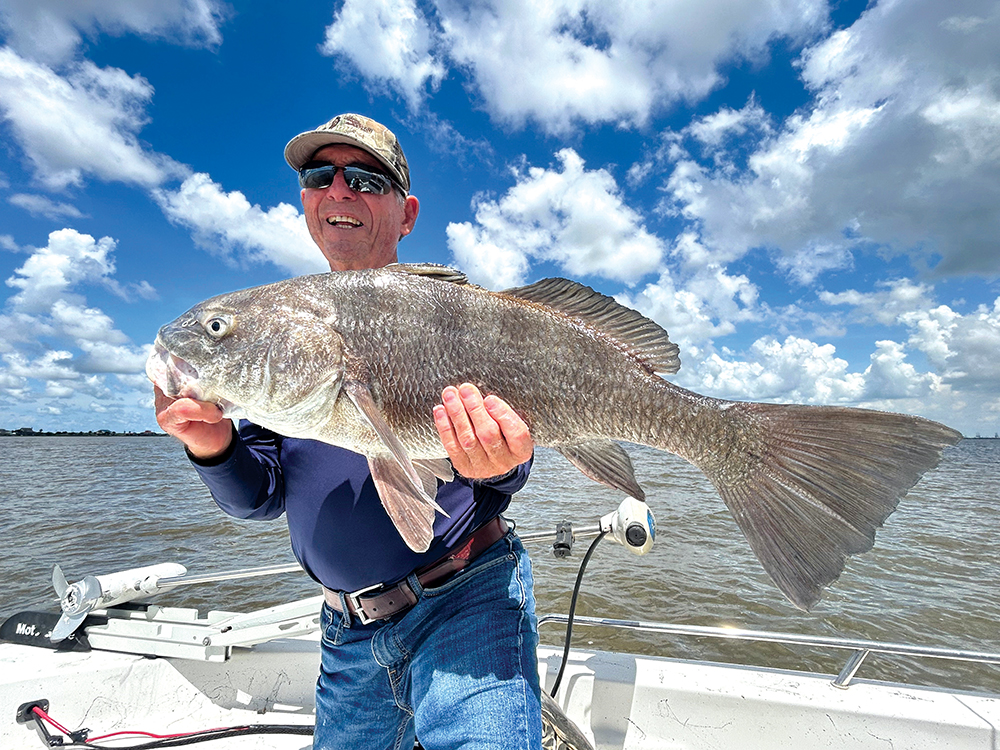
Earlier I mentioned the obvious patterns of staying out of the heat, but if you are inclined to tough it out during the heat of the day you can still score big. Obviously, you need to be prepared and certain precautions need to be taken. Easily the most important is staying hydrated and protecting yourself from the sun with sunscreen and the proper clothing – this pretty much goes without saying. You can almost guarantee that the crowds will be headed in during the hottest part of the day, looking for some air-conditioning, and you’ll have the majority of the lake or bay all to yourself. If you are fortunate enough to run across one of the big schools of redfish that seem to like this time of day, you can tug on them until your arms ache. The open body of Sabine Lake, basically two miles out from any shore, tends to be a great place to look for these schools as they hunt down the big concentrations of shad and pogies. It will be unmistakable when you find them because you can both see and hear the surface chaos. This program will also be happening along the beachfront, with lots of jack crevalle present, so be prepared.
Perhaps the type of fishing most affected during these weeks of exceptional summer heat is the shallow water bite in the backwater marshes. These lakes and ponds that average one to three feet deep will turn into brackish hot tubs as water temperatures soar to 90° and even higher. The excessive heat often makes the redfish quite lethargic, forcing them to seek relief in deeper guts and potholes. These fish will be tough to catch at times, and when you do catch one, it will take a while to revive them properly prior to releasing. The last thing you want to see is them swimming off a few yards and going belly-up. However, if you are fortunate enough to be in these shallow water areas during overcast days or after a rain shower has passed through it can be incredible. The water cools down and the fish become more active. The difference of only a few degrees in water temperature can be extraordinary.
Last but certainly not least will be the speckled trout bite that will be happening everywhere from the nearshore rigs and beachfront, all the way into the rivers. The jetties will get the lion’s share of traffic but those who know the pattern will do equally as well along the deeper breaks in the channels where these fish will often stack up. We will see increased bird activity over schooling fish and hopefully their average size will increase again this year, as it did in 2024. The overall health of the fishery is improving but still fragile, so please use your best conservation ethic to assist the recovery.
It was August of 2017 when Hurricane Harvey delivered a very cruel blow, forever changing the landscape of Sabine Lake with nearly 60 inches of rain in four days, and we have yet to completely recover from that. Hopefully we never see a repeat of that catastrophe and eventually Sabine comes back to look like her former self.
As you venture out this month please take an extra minute or two to ensure that you and all who fish with you are prepared for the conditions. As always, if you get the opportunity, please take a kid fishing and share your passion for our sport with a new angler.