
Fall on the Flats: Variety on the Texas Coast
There’s something about the turn from September into October that feels like the coast is hitting its stride. The summer heat hasn’t fully let go but the sting of August has started to fade. The days shorten, the light softens, and the bay seems to breathe easier. For anglers, this stretch of the calendar is a gift, a time when the Texas coast comes alive with variety. Redfish schools can be seen tailing on the flats, trout key in on migrating bait, tarpon start coming to life, snook creep into your thoughts, and even flounder begin showing themselves in the mix.
For me as a guide, these two months are when I lean into versatility. No single target species dominates, and that’s the beauty of it. Every day brings a new opportunity, sometimes all in the same trip. To make the most of it, I rely on simple but deliberate strategies and a few trusted tools that never leave my boat deck.
If September had a mascot, it would be a copper-hued redfish tailing or backing in shin-deep water. This is one of the peak times for schools and pods to gather on the flats, tails flashing as they pin shrimp, crab, and mullet against the grassy bottom. Down here in South Padre, we’re fortunate to see this year-round, but in early fall, it feels like it happens every day on every shoreline. The trick is patience and precision. I’ll ease my boat, or slip in with waders, and watch the movement before making a cast. A Waterloo rod is always in my hand, the right balance of backbone and sensitivity for sight-casting fish that spook at the slightest wrong sound. Paired with a Florida Fishing Products reel, I’ve got the smooth drag and reliability to lean into these bruisers when they try to bulldog their way off the flat. A KWiggler Ball Tail Shad is my go-to lure here, the tail giving just enough vibration to get noticed without blowing out the school I’m working. I’ll rig it on a light jighead, weedless if the grass is thick, and let the fish tell me how they want it.
By late September, cooler nights start nudging speckled trout out of their deeper summertime haunts. They slide onto the flats toward potholes, guts, and areas where bait funnels naturally. This is when I love working soft plastics across broken grass lines or old prop scars, twitching and pausing to mimic an injured baitfish. Topwaters can be deadly, too. Especially at first light on glassy mornings. The bite can sometimes be finicky, but that’s where confidence in your tackle pays off. I tell clients that when you’re sight-casting these elusive specks, the ratio of seeing them to hooking one might be 1 out of 20. That’s just how tricky they can be. Missing a few bites is part of the game, and when you finally stick one, it’s usually worth the wait.
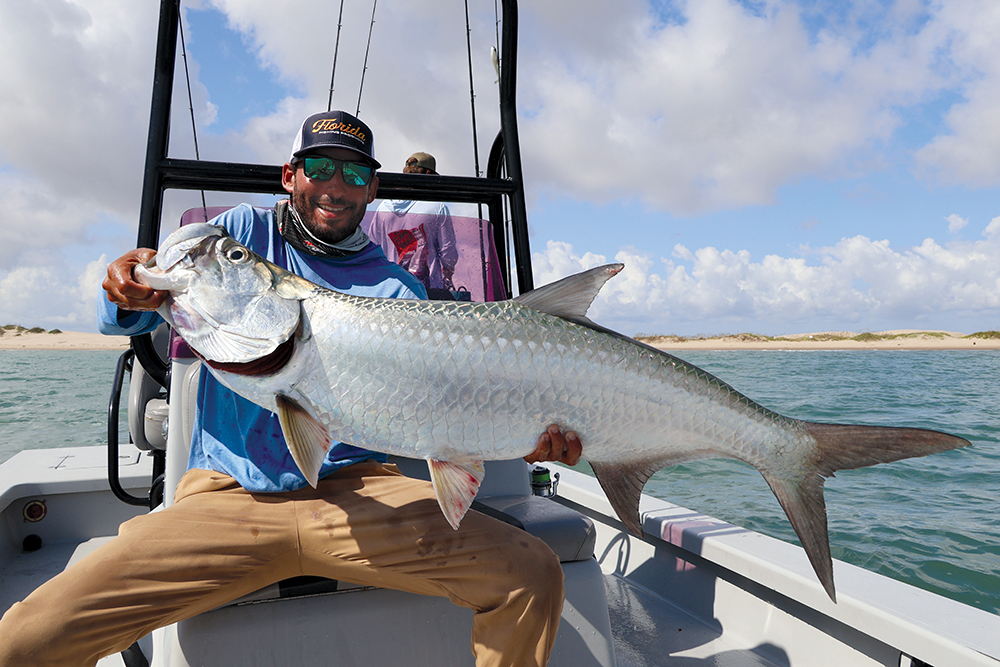
If redfish and trout own the flats in September, tarpon and snook own everything else. When the tide and bait align, it can feel like the other fish don’t matter. I typically chase snook around structure toward the south end of Padre, while tarpon demand a broader range. Juvenile tarpon can be found inshore, but the true heavyweights are farther off the beach. I’ll admit I’m still learning the offshore tarpon game, but each season I pick up new patterns that make these giants a little easier to predict. For both species, I bump up to heavier gear – stout Waterloo builds that can absorb the punishment. Florida Fishing Products Resolute reels shine here, with drags that hold up to blistering runs without locking up. When I’m targeting snook, I like throwing a KWiggler 4-inch Ball Tail Jr in the Bart’s Sand Ninja color, they seem to love that natural pattern.
As October progresses, the variety only gets better. Flounder start staging near channels and passes, lying in wait while trout and redfish roam nearby. These fish are often the “bonus bite” of a fall trip; that surprise thump at the end of a drift that turns into dinner. I’ll work edges and drop-offs methodically, keeping a rod rigged with a KWiggler ready to bounce along the bottom. Clients are often surprised by how subtle the bite feels, just a little pressure, a little extra weight. That’s when good tackle matters most. Feeling the strike, waiting that extra heartbeat, and then driving the hook home is part of the fun.
September and October aren’t about chasing one species. They’re about embracing variety, letting the bay dictate the pace, and being ready for whatever shows up. Some mornings we’re sight-casting to redfish in ankle-deep water. By mid-morning, we might be drifting deeper flats for trout and reds. And by afternoon, we could be chasing tarpon rolling just offshore. What ties it all together is confidence in the tools. A rack of Waterloo rods on deck, each paired with a Florida Fishing Products reel, covers everything I need. Add in a box of KWiggler lures in a few proven colors, and I’m set for whatever the day delivers.
Fall on the Texas coast is unpredictable in the best way possible. It’s a season where the line between species blurs, where every cast could connect with something different, and where the variety of our fishery shines brightest. As an angler and a guide, that’s what keeps me coming back day after day, knowing the next bend in the rod might be red, silver, spotted, or flat as a flounder.