


Getting the Most Out of Gut and Bar Structure
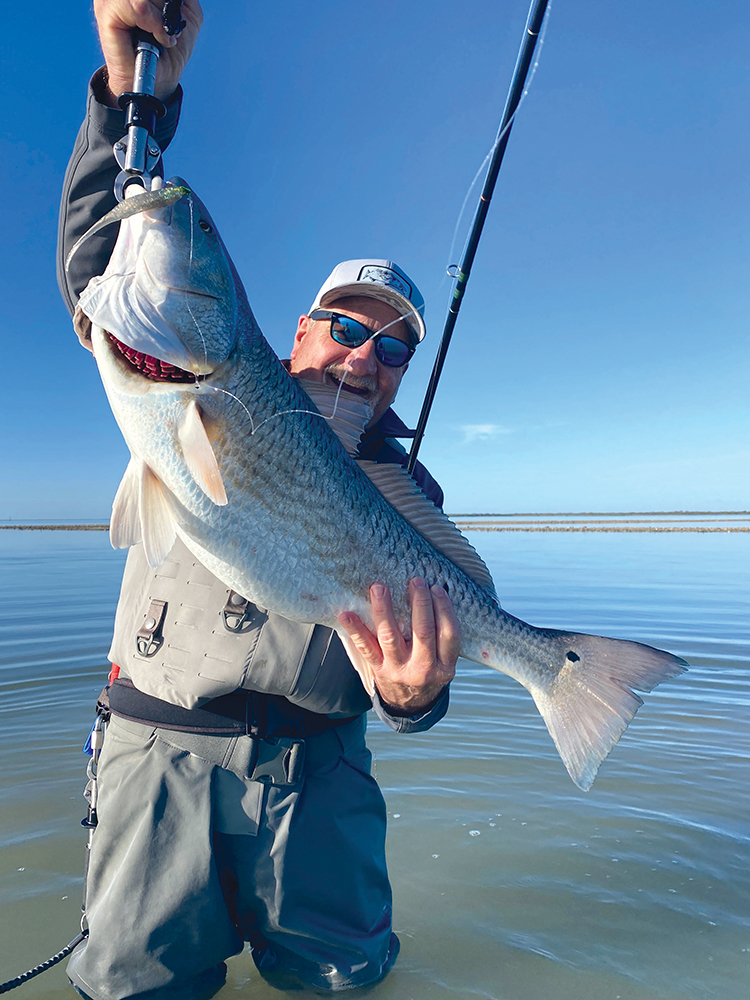
Sonny Horton with a super fat red!
I am excited about this month’s article because of its specific nature and because this pattern presents itself in just about every bay system on the Texas coast…if not the whole Gulf Coast. At this writing, tides in the Rockport area remain very low and we are unseasonably warm for this time of year. The average air temp for this specific period is around 75°F, but in the past several days our air temps have been running mid- to high-80s. As a result, the water temperatures are now reaching as high as 76°. It is spring and springtime weather patterns can be unpredictable, which makes it even more important that we be flexible with our fishing game plans and mindset.
One of my favorite patterns to fish during springtime is the gut and bar structures that lie parallel along the face of nearly all barrier and spoil Islands. These features have been created over time by predominant wind and wave action. The breaking of a wave creates a washing effect as well as a depositing effect. With every wave, sediments are stirred up from the seafloor and then settle again as the wave crests and breaks, thus creating deeper channels known as guts, and also forming shallower sand bars between them. I have seen some shorelines that possess as many as four or five such features. The majority of these shorelines possess at least three clearly defined gut and bar features within the Texas Middle Coast bay complexes.
One of the first things to remember is that the depths in each gut can vary, which is a good thing. The guts themselves can be the only structure game fish might need to create an ambush point during feeding periods. Just as important are the shallow sandbars that separate each shoreline gut. Game fish prefer to reduce the size of their feeding zones when possible and will certainly ease up on top of shallow bars and feed when opportunity presents.
This is likely true, especially during nighttime feeding, or when present atop the shallow bars any time that low-light conditions prevail. Trout will especially use the deeper guts as hideouts and quiet zones during non-feeding periods. What this means is that the fish will slip off the top of the shallow bars to the deepest portions of the gut and sit out the downtime between feeding periods. This does not imply that fish cannot be caught during these times or at these locations. Truth be known, the fact that the deeper water can be easily seen and easily fished can tip the odds in our favor during tough periods of the day.
It should also be known by just about everyone at this point, that a food source of some type must be present. During spring, a wide variety of food sources become available, including species that are rarely visible, such as pinfish, shrimp, small crabs, and occasionally young menhaden (shad.) Mullet are usually visible as are needlefish (ballyhoo.) Trout eat needle fish at this time of year on a regular basis.
The ideal gut and sandbar structure for me would first be located windward. Then I want the guts and bars to have varied depths. Submerged grass is essential, and the ideal gut or bar would feature both shallow and deep, distinct grass beds, plus a clear shallow grass edge with breaks, bends, and underwater points. I realize. It’s a big request but these magical areas do exist.
Weather patterns and other activities throughout the year hold many of the keys to the development of such areas. For instance, when tides are low during winter months, if a freeze event occurs there will usually be a significant die-off of bottom grass in shallow water. Maintenance dredging of channels and open bay disposal of the spoils will negatively impact these areas as well. Drought periods, which we are currently dealing with, will also affect the growth of our grass. How about Brown Tide, how does this loss of clarity affect growth of bottom grass?
In the northern portions of the Aransas Bay Complex we have seen the destruction of oyster reefs due to overfishing. Sadly, as these reefs have been depleted, we have also seen extensive shoreline erosion along with the disappearance of large stretches of historic gut and bar formations. In a perfect world we would have none of these issues, but nothing is or ever will be perfect.
All of these effects will always influence what we do and how we do it. Each spring I survey all the areas of shoreline and barrier spoils, looking for the proper ingredients that enable them to hold bait fish and game fish. The main ingredients are bottom grass, shallow feeding areas, moving water and quick access to deeper and darker water. With the proper polarized glasses, one can easily see the changes in water color and the darker colors of the submerged grass. I love my Waterland Co. Mineral glass sunglasses. As the name implies, they are made of glass and are very light. Believe me when I say that I’m hard on eyewear and these haven’t suffered the first scratch in six months of hard use.
Once out of the boat, the fishing process begins, and you have to be aware of the areas where bait fish are most active. Where is that in relation to the guts, sandbar or grass beds? Have you seen any slicking in the area and, if so, where did the slick originate? Where it first pops to the surface is where the fish are. Wind and current can both move the slick and more times than not the fish that created the slick are only under or near it for a short time. This is especially true in shallow water.
Over the next two months we will see increased slicking activity as menhaden migrate into our bay systems. Be sure to make mental notes where fish are caught within the structure as well as where bites are received. A bite is a fish catching opportunity and a location where we know for certain that there is at least one fish present. Once a bite pattern has been established it should play itself out throughout the area that you are in and can also be applied to other areas with similar structure.
Today we had several areas where the guts held small, submerged grass beds and these smaller areas of structure were holding the larger trout. I was telling my guys to let the lure tickle the edge of the grass as the lure approached the bed. For nearly an hour multiple fish at a time were being hooked and landed. This group had the proper tools to see the structure, cast to it accurately, with rods that were sensitive enough to feel every tick of the lure against the grass, and the subtle take of the fish mouthing the lure. It writes easier than it plays out in real-time but your technique and can be refined with practice. When this happens, your confidence will soar, and you will have become a better angler.
May Your Fishing Always Be Catching! -Guide, Jay Watkins