
Holding Out Hope

After coming off an extreme year in the Texas surf, I have hopes for a fruitful winter season ahead. The extreme part of our stressful time in 2026 has been due almost exclusively to the influence of the Mega El Nino in the eastern Pacific Ocean. This has been labeled perhaps the strongest El Nino in recorded history, and despite being hundreds and even thousands of miles to the west of us, the impacts are noticeable. This temperature-induced phenomenon created dramatic changes in the Pacific, and it changed our daily weather pattern significantly this past summer.
Our summer conditions can all be summed up with one word – disruption. Because of El Nino, our weather patterns were influenced by a displaced jet stream, resulting in vigorous winds at the start of the summer. Along the Coastal Bend and on the Lower Texas Coast, south winds blew relentlessly. When prolonged events like this last weeks or even months, it changes the very dynamic of our coastal waters. For over three months straight, these winds sparked a cold-water upwelling. While we are no strangers to these events, this particular episode was exceptionally long and enduring.
While these upwellings are one of the least understood events along our coast, they always happen after excessively strong south winds roar for a couple of weeks or more during the summer. The end result is cooler water, sometimes ten or more degrees below normal, and often muddy for several hundred yards off the beach. All of this affects our ability to catch fish along the beachfront.
With the upwellings, bait often vanishes offshore or migrates to the Upper Coast, where temps are normal, significantly warmer. In South Texas, the trout, redfish, mackerel and tarpon simply disappear. The vast majority of our targeted fish are absent. However, there is one silver lining in this generally dark cloud. This is the only time we encounter dusky sharks in the surf here in Texas. These are fairly large, strong, robust sharks that normally spend their entire lives offshore. I've even seen them beyond the continental shelf while fishing for tuna.
Think of a 10-foot blacktip shark on steroids, pushing several hundred pounds, and you can envision the magnificent dusky. Some believe the cooler water brings these brutes close to shore, perhaps to mate. Nearly all dusky sharks caught in the Texas surf are large, mature specimens. This is the one and only prime time to target a shark species rarely encountered on Texas beaches.
El Nino also disrupted tropical activity, not just the Gulf, but also in the Atlantic. While a low number of hurricanes and related storms is often cheered, there are times when we need a system in the Gulf, at least a weak one. We rely on tropical systems to push up our summer tides and pack the beach down. Due to the lack of any development at all, our beaches remained hot, dry and absolutely unsuitable for driving. It takes a lot to kill a Toyota, but I pretty much ruined my last one back in June, due to some of the worst driving conditions I've ever experienced.
The sad state of affairs lingered all the way through September. In October, around the time of the major Sharkathon surf fishing tournament, we had a hurricane development in the Gulf. While it originated in the lower Bay of Campeche, it tracked northeastward toward Florida. We finally had our tropical spark to push the tides up to the dunes for several days. Nonetheless, the Sharkathon tournament went on as scheduled, and many reckless fishermen destroyed vehicles in the corrosive saltwater, all in the name of chasing glory.
After the high tides receded a bit, driving became much easier. Areas of Padre Island that were virtually cut off due to narrow beach passage near the dunes became passable again. This said, the weather was still crazy, with large surf and variable winds. The water clarity did hold up well, and slot redfish stormed the beach in tremendous numbers. Since then, the first major cold fronts of the year have put an end to any further tropical development. Our focus has now shifted to the winter patterns that lay ahead.
Debate exists about how El Nino will affect the Texas coastal areas this winter. Some models predict a wetter than normal season, some predict cooler than normal temperatures and others predict more extreme conditions of various kinds. In any year, Texas winters are notoriously hard to predict, and this is really frustrating for fishermen. Planning trips weeks out becomes virtually impossible. It's hard to say how much this El Nino event will exacerbate this uncertainty. What I am going to do at the moment is put that in the back of my mind and focus on possibilities, with optimism.
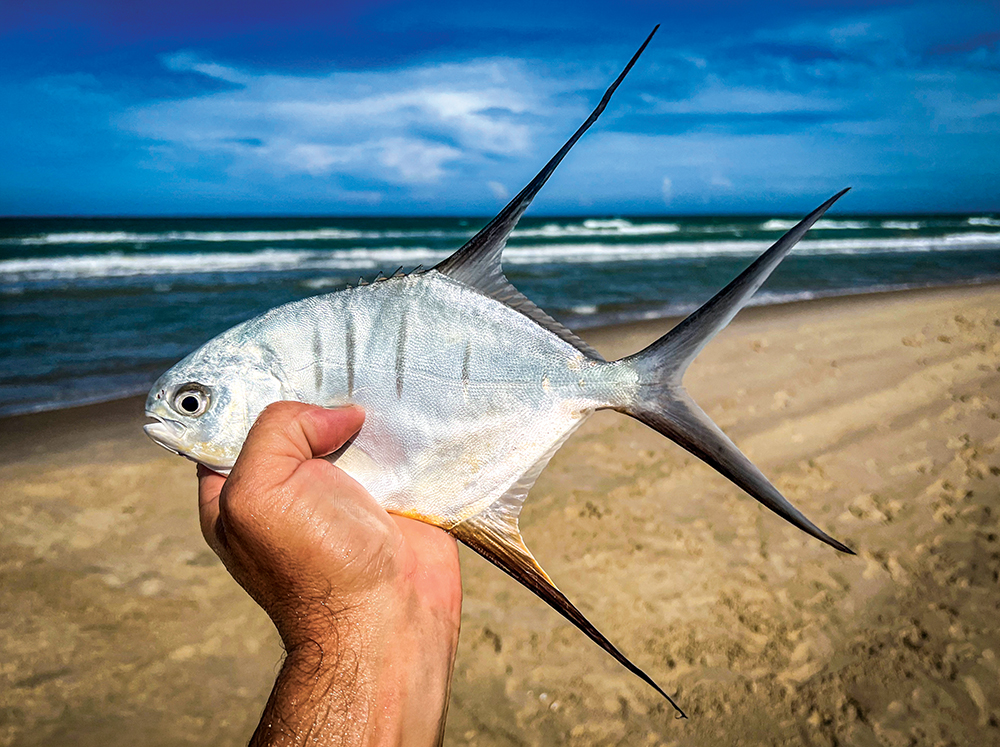
Fall has already been great for redfish on the beach. This could very well be the most epic winter of all. We could see a copious amount of pompano invade the surf. Then we have the oversized bull redfish, which are traditionally thick in December and January. Several shark species could be around in great numbers as well. Maybe this winter, we will find another Mako, or maybe monster specks rolling into the shallows, as they did regularly, many years ago. As usual, I'll be running charters all winter. Anyone who wishes to book a surf fishing or shark trip and who mentions this article will receive a 30% discount on the fee. Check out oceanepics.com for more details.