
In the Zone
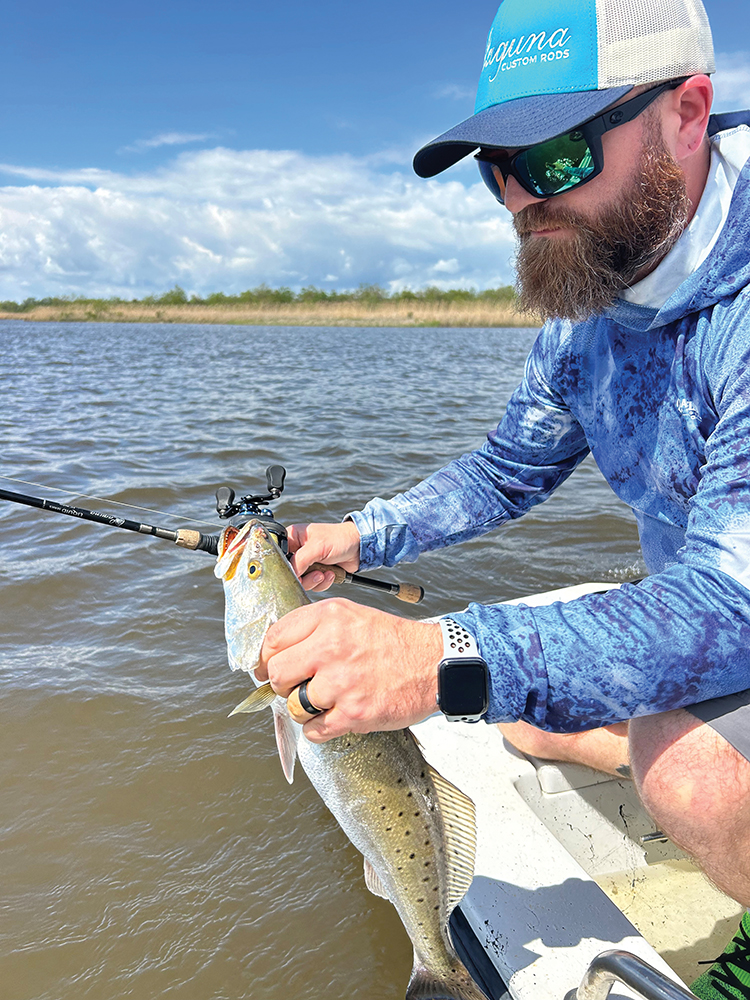
What do you think of when you hear phrases or sayings such as sweet spot, right down the middle, center cut, right down Broadway, or in the zone? Most folks would agree that this means whatever you are doing you are doing it exactly right and doing it in the perfect spot. Whatever the activity may be it’s always preferable to be in the most advantageous spot, the one where your odds are better and the chances for success increase. Fishing is no different. In fact, it’s one of the best examples of needing to be in the right spot to be successful, and there are plenty of variables in this equation.
Generally the first thing that comes to mind when you think about being in the right spot is where you are going, or to be more precise, where you will be fishing from. Yes, boat location is an important aspect but its not the most important one. Visualize for a moment that you are looking down from overhead at the face of a clock, numbers 1 through 12 all around in a circle. Now in the center of all these numbers is a point where the hands are connected to the face of the clock. In this scenario if a fish was positioned at the center from which the hands rotate you could be in a boat and cast from any of the numbers toward the center and have a chance at catching that fish. So, even though boat placement is important there are other things that are actually more important.
Perhaps the most crucial factor in this “fish catching equation” is depth. More precisely, the depth at which you present the lure or bait. So many people neglect this aspect of angling, and they miss out on some really great opportunities.
Correct presentation and depth control are critical to a fisherman’s success. Classic example of missed opportunities would be something as simple as throwing a soft plastic on a jig head that is too heavy. The too-heavy jig will sink so fast that most fish won’t give it a second look as it spends too little time in the strike zone. A lighter offering will be easier to keep in front of those fish for longer periods, which will undoubtedly produce more strikes as well as more fish. Once an angler realizes at what depth the fish are holding that angler can now focus on that depth and adjust their offering to match that depth.
This scenario also works in reverse, from the top down, so to speak. I have seen many anglers stubbornly refuse to change lures, especially topwater plugs in the summer when fish are short-striking and not completely committing to eating that plug. Rather than swap to a sub-surface offering that will put the lure in the strike zone, too many fishermen just continue to hope that one of those fish will eventually rise all the way up to the surface and close the deal. This type of thinking rarely pays the kind of dividends that switching over to a different offering made for that situation does.
Over the last several years I have become much more aware of the depth of water I fish and how I fish it as a result of some exploration. I have switched up my approach to different types of structure and begun to match lures better with those depths. Crankbaits, jerkbaits, square bills, and other depth-specific offerings have become new and valuable weapons for my clients and myself. It just makes sense to keep your bait in the zone as long as possible and the results that come from that approach are nothing short of extraordinary.
At this point, once you embrace the thought of putting the right lure in the right depth you can begin working on the other variables.
I am constantly amazed at how so many fishermen attack an area on the water from such horrible directions. I see so many anglers basically take the “lazy” way out instead of using the correct approach. For example let’s think about tidal flow and how to attack it. I see so many people never even consider what that water is doing and how it affects everything from predator to prey. Instead of facing into the current and fishing a lure with a natural approach most anglers just blindly cast in every direction hoping for the best. If most fishermen could ever see under water to witness how fish position themselves in relation to current or flow they’d change their tactics immediately. Fish naturally face into current so presenting your bait with the current instead of against it is a simple way to catch more fish. Yes, I know, sometimes its not comfortable to do this but if you want to be successful this presentation is certainly the way to go.
This can also be said for fishing in windy conditions, sometimes it’s a pain to have to cast against the wind but there are times you have to do it for a more natural and lifelike presentation.
Earlier I mentioned “boat positioning” as one of the things many anglers think about when referring to being in the zone. Having your boat in the proper location is also critical when you decide to fish a certain area in order to achieve the aforementioned lifelike presentation. There is one common example that comes to mind of how to attack an area that so often gets little to zero consideration and that’s the direction of your retrieve in relation to the structure you are fishing.
I see tons of anglers fishing a shoreline or some structure such as jetty rocks or grass lines using only a perpendicular approach. This means the angler casts to a target and reels their offering away from the target. Think about casting from deep water towards a shoreline and retrieving the lure back towards the deep water. Number one this isn’t a natural look, baitfish seldom swim in this manner. Instead the angler should be casting parallel to the structure so their bait swims along the edge.
This approach does two things, it keeps the bait in the correct depth of water longer and it also allows the bait to travel along the structure in a more natural manner. Think about watching mullet travel down a shoreline, they run parallel to it and that’s exactly how anglers should fish it when they get the opportunity.
As we look ahead the coming weeks have potential to be very special. Like most other venues along the Texas coast, Sabine Lake dodged winter weather and is in fabulous shape. There have been some really respectable trout caught already this spring and it appears that trend may continue.
Our neighbor to the east, Lake Calcasieu, is also in really good shape and is also kicking out quality fish. Look for the bite at the jetty to crank up this month and the beachfront won’t be far behind. There will still be a solid flounder bite happening and the redfish will still be doing their thing along the shorelines with the high water levels left over from spring’s tides.
Overall things are about as good as we could ever hope for coming out of the winter months, so its critical that we continue to be good stewards of the resource. For those of us who have been waiting for Sabine to start showing signs of what she once was we may just get a glimpse of good things to come. Enjoy the fabulous conditions and take a kid fishing every time you get a chance.