

Late Summer Lines: How September Shapes Up on the Texas Coast
There’s something about the transition from summer to fall down here on the Lower Laguna Madre that’s hard to beat. After months of hot, windy, and often unpredictable weather, September and October bring a shift in the weather patterns. Several things become noticeable – first, the wind lays down – second, even though the heat remains that nagging oppression that is summer starts to lift and the bay feels like it’s finally breathing freely again.
You start noticing little things; the air feels a bit less sticky in the mornings and the sun isn’t quite as relentless. The calm weather invites you to explore spots that have been off-limits during the windier months, opening up new opportunities and fresh challenges. It just all adds up perfectly and makes sense.
One of the best parts about this time of year? The tarpon start to come alive in a way that makes you sit up and take notice. When the weather calms down, it opens up areas you can’t usually fish the rest of the year. Those glassy, windless mornings might be tricky, but the payoff, if you put in the work, is real. I’ve had mornings where the bay feels like a giant mirror and you can pick apart small groups of tarpon rolling, just beyond the beachfront. It’s a sight we never tire of.
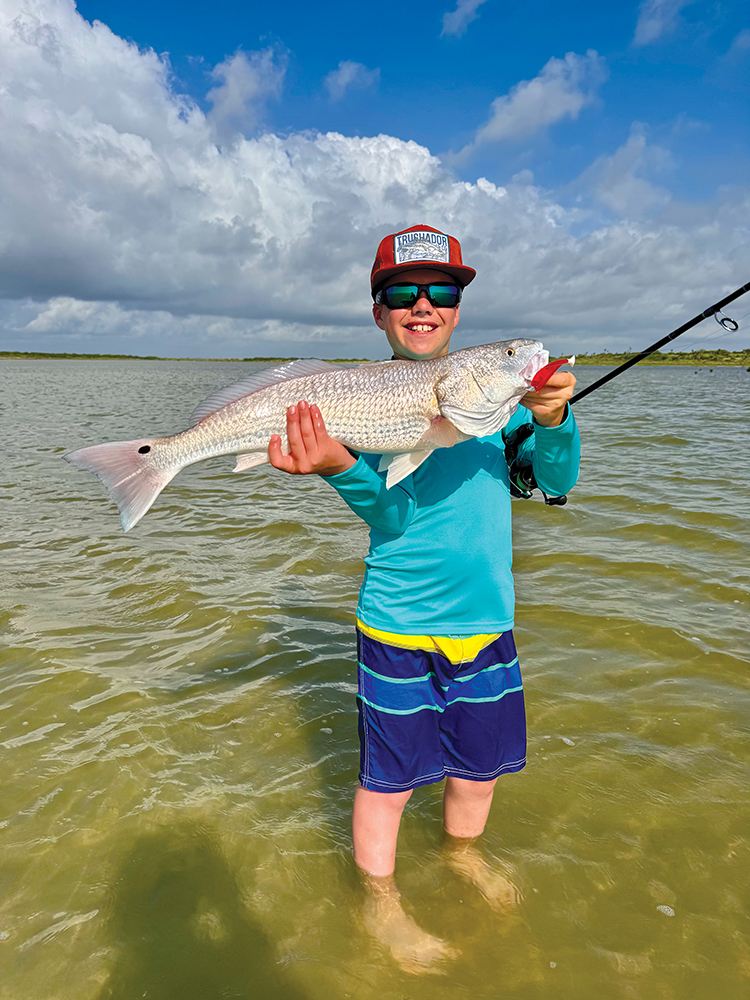
As the calendar moves forward, you’ll also see redfish beginning to stack up in the flats. Those big schools look like shadows moving under the surface, and knowing where to find them can make all the difference on any day you’re chasing tails. The challenge is that they’re wary and smart, especially this time of year when they feel the pressure from anglers and the changing conditions.
When I’m targeting tarpon during this window, I’m throwing a heavy-action rod from Waterloo Rod Company, paired with a 5000 CE Pro reel from Florida Fishing Products. You need gear that can take the abuse tarpon can dish out. For lures, chartreuse seems to be a magic color for me, or anything with a darker side that mimics the baitfish hiding in the shadows. Those colors seem to trigger those explosive strikes that tarpon are famous for.
The redfish routine is pretty similar when it comes to gear and mindset. I like throwing a KWigglers 4-inch paddletail in Bart’s Sand Ninja color when I’m working shallow flats from the tower. One thing I’ve learned over the years is that stealth can be just as important as technique. It doesn’t mean you have to be absolutely silent, but minimizing loud noises, like slamming ice chests or heavy footsteps on the tower can really pay off. Sometimes the fish are fired up, and you can get away with a little more noise. But as a rule, keeping your approach quiet and smooth is what separates a good day from a great one.
The switch from summer to fall isn’t just about cooler temps or calmer winds, it’s a signal that the fish are changing their attitude and behavior. You’ve got to shift gears too, moving from fast, aggressive fishing to a more patient and tactical approach. Whether you’re hunting for tarpon cruising the beachfront or carefully working a redfish school in a backwater pocket, this time of year really puts your skills to the test and rewards you when you get it right.
Reading the tide and timing your trips is huge during this period. Late summer tides tend to fluctuate in ways that can really influence where the fish might be stacking. I like to watch the outgoing tides around dawn and dusk, especially on the flats where redfish like to hang. Catching those windows can be the difference between hooking into a handful of fish or watching the water go silent.
Fishing through September also means dealing with the heat, and that calls for a balance of pushing hard and knowing when to back off. I’ve learned to respect the sun and humidity, not just for my own comfort, but because fish can feel that pressure too. Early mornings and late evenings are prime times to get on the water, avoiding the worst of the heat while the fish are most active.
For me, late summer isn’t just about landing fish. It’s about tuning into the bay, picking up on those subtle changes, and feeling more connected to the water every time I’m out. It’s about patience, persistence, and respect for the conditions, the fish, and the sport. If you put in the time, remain patient and respect what the conditions throw at you, you’ll find that late-August and September can be some of the best fishing months along the Texas coast.