
Mid-Coast Bays: September 2025
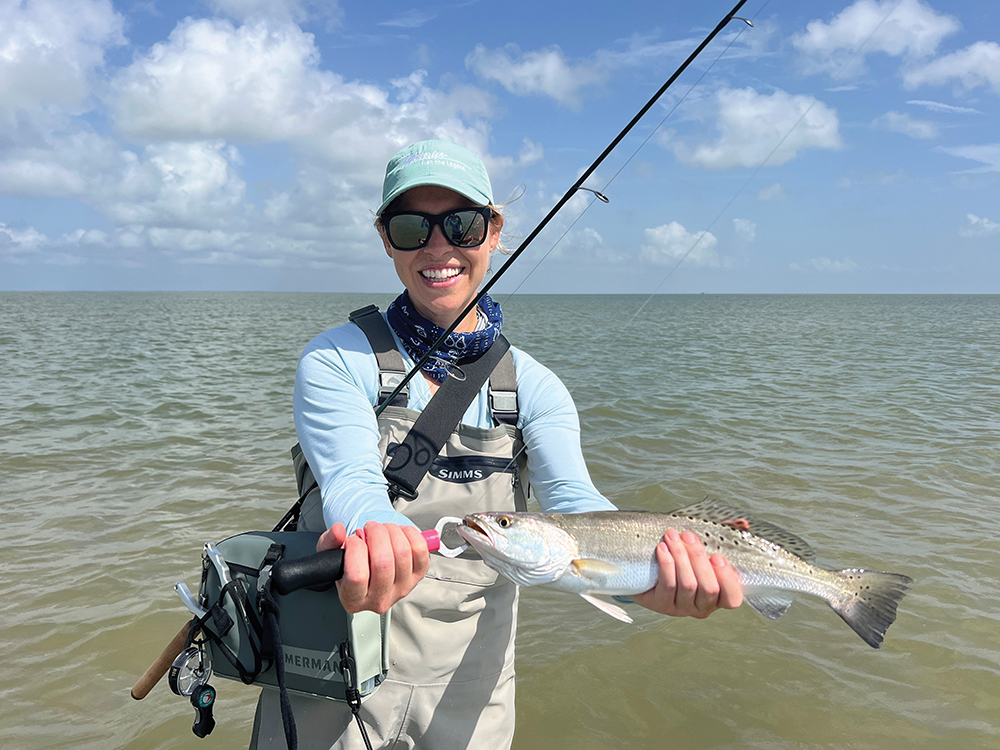
Seasonal changes are approaching, marked by shorter hours of daylight and the possibility of an early autumn cool front. These conditions create exceptional fishing opportunity and it is likely that many outdoors folk will be hitting the water to celebrate the conclusion of the long, hot summer.
The summer of 2025 was not only a hot one; June and July were quite windy, which often meant selecting fishing locations based on protection from the wind more than signals related to fish migration and feeding patterns we normally rely upon. Fortunately, these unusually strong winds have now diminished, providing greater access to various areas and reducing boat and angling congestion experienced in recent months.
Trout fishing has recently shown strong results, while success with redfish has remained moderate. With air and water temperatures soon to be declining, fish-feeding patterns are expected to become more reliable and perhaps lasting longer during the transition to more fall-like weather. If this year turns out anything like what we’ve seen in the past, redfish action will improve significantly as they begin gathering in schools, in preparation for their annual spawning migration to the gulf.
Regarding seasonal transitions, historically speaking, the first significant cold front of the season tends to arrive in mid-September. While these initial fronts generally result in minimal temperature variation, they do temporarily shift prevailing winds to a northerly direction for several days until the pattern reverts and southerly winds resume. Variations in wind direction and speed routinely influence my decisions regarding the optimal location to begin each day.
The trout bite is expected to remain consistent when fishing along drop-offs near shorelines and oyster reefs. However, my primary emphasis during early fall usually shifts toward targeting redfish. To clarify, this does not pertain to the bull redfish migration occurring in the passes connecting the Gulf and the bays. This migration generally takes place from September through early November, with peak activity often aligning with mullet runs and approaching weather fronts. These large aggregations make them easy targets for anglers. Although I have captured numerous bull redfish throughout my career, each providing a remarkable challenge when using light tackle, I much prefer targeting slot-sized redfish in shallow waters.
Back lakes are consistently excellent locations to find feeding redfish. However, on our part of the coast, many of these have soft bottoms, which tends to make the wading more difficult. Fortunately, during this season, redfish are also abundant along the hard, sandy shorelines of our main bays. Shallow areas with grass beds interspersed among sand pockets provide optimal conditions for stalking feeding redfish. A notable characteristic of redfish is their feeding behavior that frequently includes “tailing” and surface eruptions.
Redfish are generally not highly-selective feeders, particularly when they are actively foraging. Soft plastics, spoons, and small topwater lures all serve as effective options. Given that I frequently target locations with substantial bottom grasses, I prefer to utilize Bass Assassins 1/8-ounce weedless swimbait hooks with my soft plastics. These specialized hooks enable efficient retrieval through grassy areas while minimizing the accumulation of vegetation on the lure.
Johnson’s 1/2 ounce Silver Minnow Weedless Spoon earned a permanent spot in my tackle box years ago. And even though its name implies a silver finish, gold is perhaps the most popular and effective for redfish. While many anglers prefer the 1/4 ounce size, I think this is definitely a case where size matters. The larger hook of the 1/2 ounce model is less likely to bend or break when fighting larger fish and the additional weight enables more accurate cast placement when throwing into the wind becomes necessary.
Wading anglers should be constantly aware that stingrays are almost always present in and around schools of redfish. In fact, we can sometimes see stingrays trailing the reds, pouncing on small crustaceans and bait fish the reds kick up as they forage along the bottom. For safety, it is advisable to always shuffle your feet and wear protective gear such as ForEverlast’s stingray guards. I shuffle my feet from habit – even when wearing protection.
The early fall season offers an ideal opportunity to target shallow water redfish. I encourage all anglers to dedicate time to exploring both back lakes and sandy shorelines in coming weeks, and always make a point to fish areas you have never tried before. Embracing new challenges just might contribute to the development of advanced angling skills.