
New Tricks for Old Dogs
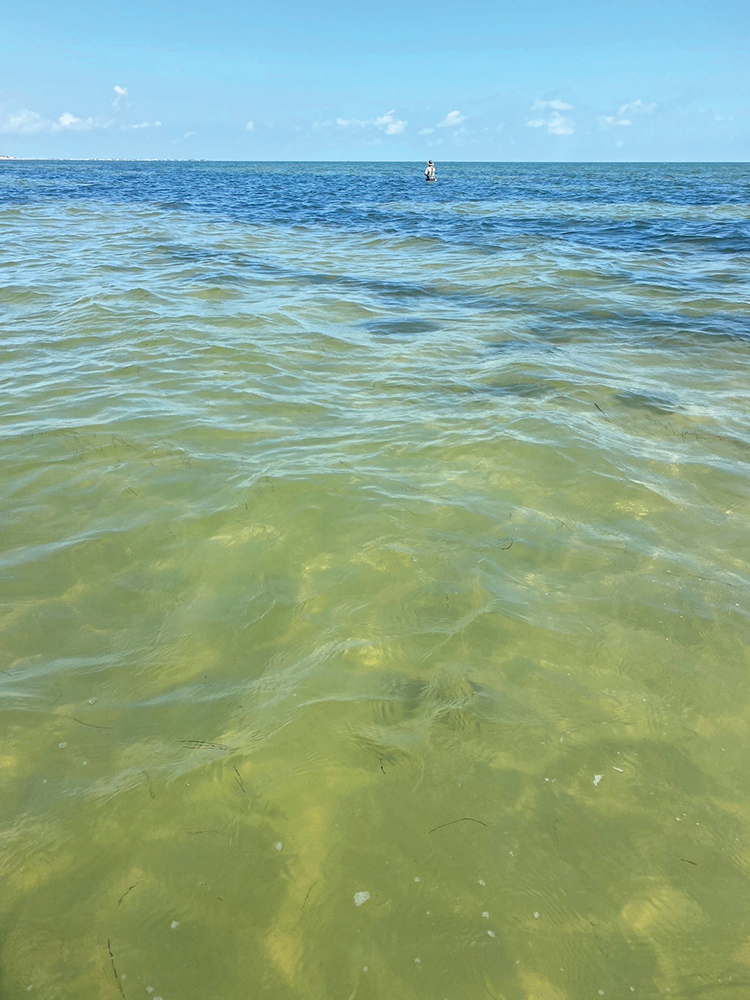
I had a few weeks off due to some eye surgery, but I’m back out there fishing again and hoping my eyes continue to improve. Cooler weather patterns are making for some nice morning runs across the bay. I love having to wear a light windbreaker for the first hour or two of the morning, then peeling down to just a long-sleeve shirt. I’ll keep wet wading until the water drops into the lower 70s.
I really love my Southerly wading pants, and being short, I appreciate that these folks nailed the inseam length—finally, a perfect fit. I’ve been wearing mine for two seasons and they’ve held up great. They launder well and don’t look like I slept in them when I put them on, even if I forget and leave them in the dryer overnight. I also love the Southerly layering gear I wear under my waders. Southerly continues to improve their line of waders, wading boots, and jackets, so keep your eye on this Texas-owned company.
I’m seeing some positive things in what I call the North Country—the area north of Long Reef and Marker 25. Bait is plentiful, and I’m seeing more grass along the barrier island shorelines than last season. We’re still lacking in some areas, but as our oyster reefs slowly rebuild, the current buffering those structures provide will help reduce shoreline erosion and promote better grass growth. We’ve absolutely got to continue fighting to eliminate the destruction of our natural oyster reefs. Thankfully, we’ve got a great crew working hard on that front.
In the past, I typically fished the North Country from about June through April. Since Hurricane Harvey and the 2021 freeze, fishing farther south in Aransas and Corpus Christi Bays has been more predictable—but I’m feeling very positive about winter prospects up north. That’s great news for the Aransas Bay Complex and the anglers who fish it.
The most attractive feature of the North Country is the wide variety of structure available on any given day—and the accessibility of protected areas during less favorable weather conditions. I’ve become more of a “safety first” guide as I’ve gotten older. Don’t run fast. Don’t run in the dark. Don’t take chances when the forecast calls for potentially dangerous weather. I’ve got safe routes programmed into my GPS that allow for slow, careful navigation through fog when needed.
The North Country is full of protected coves and pockets that offer shoreline points with scattered grass beds and small patches of shell. You can’t have a cove without creating some type of point—and there’s always a windward and a protected side. I prefer windward almost all the time, but there are conditions that force me to fish the leeward water. If the protected side has the same bottom structure, you can still find fish there. I especially like areas where shallow bottom structure continues into deeper water along the drop-off.
Of course, a viable food source is key. In the fall, these areas often require casting into the wind. When that’s the case, I’ll bump up to a heavier jighead to get the cast where it needs to be and keep the lure in the strike zone. Lures that cast well are always what I recommend, because distance matters when you’re fighting wind.
I’m a 1/16-ounce jighead fan and rarely throw anything heavier, but in fall and winter I’ll occasionally go to a 1/4-ounce Texas Customs jighead with a 2/0 short shank hook. I remember a day last fall in Copano when a strong east wind kicked up, and that setup instantly became necessary. Lowering your rod tip during the cast allows for greater distance and reduces the risk of backlash. I also try to bend my casts so the lure presentation comes across the fish’s line at an angle—retrieval angles are critical when fish are finicky. Anyone can catch fish when they’re feeding aggressively, but it’s the slow, picky periods that separate consistent anglers from the rest.
Pre-frontal periods are always my favorite, but not all fronts have the same effect. Early fall fronts tend to be weak and often bring little more than a wind shift. You’ll see some increase in feeding activity, but it’s not as dramatic as the stronger winter fronts. I like to target areas where a strong north or northeast wind pushes water into tight, confined spaces—perfect ambush zones that concentrate both bait and predators.
Over the years, I’ve discovered a number of these small, out-of-the-way areas that consistently produce. Many are narrow ditches or swags cutting through reef structures. Even though the water is barely knee-deep, wind-driven current through those depressions creates a feeding lane.
The water in these areas can be dirty—downright nasty at times—but the key is to watch for pelicans and royal terns. If one of those birds picks up a shad or menhaden, you can bet fish are there in good numbers. These spots typically produce trout, with the occasional redfish mixed in.
Thirty years ago, the North Country had some primo flounder spots where catching 15 to 20 fish from 3–5 pounds in the fall was fairly common. We still catch a few, but nothing like the old days. I remember pulling up to one of those spots with a client who wanted trout. The northeast wind was howling, and the water looked like drilling mud. “Perfect,” I said. He just stared in disbelief.
I told him exactly where to land his lure and the angle to work it. On his first cast, a 3-pound trout boiled on a Plum 5-inch Bass Assassin. He just shook his head. That scene repeated itself for the next hour and a half.
No matter where I fish, I’m always looking for areas like that. When I find them, I find fish. I have five or six of those spots in Baffin and about the same number in Port Mansfield. Down south they’re sandbars instead of shell reefs, but the principle is the same—add a little wind and dirty water, and the fish will be there. The key takeaway is this: patterns are patterns, and they apply up and down the Texas coast.
As the water cools, baitfish begin exiting the back lakes and stacking along outside shorelines near drains. Right now, we still have some white shrimp in the bays, and they’re moving toward the Gulf. The combination of falling temperatures and bait migration triggers what many call the “feeding up” period—a seasonal bounty of opportunity.
Lots of lures will work in these conditions, and I always suggest my clients bring what they’re most confident using. Personally, I’ll be throwing Texas Customs Double Ds, Custom Corky Soft-Dines, MirrOlure Lil Johns and Lil John XLs. I’ve also been experimenting with the new MirrOlure Soft-Dine Shallow Diver and 6th Sense Party Paddle and Shindo soft plastics.
Lure color depends on water and weather, but I like to keep a variety in the box: Watermelon, Plum, Pistachio, Bone, White, Black, Opening Night, Pink, and Chartreuse all have their moments. Over the past year and a half, I’ve opened up to a wider range of lures and color combinations—just trying to be that old dog learning a few new tricks.
May your fishing always be catching!