
No Matter Where You Go; They’re Still Redfish!
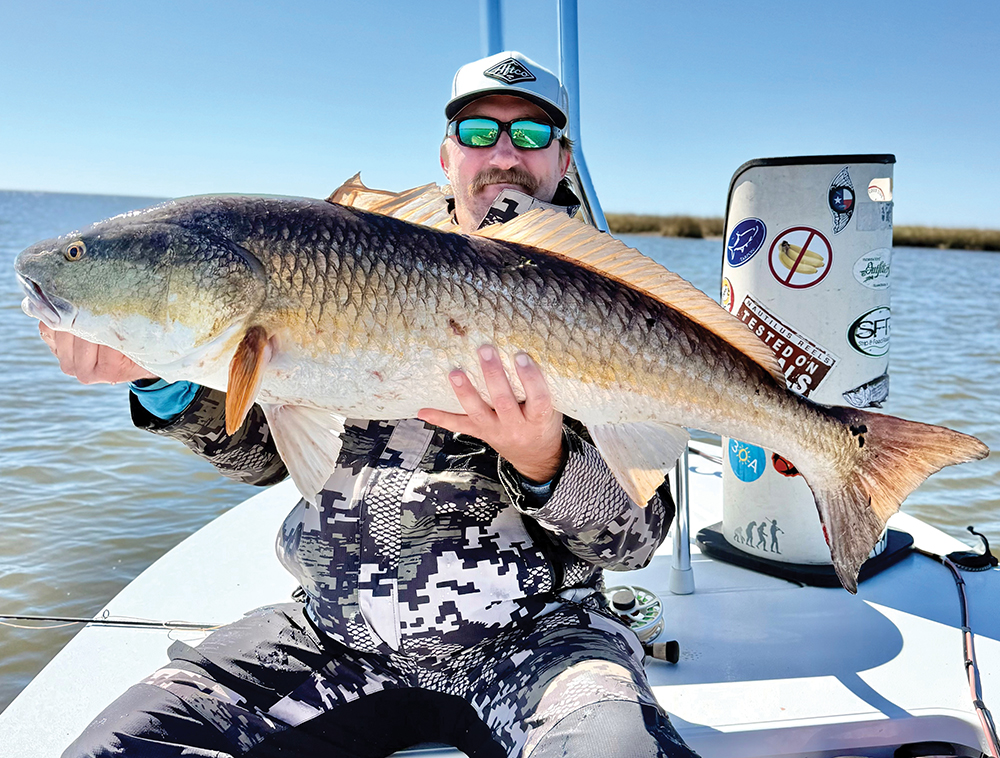
I have been very fortunate in my life to have been able to travel and chase redfish all across the Gulf Coast. In my personal opinion, they are the perfect game fish to target. You can catch them shallow or deep, on live, dead, or artificial bait. They can be very aggressive and always put up a good fight. All of these aspects, combined with their quality as table fare, make them an ideal game fish species. In addition to all that, they can be found in every bay system, although targeting them specifically can take a little time to dial in. However, there are a few key points that have helped me find success in catching them no matter where I am fishing.
Earlier this spring I made a trip over to Venice, Louisiana and fished with my buddy John West. He runs Blue Mud Charters down there, and our goal was to see if we could pick up a few redfish on the fly. During a little lull in the action I asked him when he fishes a new place, what does he look for that might be helpful in getting dialed in. We agreed on a majority of the elements, but he went into greater detail about some aspects that I have never considered. I will circle back to those finer points later in this article but, for now, this is what I look for when fishing a new area.
GOOD TIDAL FLOW
I truly believe that moving water is a key component when it comes to locating redfish, or any game fish species for that matter. The tidal flow in an area completely dictates the movement of baitfish and feeding patterns. If you have ever paid attention to it, slack tide is a very difficult time to catch fish. Redfish will move with the tide and will take advantage of areas where eddy currents occur and other places where moving water brings baitfish to them, making them work less while providing an easy meal.
A few years back, I stopped off in St. Augustine, Florida and figured I would fish the area for a day or two before continuing my journey back home. I had never been there and was going in completely blind. Once I launched, I headed out into the boating lane, figured out what the tide was doing, and then looked at Google Maps. Knowing that the tide was going out, I focused on an area that had a main bayou with several braided drains and ponds at the end of it. I knew that as the water level dropped, bait had to exit the shallows and move into the deeper channel for shelter. This creates a perfect scenario for hungry redfish waiting at the mouth of a drain. I found great success that day in an area I had never seen before, and I credit it all to tidal movement.
LOOK FOR STRUCTURE
When you think about the word structure and fishing, a few different ideas come to mind. I like to think of it in two ways – manmade structure and natural structure. I don’t believe that I need to harp on the importance of oyster reefs, as I feel that these are a given. Other types of structure created by Mother Nature are the myriad shapes and sizes of submerged grass beds. I know that on the Lower and some Middle Coast bays, grass flats can go on for miles. Here on the Upper Coast and over in Louisiana though, we simply do not have such luxuries. However, if you can find ponds and areas that hold good amounts of wigeon grass, you will find plenty of fish. These grassy areas provide a perfect haven for shad, mullet, crabs and other smaller baitfish to thrive. Along with that, the grass helps clean the water and can provide great opportunities for sight-casting redfish.
Even though it was not our intention, manmade structures provide great habitat for redfish. Some examples include rock walls such as jetties and erosion barriers, pilings for piers and docks, and believe it or not, even duck blinds. While you might not believe it, duck blinds are always worth making a few casts around. These areas give redfish excellent ambush points for unsuspecting bait seeking refuge within the structure.
A HEALTHY ENVIRONMENT
If there is one thing I have learned from standing on a platform and trying to sight-cast redfish, it is this: you don’t realize how much dead water there is. What I mean is that there is a lot of water that may look fishy but is, in fact, totally devoid of fish. Why some areas are empty I will never fully understand but, that being said, I am a firm believer in finding areas that have plenty of other wildlife present.
Of course, shorebirds such as egrets are a great sign, but herons, ospreys, nutria, turtles and otters should never be overlooked. All of these animals either eat the same things redfish do or live off the grass that provides a home for the creatures redfish eat. I’ve watched otters chase and eat crabs. Osprey are often seen snatching mullet, and egrets love to eat shrimp. When it comes down to it, all aquatic life thrives in a healthy environment, and that includes redfish.
To circle back to my conversation with my buddy John about what he looks for in Venice, he mentioned that he always pays attention to which direction a shoreline runs. The reason being that the shoreline opposite the rising and setting sun will warm up quicker during winter and stay cooler during summer. These subtle changes are something anglers may not consider, but redfish will certainly take notice.
If you don’t believe me, turn your air conditioning thermostat down two or three degrees and I promise you will feel a noticeable difference. Along with that, he likes to focus on main lake shorelines, saying that once the tide begins to come in, this will be the first area to receive clean ocean water, making it easier to spot fish. After fishing a stretch, you can work your way further into the marsh and chase the clean incoming tide. Both of these are great tips to follow.
Redfish can be found all across the Gulf Coast and can be caught many different ways. If you plan on going to a new area and want to find a few fish, any of these things can help. If you are looking for real success, combine all three of these aspects and you will be able to find redfish no matter where you go.