

Respect
We have a species of fish here in Texas that no longer seems to get the respect it deserves. It possesses a number of great attributes that you’d think would endear it beyond the level of appreciation it currently receives. It’s a particularly aggressive fish, eats a wide variety of lures, flies, and natural baits, and can be caught from the bank, beach, boat, or bayou. It even has a finicky streak for those who prefer a greater challenge—eating anything you toss its way one day and refusing everything the next.
They can school in large numbers and have created some of the most memorable days on the water for countless coastal anglers. These fish were once harvested commercially to no end until a few sport fishermen banded together, forming an alliance that ultimately stopped all commercial harvest of what is now one of our most prized game fish. Yes, I’m speaking about redfish.
What was once likely the most cared-about and respected resource on our Texas coast seems to have slipped to the back burner in the minds of modern conservationists. It appears many believe the war has been won and redfish are forever saved. And while that may be partially true—they have indeed been saved from commercial harvesters—there is another entity taking its toll: rod-and-reel anglers. That’s right—sport fishermen.
Please don’t get the wrong impression. I’m not going to sit here and tell everyone they shouldn’t keep any redfish. Heck, I enjoy taking some home myself from time to time. All I’m saying is it may be time to collect data and look at real numbers on the population.
For as long as I can remember, redfish regulations have remained unchanged while angling pressure has increased at least tenfold. I also believe that if we shifted the slot size slightly lower, similar to some other Gulf states, we might see an increase in larger redfish within our bays.
I don’t know about you, but I’d much rather eat a 20-inch redfish than a 28-incher. Once they get bigger than about 26 inches, the fillet becomes very thick and significantly tougher. I’ve never kept a 19-inch redfish to eat, but I imagine it would be quite tasty. On the other end of the spectrum are people who take over-slot reds home for dinner. This always blows my mind, because anyone who’s tried it knows the bigger they get, the less desirable they become.
Another factor to consider is that since the 1980s, we’ve been releasing redfish fingerlings into our waters by the millions. Just last year, TPWD made a big to-do about releasing their billionth redfish fingerling—yes, billion with a “B.” There was plenty of press around it, and it was a major celebration for the agency. Don’t get me wrong, I’m very glad this program was initiated back in the day and is likely responsible for the large numbers of redfish I saw on the flats as a child.
All I’m saying is this: in a time when sustainability is one of the most-used buzzwords in conservation, what exactly is sustainable about a redfish population that relies on a government entity to supplement our bay systems indefinitely? After three decades of this effort, shouldn’t we be able to self-sustain redfish populations—at least to the point where intervention is only needed for rare events like severe freezes?
If redfish populations were truly self-sufficient, it could open funding and hatchery capacity for other species, such as snook. If you do your research, snook were once very abundant in Texas—so much so that there was even a commercial fishery for them as far north as Galveston. Yes, snook are more susceptible to extreme cold, but that is all the more reason they could benefit from hatchery support. You can’t tell me there weren’t cold spells along the Texas coast in the early 1900s when snook were abundant. How will we ever know if a species like this could thrive again if we don’t give it the same opportunity we gave redfish and are currently giving trout?
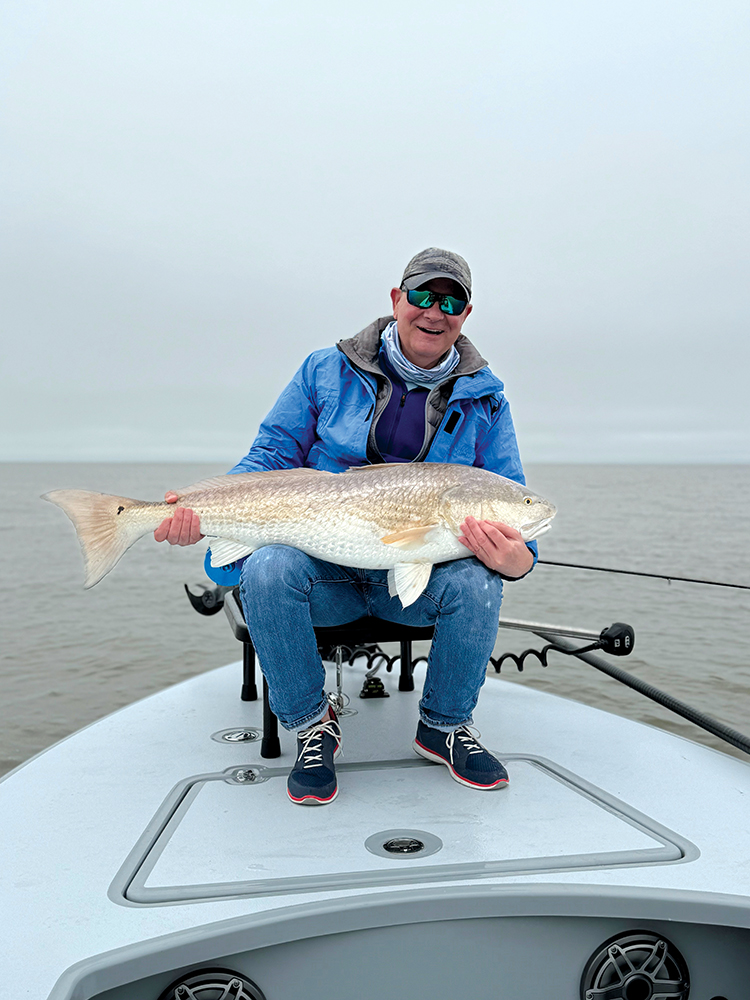
If we truly want redfish populations to become self-sustaining, we must stop harvesting brood stock. Bull reds, as they’re often called, are a fantastic sport fish but are poor table fare. That’s why it troubles me to see large numbers of them brought to the cleaning table. The only explanation I can come up with is that they’re easy and available—something to throw in the cooler. What many don’t realize is that they’re also taking home fish with high mercury levels and parasites.
Think no one does this? Here’s some data pulled directly from tpwd.texas.gov. In 2018, there were 16,683 bonus bull red tags sold. That number increased every year, and by 2025, 36,640 bonus tags were sold. To my understanding, that means every one of those anglers had already harvested a bull red using the tag that comes with their license and then purchased an additional tag with the intention of harvesting another.
Let’s assume that only half of those anglers were successful—a fair estimate. That means nearly 55,000 bull redfish were removed from Texas waters in 2025 alone. That’s a significant harvest for so-called recreational anglers, and that number doesn’t account for illegally harvested fish. Now consider how many juvenile redfish those 55,000 brood fish could have produced. It makes you wonder whether we’re releasing enough fingerlings to offset that loss.
Another eye-opening fact: our neighboring state of Louisiana—where it is still legal to shoot redfish with a bow and arrow at night, using lights—has made it illegal to harvest bull reds. Let that sink in.
There’s much more I’d like to say on this subject, but this will have to suffice for now. This topic has been on my mind for quite some time, and it felt right to finally put pen to paper. All I’m suggesting is that it’s time to review the data and take an honest look at the numbers. While the redfish population appears healthy today, I don’t believe it will be thirty years from now if nothing changes.
If nothing else, I hope this article serves as a conversation starter—and that we can move toward positive change in the future. In the meantime, let’s give redfish the respect they deserve.
Works Cited
https://tpwd.texas.gov/business/licenses/license-sales-volume/