
Rojo on the Run
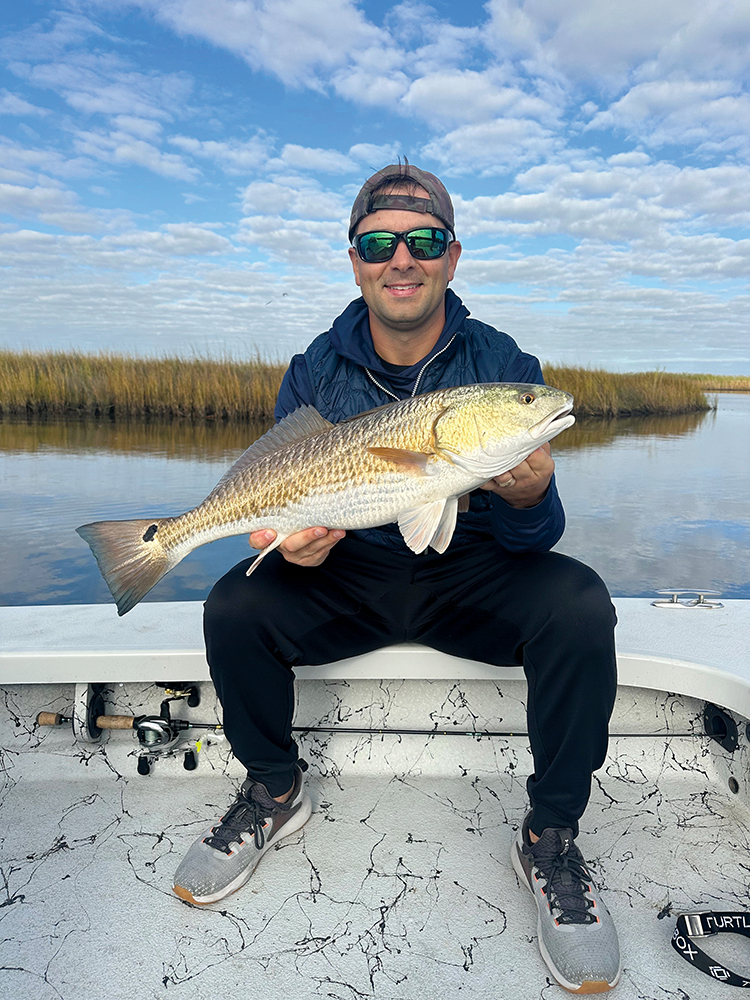
Solid slot-sized reds will congregate near marsh drains and feed aggressively on tide changes.
There are very few things that warm an angler’s cold hands like a solid thump on the line followed by the surge of a well-timed hookset. Countless winter hours can feel mundane or downright grueling—until that long-awaited strike jolts your senses and suddenly everything is right with the world again. For many anglers, this time of year conjures thoughts of magnum speckled trout, and judging by the number of articles dedicated to them this month, that’s no surprise. But as the great Lee Corso always said, “Not so fast, my friend.”
For some reason we tend to dismiss redfish as second-class citizens during winter, especially when everyone is chasing that elusive giant trout. Ask any veteran guide, though, and they’ll tell you the same thing: more winter trips than they can count have been salvaged by hungry, willing redfish. Don’t overlook these bruisers—they’ll be ready, willing, and able on most winter days when trout decide to sulk.
I’ll fully admit my appreciation and admiration for redfish. They’re what drew me to saltwater as a young angler. In fact, my introduction to them came in the winter, probing the banks of the Sabine River with Rat-L-Traps on some of the coldest days of the year. I remember that first fish like it was yesterday—the power compared to the freshwater species I’d been chasing, the thump, the spool-peeling run. That was all it took to spark a lifelong love for redfish.
This month, anglers will quite literally have to chase them. Through the fall on Sabine, these reds have behaved more like greyhounds—always on the run. Pinning them down has been a challenge as they’ve keyed heavily on swimming crabs and, surprisingly, shad. Much like trout feeding on shrimp, redfish stay put longer when shrimp are the main forage. But when they’re chasing fast prey, they roam. A common scene this fall has been birds working over schools of small trout or undersized keepers—then out of nowhere, reds blow through and scatter everything. When the birds move on, calm water often reveals reds cruising just under the surface, hunting shad and crabs while remaining on the move.
You’ll typically get one or two fish from a school before you have to chase them down again. It’s a constant battle to stay with them, but the effort is worth it once you get back in range.
A good trolling motor is essential for staying on these open-water reds. I recently watched a kayak angler absolutely dial them in, and his setup was impressive—a Minn Kota Riptide Terrova designed for kayaks, complete with GPS integration and Spot-Lock. His ability to run down and stay on those fish was something to see.
If you’re chasing reds by boat, keep your batteries charged and approach strategically. Boat position relative to the school is everything. Stay far enough to make a long cast, yet close enough to stay ahead of the moving fish.
Our best lure setups have been simple: soft plastics on jigheads or under rattling corks. The ZMan PrawnStarz Shrimp, Mulletron, and Berkley Gulp Ripple Mullet have all performed well. Rigged on single hooks, they’re safer and easier to unhook when the action gets fast and frantic. Nobody wants to dig treble hooks out of a net—or worse, a fishing partner.
Sure, reds will crush topwaters, but they’ll also destroy hooks and hardware in the process. Single-hook jigheads are simply more efficient when the bite is hot.
If the birds don’t cooperate, or you prefer to wade, expect redfish along shorelines near marsh drains and cuts feeding into Sabine Lake. It can be comical watching an angler’s expression when they discover the $15 Corky they just cast has been mauled by an oversized red instead of the trout they were hoping for. Re-tuning a Corky that’s been balled up like tinfoil is practically an arts-and-crafts project—but with patience, most can be revived.
As we wrap up the year and head into 2026, I can’t help but smile at how far Sabine has come. I’ll proudly put Sabine’s redfish population up against any along the Texas coast—the numbers and overall health are incredible. And the trout fishery made huge strides this year as well. I’m eager to see what spring brings and whether some true big fish finally make their return.
As we celebrate this holiday season, please remember to wear your lifejackets and PFDs. Cold water is no joke, and that gear can be the difference if something goes wrong.
Thank you to all my customers and readers of this great magazine. I look forward to seeing you on the water or at a fishing show in 2026.
Have a blessed Holiday Season and Happy New Year!