
Run to the Light Stuff!
Highly acclaimed angler Larry Dahlberg frequently mentions his 4 Stages of a Fisherman during his seminars and various speaking engagements and I have become a big fan. He explains that during the first stage the angler just wants to catch a fish. In the second stage the angler progresses to wanting to catch a lot of fish. The third stage finds the angler wanting to catch a big fish. And, finally, in the fourth stage, the angler seeks to catch fish only in the way that he or she prefers to fish.
Now, if you stop for a moment and think about it, this really sums it up for most fishermen, especially those of us that have been doing it for a while. For me personally, I have been hanging out in the fourth stage for quite some time and I don’t see myself leaving anytime soon. In fact, here lately, I have become increasingly enamored of chasing fish with lighter tackle and that has brought a renewed element of fun to the sport for me. Using gear that is smaller or lighter than what one would consider standard brings with it a certain challenge and sense of accomplishment, as well as the occasional heartbreak that makes for great stories over a cold adult beverage.
Many years ago, when I first started guiding, I met Pam Basco and learned about her many accomplishments in the fishing world, notably her IGFA Line-Class and World Records. I was truly fascinated. Listening to her tell of the preparation it took to land fish of the caliber she was after did not include luck. It was an incredible skill. Basco had fourteen IGFA World Records at the time and still holds the 20-pound line-class record for yellowfin tuna with a specimen of 203 pounds - 8 ounces. That world of line-class records requires following some rigid standards and rules that have to be met for record consideration, an undertaking to say the least, and I have the utmost respect for those who choose to go this route.
My own personal light tackle challenge is geared a little different than you might think because I have challenged myself to fish for bigger species of fish with our standard Texas trout and redfish tackle. That’s right, the same rod you grab to throw soft plastics or topwaters in your favorite bay is now my choice for virtually everything when the opportunity presents itself.
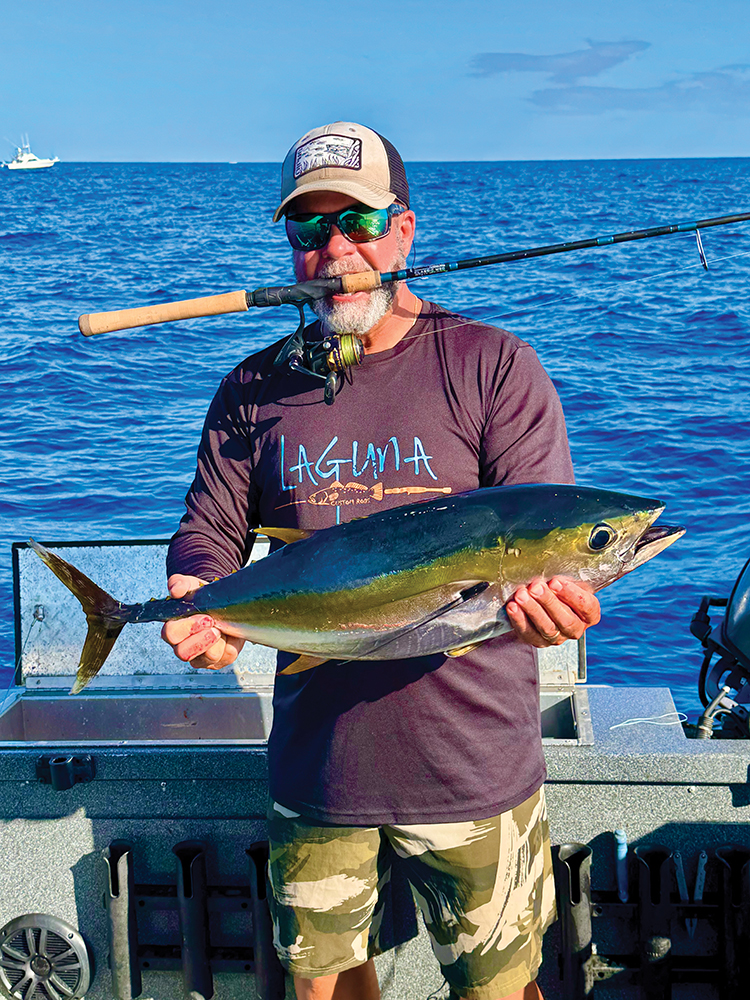
Thanks to the great guys at Laguna Custom Rods, I now carry an array of travel rods that allows me the luxury of bringing my own gear and using it, regardless of the destination. It’s comical to see the faces of other guides or captains when I tell them, “All I want is for a fish to try to run away with all my string and to see if I can stop him.”
I recently added another species to the list of fish that the Laguna Customs whipped – yellowfin tuna in the 30-40 pound class. I must admit when the first fish hit and made the initial run, I thought I had gone to a knife fight with a plastic spoon. Fortunately, I had enough line on my Penn Battle IV 2500 spinning reel to handle that first drag-testing run and regain control of the situation.
Using braided line in this endeavor is a must as it affords you much more line capacity than monofilament of equal strength, which certainly comes in handy when the big fish decides to head for parts unknown, and you have to hang on and chase them. My Mexican friends I fish with in the Pacific get as big of a kick out of me catching these fish on smaller gear as if they had done it themselves. Currently, I’m pursuing a sailfish on both the spinning and baitcaster models of the Laguna Travel rods just to see what happens when one finally eats a lure. I’m quite certain it will be a rodeo of epic proportions.
So, if chasing oversized fish on undersized tackle sounds interesting to you, there are a few things to think about before you get started. As mentioned earlier, having a quality setup is paramount to your success. Selecting a reel that affords you comfort, line capacity, and adequate drag tension is a must. When I travel, I use wide frame 300-Series baitcasters from Penn and Okuma because they are durable, have excellent drag, and you can easily fit 300 yards of 30-pound braid on them. With this baitcaster set up I can do just about everything from throwing topwater plugs to deep jigging in 300 feet of water and everything in between. For spinning tackle, I stay in the 2500 series and also go with braid for extra added line capacity.
Another aspect that requires your devoted attention when targeting these bigger fish is your ability to tie quality knots, especially to connect your leader. At times this can become a challenge with the small diameter braid being attached to 30 or 40 pound fluorocarbon, so knot choice is crucial. Knowing if you want to be able to reel the knot up through the eyes or leaving it out helps make your knot decision easier. You can also stagger your line in gradual increments to make a smoother transition from the small line to the biggest leader material, much the same way fly fishermen tie their tippets and leaders.
I like the Double Uni-Knot in this situation because it’s strong, easy to tie no matter where you are, and runs smoothly through the guides. There are plenty of knots to choose from, so find one you can become proficient with and have confidence in before just doing something halfway and end up losing a great fish.
Lighter tackle, smaller lines and lures will always have a place in the fisherman’s arsenal, and during these months heading into winter are prime for just such a setup. Winter tends to bring some of the clearest water we see all year on the Upper Coast, and the smaller offerings are tailor-made for just such a situation.
I have carried a pattern from late summer. I have been having great success with late-fall and that is shallow diving jerkbaits such as the Berkley Cutter 90 and Heddon Swim’n Image. Both these plugs, along with swimbaits like the Mulletron from ZMan, will be in my daily arsenal as we push towards the end of the year. The redfish schooling activity is in full swing and should remain a constant program for a while if you are inclined to choose this style of fishing.
Hopefully, this winter will produce some of the better-quality trout we have all been praying for over the last couple of years. A quiet tropical weather season coupled with fantastic water conditions over the summer has many anglers, including myself, cautiously optimistic for what the cooler months will produce. We saw some very nice trout this summer in the deeper water near the jetty and hopefully that’s just a preview of what’s in store.
There are plenty of options out there from species of fish to the tackle you choose to chase them with, so take advantage of the opportunity and enjoy some of the best fishing of the year. Remember to be a good steward of the resource, keep only what you will eat fresh and practice CPR (Catch-Photo-Release) on the rest when you can. And by all means, please bring a kid or someone new to the sport next time you head out for the water.