
The Cove Pattern
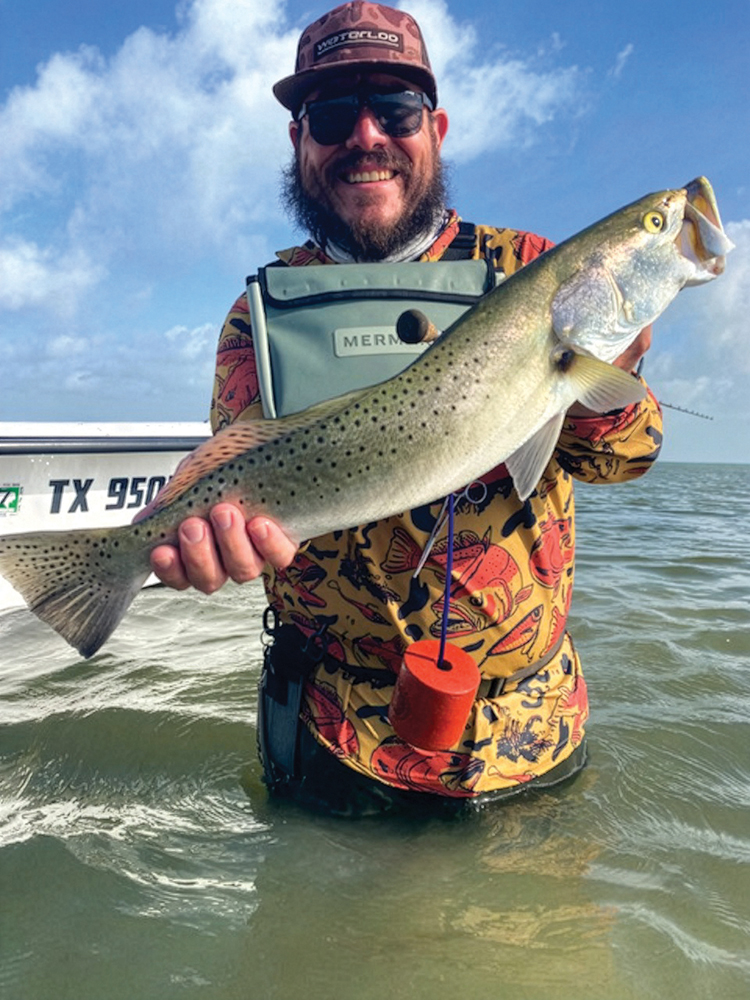
The heat wave continues but the rain we received in May and June has allowed for some good water quality conditions and even some stacking of fish along our south shorelines, which has helped improve our fishing for the time of year it is, which is truly the toughest of times to catch quality trout. Like I stated in the last issue of the magazine, I like the challenges the conditions create for us this time of year. In this month’s article I want to touch on my confidence in fishing coves and pockets that lie adjacent to nighttime feeding areas. I have written pieces on this in previous years, but understanding this pattern is an absolute must for success this time of year and therefore warrants repeating. I have also discovered some new but small nuances to the pattern that have helped me better predict what I will find prior to working the pattern. I get great satisfaction out of calling the shot. Had this happen just yesterday with a guy and that is the first thing he told me, “You called it!” And I loved it.
I guess the first thing one needs to know is how to identify a nighttime feeding area. Any area of shallow water adjacent to deeper drop-offs must have at least a few of the following structure elements before we can consider them as nighttime feeding zones. These are bottom grass, scattered oyster shell, sandy potholes amid dense grass, bottom contours such as humps and guts, shoreline fish highway, and a drain or slough that feeds a backwater marsh area. We don’t need all the above, but most will have at least three of the six types of structure mentioned.
I prefer my coves to be windward, but leeward is not a total showstopper, as we are most often spending a good amount of our fishing time working the drop-offs that outline the coves. I have to say that this pattern requires confidence in the chosen area and plenty of staying power. I gained my staying power as a guide when I knew fishing time was short or on busy weekends and holidays back when I fished every day I could.
Tournament days also contributed, with limited time frames and boundaries (back then), that did not allow for extremely long runs. It would not have mattered much as most everyone fished in relative proximity to wherever the tournament was being held. Fifty to sixty miles one way would have been considered an exceptionally long run. With that said, we learned to choose an area and then just fish it for the day and hopefully the bite would develop while we were in the area. This certainly did occur at times, and I learned from it and soon adopted this into my day-to-day guiding business. Today, it is probably the most important aspect of fishing that I try to teach clients with a genuine interest in becoming better year ‘round anglers.
I try to avoid pushing through these small areas where I feel fish are staging during non-feeding periods. Coves provide good opportunities to properly stand and work at an angle to the drop-off, bending each cast and providing multiple opportunities per cast for the angler to get a bite. Casting at angles to the drop-off allows the lure to come across in front of the fish and hopefully in front of more fish. When positioned properly, you’ll never walk through the area holding the fish. This allows you to revisit the area later in the day. David Rowsey reinforced this concept to me on one of our first fishing trips together. I have never forgotten that lesson from a very young David Rowsey.
It is also highly possible that the area will reload throughout the day. I believe that what one fish prefers, others do as well. Over the years I have come to believe that larger trout will slowly mill through areas that provide all that is needed for them in the way of cover and food. This belief provides me with a high level of confidence, which in turn creates staying power. These two things play a tremendous role in our success.
I made a comment on a recent Instagram post (official_jaywatkinssrfishing) about a very distinct and predictable summer pattern that I had observed for an entire week. I am not sure whether my observations over a 5-day period would qualify as a seasonal pattern, but it was definitely the pattern that week. The trout we were catching were on distinct submerged grass edges; the same ones each day, and the fish were typically not feeding until midday. It was that way every day, at the same time and in the same area. I think this qualifies the terms I used in that post.
Small windows of similar patterns manifest themselves during summer when nighttime feeding patterns are in place. It is also highly likely that as the daytime water temperatures increase to uncomfortable levels, that the fish will pull out to deeper submerged grass edges and potholes to wait out the heat. These fish can be caught if you use some of the information in this article.
It is not uncommon to see daytime water temperatures as great as 90° degrees in the shallows. During the dog days, trout do not want or cannot afford to travel long distances to feed; it is simply not cost effective in terms of energy expended versus nutritional value gained. This is the basic foundation of the whole Cove/Pocket pattern. Understand that the Cove or Pocket does not have to be very big to hold some decent numbers of fish. Bigger is not always better; in fact, smaller areas increase our odds of putting a lure in front of the fish. And, just so you know, this pattern can often play out for many of the same reasons during periods of harsh winter weather. Structure and bait must also be present, of course. If there is submerged grass there will be bait present at some point during the day. This of course is another pattern for another time.
I pretty much stick to soft plastic lures when fishing this cove pattern. There are periods when we can get them to react to slow-sinking or suspending lures such as the Soft Dine and MirrOdine, and the Custom Corkys, but the soft plastics tend to be more reliable a greater percentage of the time. In the soft plastic category, I like several different models and brands. Something that I believe is paramount in lure selection goes like this: Give them what they want to eat, not what you want to catch them on.
I have the luxury of choosing from some of the best soft plastic companies and products out there. I prefer a straight-tailed bait in 5-inch model, and I want the lure to dart and dive erratically in response to rod twitches. Having said that, there are special times when a 3-to-3.5-inch model is the ticket, for sure. Some big trout can be tricked with a smaller presentation. My favorite soft plastic brands today are MirrOlure, Texas Customs, and 6th Sense. All of these companies have proven to be aggressive and willing to produce lures that anglers need.
I will go with clear body colors when fishing shallow in the morning hours and then go to a darker color when fishing deeper, later in the day. Some of my favorite clear-water colors are Pistachio, Bone, Opening Night, White, Clear Red/Gold Gitter and Smoke/ Red glitter. The darker colors I prefer are Watermelon Red glitter, Plum, Watermelon Green Gitter, and Morning Glory. I like Chartreuse and Spanish Bone in the 6TH Sense Party Paddle when needing to keep a lure above the shallow grass in the coves during early morning or late afternoon wades.
I hope something in this article will help you gain some confidence during the remainder of our hot summer weather.
May Your Fishing Always Be Catching – Guide, Jay Watkins